
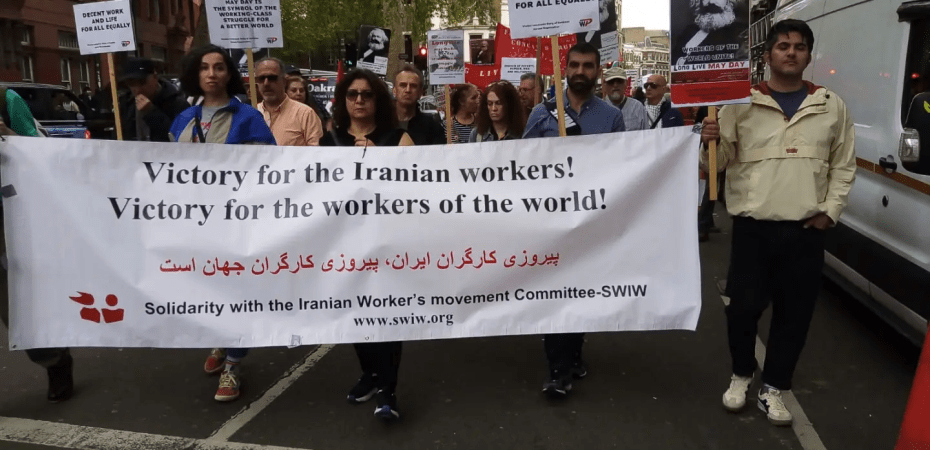
A statement by the Solidarity with the Iranian Workers Movement Committee.
The Beginning of the Protests
On December 28th, protests started at Tehran’s Grand Bazaar and quickly spread to 180 cities across all 31 provinces. This has become the largest and deadliest uprising in the 47-year history of the Islamic Republic. Millions of young, working-class people have joined the movement, risking their lives to chant “Death to the Dictator” and “Death to Khamenei.”
A Deep Economic Crisis
The “rebellion of the hungry” is driven by a massive economic crisis. Recent data shows:
• Poverty: Over 70% of the population now lives below the poverty line, with 30% in absolute poverty.
• Inflation: General inflation is around 50%, but food inflation has climbed above 75%, making basic survival difficult.
• Currency: The Iranian rial has lost nearly 300% of its value against the dollar in less than two years.
• Trigger: The government recently cut fuel subsidies and ended cheap exchange rates for imported goods, causing food prices to skyrocket overnight.
State Violence and Blackouts
On January 8th, the government completely shut down the internet and phone lines to hide their crackdown. Security forces used military weapons against unarmed protesters.
• Casualties: While 3,400 deaths are confirmed, some reports estimate the toll could reach 20,000.
• Injuries: Tens of thousands are wounded. In just one Tehran hospital, over 400 people were blinded after being shot in the eyes with pellet guns.
• Detainees: Thousands remain in prison facing torture. Shockingly, the regime has even demanded money from families before returning the bodies of their loved ones.
The Political Landscape
This movement is spontaneous and was not started by any specific political group or leader. Although outside groups, such as the supporters of Reza Pahlavi, claim to lead the uprising, they lack genuine influence among the workers and students who are on the streets. This is reflected in the popular slogan: “Neither Pahlavi nor the Supreme Leader—freedom and equality.” The Iranian people are not looking for foreign military intervention or harsh sanctions that hurt the poor; instead, they are fighting for grassroots democratic change through their own social movements and organized strikes.
A Call to Action
The situation is critical. We call on international unions and human rights organizations to:
1. Condemn the mass killing of protesters.
2. Demand the immediate release of all political prisoners.
3. Pressure the British government and others to cut diplomatic ties with the regime.
4. Support the Iranian workers and social movements who are the true force for change.
For more information about the Solidarity with the Iranian Workers’ Movement Committee, see https://www.swiw.org/about/
image: c/o Labour Hub.
 Labour Hub