
By Paul Seligman
Palestinians are divided by Israel into many different spaces and regimes – Gaza, East Jerusalem, the West Bank Areas A, B and C, and the descendants of those who managed to stay in what became Israel in 1948. That’s how the apartheid state works.
In the Palestine solidarity movement, we often overlook the situation of those in ’48 Israel. And they are regarded with suspicion by some of the Palestinian resistance groups in Gaza (in particular) and the West Bank.
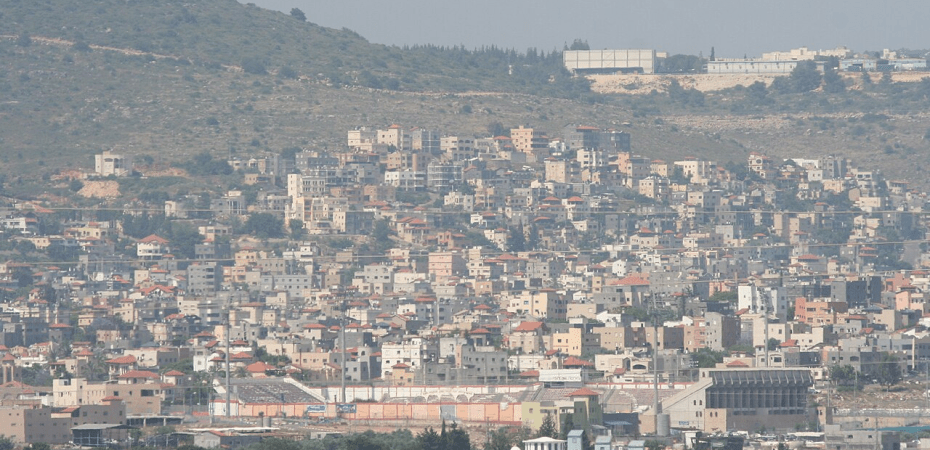
On Thursday, Palestinian citizens of Israel, with a small number of Jewish supporters, demonstrated in the town of Sakhnin, in Northern Israel. The town itself held a rapidly organised General Strike.
Awad Abdulfatah, the former general secretary of the radical Balad party, said shortly afterwards that this was the largest Arab demonstration in the history of the State, exceeding 100,000 participants. Ha’aretz quoted “tens of thousands”, and said it was the largest such demonstration since 2019. The Times of Israel, which has the best English report, hedges its bets.
Whatever the size, it was certainly significant. A parallel, smaller protest was held in the southern city of Rahat, the centre of the Bedouin community in the Naqab/Negev.
It was not over ‘nationalist’ issues, as the Israelis call any action in support of the Palestinian cause, or in solidarity with Gaza. That would never have been permitted, and would have been met with firm action by the Jewish state. Permission for this protest was initially refused as well.
It was protesting the appalling crime and murder rate in Arab communities, the length and breadth of Israel.
In 2025, there were 252 homicides in Arab communities in Israel, the third highest homicide rate in the world. To date in 2026, there have been 22 murders in Arab communities.
It wasn’t always like this. As recently as 2022, there were only 38 such murders. So what has caused this dramatic rise?
The most obvious change is the appointment of Itamar Ben-Gvir as Minster for National Security in December 2022, with response for the police and allied forces and units. Ben-Gvir is also the Chair of the Jewish Power party (Otzma Yehudit) which, as its name suggests, is an organisation proud of its supremacist, violent ideology, which is often described as fascist.
It may surprise those who don’t know much about this subject to know that since then there are armed criminal gangs operating in Israeli Arab communities with impunity. They run extortion and protection rackets, control the drugs trade, and readily shoot to maim or kill. No one is safe; not merchants, Imams, or Mayors. Different gangsters fight for control, like prohibition era Chicago or New York. The streets are a death trap at night, and, not infrequently, by day.
The situation is so bad that thousands of Arab families have left Israel, unlamented by the state.
And the police? They will file a report if they have to. They rarely take meaningful action and they almost never catch the murderers – even though their identity is often known.
It’s hard to escape the conclusion that the gangs are, at the very least, deliberately allowed to operate by the Israeli state itself.
“The [Arab] public has no hope, they understand that the prime minister and the rest of the government ministers have abandoned them,” said Hadash-Ta’al Knesset member Aida Touma-Sliman, who marched in the Sakhnin demonstration.
From time to time, a campaign has succeeded in getting the Knesset to approve budgets for the police to tackle this crime epidemic. Under Ben-Gvir, much of the allocated money remains unspent, or diverted to other projects and pockets.
Palestinian citizens represent over 20% of the Israeli electorate. There have, of course, been many discussions about whether standing and voting for the Knesset is ‘normalisation’ or collaboration, or whether it’s the only way of getting a fairer share of resources, as well as making their voice heard internally and abroad. Majority views have changed back and forth over time.
But after yesterday’s protest, the four main Arab parties (themselves mostly coalitions of smaller groups), announced that they would run as a ‘Joint List’ for the first time since 2020. The overwhelming majority of their electorate have been pressing for this.
It won’t be easy to keep together an electoral coalition that includes ideologies that range from Conservative Islam (Ra’am) to Arab-Israeli Communists (Hadash) and left wing Palestinian nationalists (Balad).
Israel has a national PR system, but with a ‘minimum share of the vote’ hurdle which eliminates small parties. Negotiations for positions on the Knesset list and agreeing the joint programme will be hard and protracted.
On the day of the 2015 elections, Netanyahu warned his voters, who he feared were staying at home, “The rule of the right is in danger. Arab voters are moving in droves to the polling stations. Left-wing organizations are busing them in.” He later claimed that he was only unhappy that they were voting for the Joint List and not objecting to them voting per se.
You can be sure that Israeli state actors and agents will be doing whatever they can to disrupt and undermine the Joint List, and right-wing parties will try to get them disqualified from standing.
Perhaps that’s one reason why we should welcome the announcement of the revitalised Joint List.
Paul Seligman was conceived on a kibbutz, raised in a Zionist family in Cardiff. After High School, he received a year’s training in Israel to be an elite Zionist youth leader. He subsequently lived in Israel on border settlements for several years and served in the IDF. After becoming disillusioned, he returned to Wales and has been involved in campaigns for justice, and Palestinian rights for some 50 years. He has family in Israel as well as Palestinian friends. He posts on X as @PaulMSeligman. He has written previously for Labour Hub on the issue of Palestine solidarity here and here. This article first appeared on Substack here. Read more of Paul’s contributions on Substack here.
Image: Sakhnin https://commons.wikimedia.org/wiki/File:Sakhnin_stadium_and_city.jpg Author: Oyoyoy, licensed under the Creative Commons Attribution-Share Alike 3.0 Unported license.
 Labour Hub
