
By Evie Breese
The government has recently unveiled the most significant changes to immigration rules in decades. These changes will fundamentally alter how people born overseas build their lives in the UK. Set to be applied retroactively, they will put settlement further out of reach for everyone born-overseas who hasn’t already obtained settled status, and reshape British society for everyone.
Despite their widespread, long-term reach, the government has released this set of policies without an Impact Assessment. This means the government does not know how they would affect public services, the economy or our society. A consultation has been launched, but it’s unclear how exactly the public can give their views with so much unknown. This is a procedurally flawed, farcical exercise, hiding a terrifying shift towards a Dubai-style two-tier society of citizens, and non-citizens.
Upwards of half a million people arrived in the UK on the Health and Care Worker Visa or Skilled Worker visa since 2021. They left behind careers and loved ones to take up job offers with Home Office-approved sponsors. The agreement was that after five years of work under the restrictive conditions of sponsorship, in roles that were deemed critical to the UK economy, they would be eligible to apply for settlement.
In a move practically unheard of in immigration policy, the government wants to break this promise. Under the proposals laid out in the “earned” settlement policy, most people will have to wait ten years for Indefinite Leave to Remain (ILR) – double what they were promised.
Inexplicably, migrant carers and other workers in middle income jobs have been singled out for a longer period of fifteen years. Most refugees, save for those who arrived on the Afghan Resettlement Scheme, will face a twemty-year baseline wait, with additional twenty year penalties for anyone who arrived in the UK on a visitor visa or by crossing the channel. While the majority of people without settled status are barred from claiming benefits, under extreme circumstances such as homelessness or destitution, the Home Office can allow them to receive some support. Under the proposals, having legally claimed benefits in the past would mean having an extra five to ten years added to your wait for settlement.
Getting settlement means the difference between being able to change jobs freely, and being tied to an employer, at high risk of exploitation. It allows an individual or a family to feel secure enough to plan for their future, without the spectre of more costly visa applications or risk of overstaying. Stability is needed to put down roots. Denying people the stability of a permanent home only makes it harder to achieve the integration the government claims it wants to create.
It is clear that these proposals punish the most vulnerable. They seek to measure the value of a person in terms of their fiscal contribution alone. The government justifies these harsh reforms by claiming migration is too high and the contribution of low to medium-income migrant workers is too low.
But the data tells a different story. Migration is already falling, and is projected to fall further, due to a recent series of policy restrictions that have increased minimum salary thresholds, limited the roles eligible for sponsorship, and reduced migrants’ abilities to bring dependants.
In terms of “contribution”, migrants on the Skilled Worker visa, including in medium-skill roles, actually make a net positive contribution to public finances. Care workers answered former PM Boris Johnson’s plea for help following the Covid-19 pandemic that decimated the care sector. The UK care sector remains in desperate need of carers for our ageing society.
Yet in response to a parliamentary question from Poole MP Neil Duncan Jordan, the government admitted it does not know how many NHS workers could be affected by its proposed immigration reforms.
If they go ahead, these plans will make the UK system one of the harshest in the Western world, and put bona fide British businesses at a serious competitive disadvantage. In Germany, France, Canada, and Australia, migrants are typically offered settlement after three to five years. We urge every MP with a conscience to stand against them.
Without an Impact Assessment, we cannot be sure of the long-term impacts on our economy, job market or public services. But with the NHS already on its knees, pushing migrant care workers, nurses, doctors and other medical professionals further away, is certainly not going to help. What we can be certain of though, is these proposals widen the divide between people born in the UK, and people who weren’t, fuelling racism, xenophobia, and a fractured society.
How you can take action
The Work Rights Centre, in collaboration with Unison and Labour MP Neil Duncan Jordan, is hosting an event in Parliament to help MPs understand how these proposals will impact workers, businesses and communities.
Please write to your MP to ask them to join us on Wednesday 4th February at Portcullis House, to hear directly from migrant workers themselves.
Send the following invitation to your MP (find their email address here). Remember to include your name and postcode at the end:
As your constituent, I am deeply concerned about how the plans to restrict settlement will impact migrant families and individuals already living in the UK. Under these proposals, their wait for settlement would double to 10 years, or even longer for care workers, refugees, and the most vulnerable.
Please listen to migrant workers themselves to understand just how damaging these plans will be. In partnership with Neil Duncan-Jordan MP and Unison, the Work Rights Centre is putting on an event in parliament where you will be able to meet affected people, hear the evidence, and understand the impact on UK businesses and the care sector.
When: Wednesday, 4th February 17:00 – 18:30 (Speeches at 17:15, but drop-in welcome throughout) Where: Boothroyd Room, Portcullis House
Can you or a member of your team attend? Please RSVP at andrei.savitski@workrightscentre.org
Evie Breese is Senior Communications Officer at the Work Rights Centre.
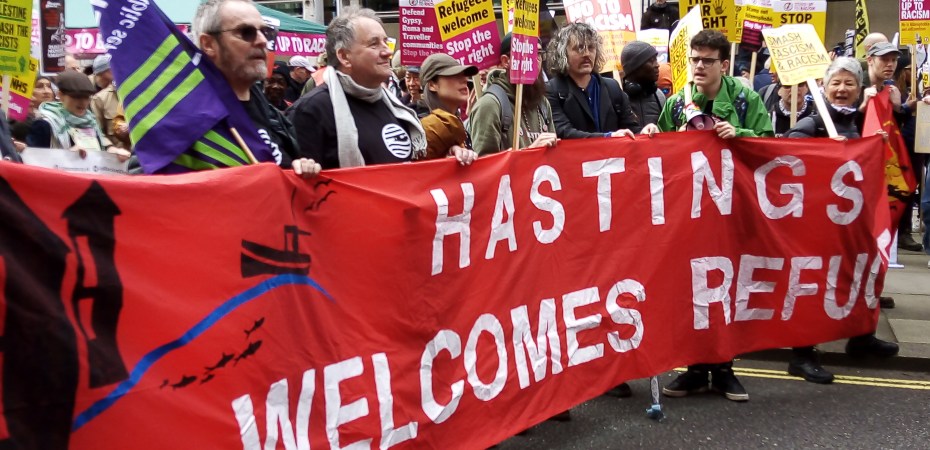
Image: c/o Labour Hub.
 Labour Hub
[…] more on Labour Hub about the Government’s proposals here and here, and edited extracts from this week’s Parliamentary debate […]