
The Universal Credit (Removal of the Two-child limit) Bill will be debated in the House of Commons for the first time today. Erin Mansell writes.
MPs will vote today on the second reading of the bill to remove the two-child limit, bringing a long-overdue change a step closer to becoming law. The government has recognised that the link between need and support in our social security system is broken, and scrapping the two-child limit is a landmark move towards repairing it. It marks the end of a policy that deepened hardship for the poorest families and imposed the horrific requirement on women to prove they were raped in order to qualify for an exemption.
For some of the poorest households, that relief will be partial and short-lived. The government’s own impact assessment shows that around 60,000 families will see some or all of their newly available support clawed back by the benefit cap, which arbitrarily limits the amount of social security a household can receive unless they earn the equivalent of 16 hours a week at the minimum wage. For single parents – most of whom are women – balancing paid work with caring responsibilities is a far harder juggling act than for dual-parent households, which is why they make up nearly 70% of families affected by the cap.
As a result, we estimate that on average single mothers who benefit from the lifting of the two-child limit will lose around half of what they gain because of the benefit cap, limiting its impact on lifting children out of poverty. Women are already more likely to skip meals or fall into personal debt just to cover daily living costs. At the very least, the benefit cap must be uprated in line with inflation, as some of the poorest families are currently facing a real-terms cut in support while continuing to struggle with the cost of living crisis, but ultimately the cap should be scrapped.
Erin Mansell is Interim Deputy Director at the Women’s Budget Group, the UK’s leading feminist economics think tank, providing evidence and analysis on women’s economic position and proposing policy alternatives for a gender-equal economy. WBG acts as a link between academia, the women’s voluntary sector and progressive economic think tanks.
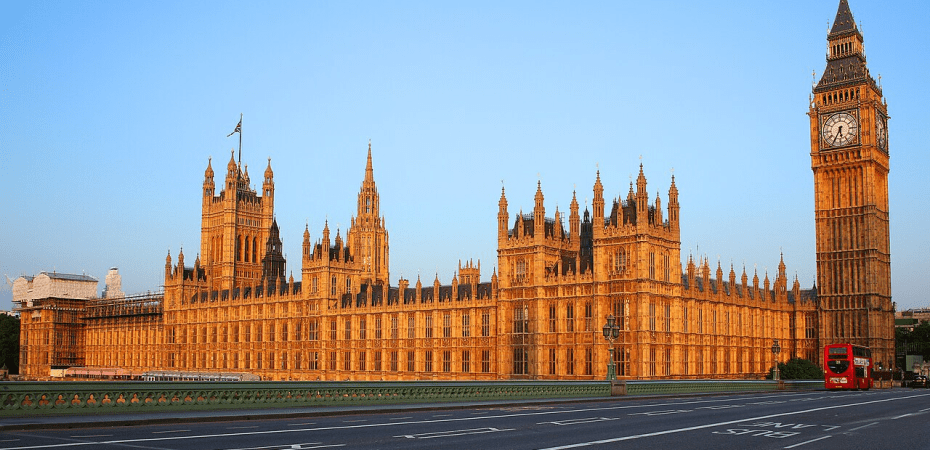
Image: https://commons.wikimedia.org/wiki/File:British_Parliament_(14749841802).jpg Source:
British Parliament. Author: Rennett Stowe from USA, licensed under the Creative Commons Attribution 2.0 Generic license.
 Labour Hub
.jpg)