
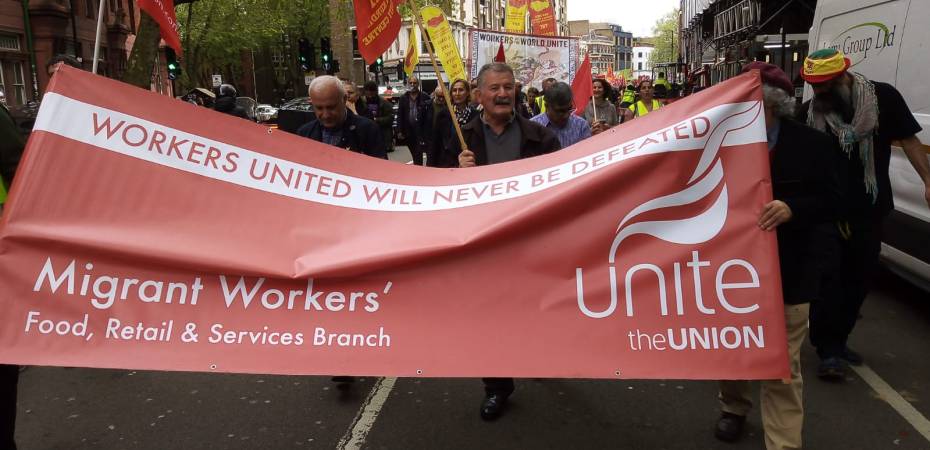
Minister confirmed that they will go ahead with proposed changes to immigration rules on Monday during a packed parliamentary debate in which a number of Labour MPs expressed opposition to the unfairness of the new proposals.
The debate was triggered after two petitions received 330,000 signatures from members of the public. A number of backbench Labour MPs spoke in the debate, highlights of which are reproduced below.
Tony Vaughan (Folkestone and Hythe): The Government are now considering doubling the wait for settlement from five years to 10, and up to 15 years for care workers. One of the most contentious elements of the consultation is that that will apply to people who are already here. I fundamentally oppose that rule change. Migrants entered this country on a contract, and the deal was simple: if they came to work in the sectors where we needed them, obeyed the law and paid their taxes, they could stay. Changing the terms of that contract after people have spent years building a life here is not just bad policy but a breach of trust…
The Government suggest a system of credits, for things including “social contribution”, to shorten the 10-year wait. On the face of it that sounds reasonable, but its proposed definition is dangerously narrow. It includes the police and the NHS but inexplicably, in my view, excludes care workers in the private sector. Why are we proposing a bureaucratic minefield of “volunteering credits”, which could be very difficult to verify, while ignoring the immense social value that care workers give during a 12-hour shift looking after our elderly? Their job is their contribution, and that should be the credit…
I am also concerned about the proposal to place lower earners, including most care workers, on the 15-year route to settlement. We have heard about the problems of recruitment, and that will certainly make the position worse. If we tell a care worker they must wait 15 years for security, while Australia offers it in three and Canada in five, they will simply vote with their feet. We risk becoming a training ground for economic competitors: recruiting talent, training them up and then watching them leave for jurisdictions that offer them a stable future…
Bell Ribeiro-Addy (Clapham and Brixton Hill): According to the Royal College of Nursing, 60% of internationally educated staff without ILR have said that it is very likely that extending this qualifying period will affect their decision to remain in the UK. That equates to 46,000 nursing staff at risk of leaving the UK.
Rebecca Long Bailey (Salford): Even after gaining indefinite leave to remain, people would have no recourse to public funds—settled in name, but excluded in reality. For women fleeing domestic abuse, disabled people, and the LGBT communities, the impact will be cruel and profound.
The problems reach beyond skilled worker routes. Charities and clinicians in the asylum system warn that prolonged insecurity deepens trauma and drives people into destitution. Earlier access to work, settlement and citizenship improves outcomes for individuals and the communities they join. A humane asylum system, with safe routes and timely decisions, is not an act of charity, but an investment in social cohesion.
Abtisam Mohamed (Sheffield Central): Many people uprooted their lives, accepted jobs, bought homes, enrolled their children in schools and planned their futures in good faith, on the understanding that settlement after five years was the agreed pathway. They are now being told, midway through that journey, that the rules have changed. Retrospective application of this policy would be not only deeply unfair, but entirely unjustified…
The proposals… risk recreating the very conditions that defined the hostile environment: long-term uncertainty, barriers to stability, and communities living with the constant fear that the rules could change again. When my constituents hear migration described as a destabilising event and migrants framed as a burden to be managed, and see policies recycled from failures of the past, they know that this is not reform, but a road to insecurity and division.
John McDonnell (Hayes and Harlington): Families have settled, sold their accommodation and everything in their home, worked hard and delivered everything asked of them, and we are going to deny them and their children the right to the future that they hope for. If this goes ahead, every one of us will report social care collapsing in our constituencies.
Mark Sewards (Leeds South West and Morley): Around 30% of the families I have spoken with are due to receive their ILR within the next six months, so they are understandably very anxious about what the changes will mean for them. The vast majority are high earners or work in key sectors…
Because at least one member of those families is earning a high salary, their spouse or partner has been able to move into part-time work, often so that they can help raise and care for the children. They are very worried that, as a result, they will not meet the new criteria at the same time as their partners. They came to this country under one set of rules, which allowed dependants to move to the UK with them, and now they are very concerned at the prospect of being unable to qualify together and being broken up entirely.
Melanie Onn (Great Grimsby and Cleethorpes): If we want a system that commands confidence, we must not create incentives for silence, exploitation and instability in our essential services. Making changes for future arrivals can probably just about be explained, but making retrospective changes for those who are already here, and who often work in our essential public services, risks undermining workforce stability and basic fairness.
Brian Leishman (Alloa and Grangemouth): The Government’s proposal for pathways to settlement introduces a new 10-year baseline for people, including those granted refugee status, with time added or taken away for circumstances seen as favourable or unfavourable to the Home Secretary of the day. If someone was to arrive via illegal routes, that adds 20 years to the baseline, meaning it would be 30 years before they could apply for citizenship. Bear in mind that arriving by an irregular route is almost unavoidable due to the virtual nonexistence of safe and legal routes. It must be acknowledged that claiming asylum is a human right; it is not an abuse of any system. Proposals that differentiate between regular and irregular arrivals are unequal at their very core. Differentiating would create an inferior class of people, whose need for protection might well be internationally recognised, but whose long-term status is kept deliberately precarious…
I say to the Minister: Labour must do better than copying the right-wing parties and demonising immigrants and asylum seekers.
Gareth Thomas (Harrow West): I echo the concerns of many in the Hong Kong community in Harrow, who are concerned about their status and their route to indefinite leave to remain…
I am concerned that too often we shy away from recognising the economic and cultural contribution that those from outside our country make to our communities. They make the UK home. It is not Britain being exploited; we gain from the talent, imagination and hard work that migrants bring to our country.
Steve Witherden (Montgomeryshire and Glyndŵr): The proposals risk fuelling exploitation, deepening poverty, destabilising already fragile sectors and doing real harm to the wider economy. Under the new system, so-called medium-skilled or lower-paid workers, including nursing, healthcare and social care staff, could face a staggering 15-year wait before being eligible for settlement. That is not a pathway; it is a prolonged period of insecurity…
It is not migrants who have weakened our public services; it is successive Governments who have done so through underfunding and privatisation.
Cat Eccles (Stourbridge): Contrary to what many believe, the process of getting ILR is difficult and costly, so there is no need to make it even more difficult by increasing the eligibility period…
The NHS and social care sector employ thousands of people on work visas to cover workforce shortages, including one of my constituents, who is a healthcare assistant living in limbo due to these proposals, with a salary just £60 a year under the arbitrary threshold. Although we do not have robust data in that area, conservative estimates suggest that about 25,000 doctors and 50,000 nurses will be impacted.
Apsana Begum (Poplar and Limehouse): I must take the opportunity today to ask the Minister the following questions. When will the impact assessments be published? Given the potentially wide-ranging impacts on all our communities and the economy, including on local authorities and voluntary service providers, how does the Home Office reconcile the potential impacts of the proposals on migrant families with the Government’s wider commitments to reduce child poverty and homelessness in particular, as laid out in their respective strategies published last year?
How can the Home Office justify retrospective applications of the changes to more than 1 million people who came to the UK on the understanding that they would be able to settle after five years? For the educators in my constituency, many of whom contacted me over the weekend, I ask: will the changes apply to all staff in the education sector? As we know, professional services staff in the education sector play an essential role, but their salaries make alternative settlement routes inaccessible.
Like many of my constituents, I am alarmed by the harm that the changes will inflict on our population. They will undermine integrity, integration, workforce stability, efforts on child poverty and our ambitions to tackle violence against women and girls.
Jas Athwal (Ilford South): Nearly 3,000 residents in Ilford South signed the petitions. They are not asking for special treatment; many have never claimed benefits and do not intend to. They are simply asking that the rules they came under are upheld.
Lee Pitcher (Doncaster East and the Isle of Axholme): The care sector is under immense pressure. Many of the people affected by the change are doing demanding, often lower paid, but essential work: caring for our parents, grandparents and some of the most vulnerable people in our society. Removing certainty from that workforce risks deepening existing shortages and undermining continuity of care.
Mary Kelly Foy (City of Durham): Migrant workers, particularly in social care, are too often trapped by sponsorship rules that tie their legal status to their employer… In practice, sponsorship rules mean that migrant workers and particularly care workers are living under conditions that resemble indentured labour. When settlement is pushed further away, that vulnerability is prolonged. By extending the route from five to 10 years, we are effectively handing a bad boss 10 years of leverage instead of five.
Rachael Maskell (York Central): The problem at the heart of the White Paper is the wrong diagnosis and the wrong prescription… We have a serious skill shortage across our country. Our health and care systems are creaking… If we put skills at risk and create insecurity, our economy will not function, our public services will continue to crumble and our society will be worse off, causing more pain across those communities that desperately look to Labour to find solutions.
I therefore say to the Government that the only place where this policy belongs is in the bin.
Perran Moon (Camborne and Redruth): I am deeply uncomfortable with the principle of changing the rules for people already in the UK who have so often experienced huge upheaval to settle in the UK. They described to me having made decisions about work, housing, education and family life based on the existing five-year pathway. Many have shared the emotional toll of the uncertainty that they are now experiencing.
Patricia Ferguson (Glasgow West): Research by Unison indicates that, of the more than 3,000 people who have come to the UK recently to work in the care sector, 15% paid money to an employer for the privilege; 31% had problems with their pay not being given to them on time; and some were not paid for travel times between care visits or were penalised when they were ill. Many reported racial abuse, including verbal and physical abuse…
Often, the threat of a visa being revoked or of a worker being returned to their home country is used to stop people speaking up about poor conditions. As Unison argues, a sector-wide sponsorship scheme, run by a public sector body, would take away those fears and reduce the costs incurred when a worker moves jobs.
Warinder Juss (Wolverhampton West): These people are here legally; we should be making it easier for them to become settled citizens, not more difficult. Our diversity and multiculturalism are what makes our country great. We should protect legal migrants, not only to enable them to better their lives but to better our lives, too.
Tracy Gilbert (Edinburgh North and Leith): The situation is unfair. That is not just my view but the view expressed in court. In its 2008 judgment on R (HSMP Forum Ltd) v. Secretary of State for the Home Department, the High Court considered changes to what was then the highly skilled migrant programme. The changes would have retrospectively extended the qualifying period for any person to apply for indefinite leave to remain. In its ruling, the High Court said that applying new rules retrospectively was unfair and unlawful, and that migrants had a legitimate expectation that the rules that they were initially granted would continue to apply. If the changes proposed by the Government are enacted on a retrospective basis, it is likely that the High Court will take a similar view on applying the changes as it did in 2008.
Josh Newbury (Cannock Chase): The proposal that people in so-called “lower-skilled roles” could face qualifying periods of up to 15 years is causing concern, particularly for those in social care.
The people I met pointed out that social care requires extensive training, safeguarding responsibilities, emotional resilience and compassion, but often is not well paid, meaning that they will not reach the income thresholds under the Government’s contribution proposals. They are not asking for special treatment. They made a constructive suggestion: could those who demonstrate a long-term commitment to care work and continued professional development have access to quicker settlement?
Kirsteen Sullivan (Bathgate and Linlithgow): Those people budgeted for visa fees, planned family life and made long-term decisions on the understanding that after five years they could apply for settlement. Extending that to 10 years means five more years of uncertainty and thousands of pounds in additional costs. For families, it means children growing up with prolonged insecurity and uncertainty.
Martin Rhodes (Glasgow North): Currently, as others have mentioned, a migrant care worker’s visa is tied to their employer, which opens up the potential for abuse. It creates a situation of dependency where a bad employer can exploit their staff knowing that those staff will not risk speaking out because their visa relies on that employer. That power dynamic strips migrant care workers of their bargaining power. We need to rebalance the power dynamic between migrant care workers and their employers.
Sarah Hall (Warrington South): I have met and heard from NHS clinicians, care workers, engineers, researchers, academics, teachers and other skilled professionals, some only weeks away from being able to apply for settlement under the current rules…
Some of the concerns that came up were about a single national income threshold that ignores regional pay differences. People working full time in vital jobs in Warrington cannot simply magic their wages up to a national figure. Many described normal career progression in highly skilled roles, with salaries starting lower and growing quickly, while others explained how visa restrictions limit their ability to move into higher-paid work.
Barry Gardiner (Brent West), Patrick Hurley (Southport), Jayne Kirkham (Truro and Falmouth), Pam Cox (Colchester), Dr Scott Arthur (Edinburgh South West), Sojan Joseph (Ashford) and Euan Stainbank (Falkirk) also spoke against the Government’s proposals.
Image: c/o Labour Hub
 Labour Hub
[…] Read more on Labour Hub about the Government’s proposals here and here, and edited extracts from this week’s Parliamentary debate here. […]
[…] letter comes hot on the tails of a packed Westminster Hall debate where nearly 50 Labour MPs spoke against the Home Secretary’s plans. There are concerns the […]
[…] 2025, she is responsible for the Reform-aping tough stand on migration, the much-criticised changes to Indefinite Leave to Remain, widely slated by her own backbenchers as cruel and unfair, and a proposed crackdown on the right […]
[…] proposal to make migrants wait longer before being allowed Indefinite Leave to Remain, which large numbers of Labour backbenchers outspokenly criticised in […]