
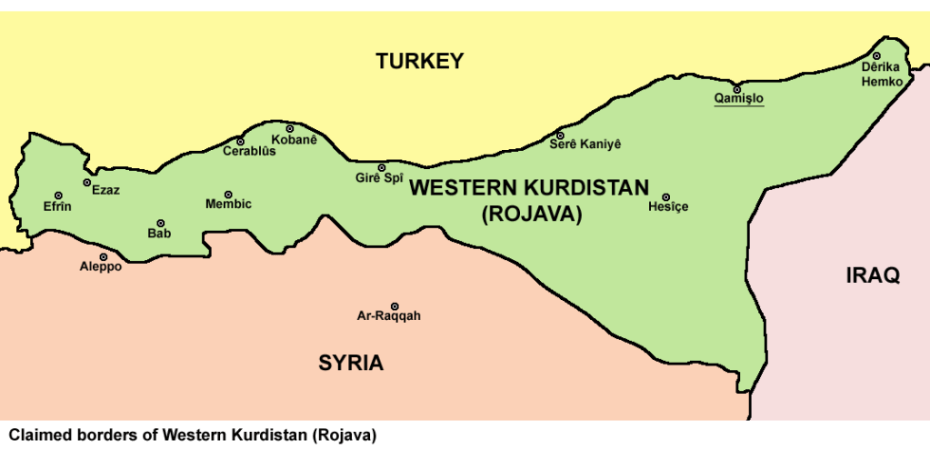
Dashty Jamal, just returned from Kurdistan, reports on the fragile situation in Rojava.
The Military Escalation of 2026
On January 13th, 2026, a dangerous new chapter of the Syrian conflict began. The ‘Islamic–Daesh Syrian Government,’ led by Ahmad Shar’a (also known as Mohammad al-Jolani), launched a massive military offensive. The attacks first targeted the Kurdish neighbourhoods of Sheikh Maqsoud and Ashrafiyah in Aleppo, where over 200,000 civilians, primarily internally displaced persons (IDPs), reside.
This offensive quickly spread to other regions previously managed by the Syrian Democratic Forces (SDF). It was not a random attack; it was a systematic attempt to destroy Kurdish self-administration. This campaign has resulted in the displacement of an estimated 150,000 people in just the first two weeks of fighting. During this period, at least 13 civilians were killed and over 64 injured in Sheikh Maqsoud and Ashrafiyah alone. The government forces repeatedly shelled or attacked these neighbourhoods with drones, destroying or damaging over 300 homes and hitting the only operating hospital in Sheikh Maqsoud several times, leaving the Martyr Khaled Fajr hospital without power since January 8th.
The Paris Agreement: A Secret Deal
This military campaign did not happen by accident. It was the direct result of the Paris Agreement, a deal allegedly negotiated between the Syrian regime, the United States, Israel and Turkey. This agreement effectively handed control of all Syrian territory to Ahmad Shar’a’s government.
To make this deal work, the US and its allies put immense pressure on the SDF to surrender. By doing this, the United States granted strategic power to Ahmad Shar’a, a man designated as a terrorist. His forces have historically caused instability and fear for millions of Syrians. This shows that for Washington, a regime led by a terrorist is acceptable as long as it serves American strategic interests.
Global Resistance and Solidarity
In response to this attack, a massive wave of popular protest erupted. In more than 40 cities worldwide and across all parts of Kurdistan, freedom seekers, human rights defenders, and socialist movements stood up in solidarity.
These demonstrations were vital in exposing the regime’s atrocities. The world remembers the heroic resistance in Kobani in 2014, where the YPG (People’s Protection Units) and YPJ (Women’s Protection Units) defeated ISIS. Today, those same people are being used as bargaining chips in a global power game.
The Current Situation: Siege and Suffering
Although a ceasefire was announced on January 30th, the danger is not over. The SDF was forced to accept harsh conditions, including handing over administrative control and military positions to the central government and Turkey.
The humanitarian cost is staggering as follows:
- Kobani Blockade: The city of Kobani has been under a total blockade by Shar’a’s forces for over 30 consecutive days.
- Displaced Families: Thousands of families remain displaced, living in unstable conditions, unable to return to their homes.
- Access Denied: Essential supplies like medicine and fuel are being blocked from entering Kurdish-majority areas. The Kurdish Red Crescent has been denied access to retrieve the wounded and bring them to hospitals.
- Overall Humanitarian Need: In 2026, an estimated 16.7 million people across Syria need humanitarian aid.
Why Existing ‘Solutions’ Are Failing
The international community often suggests solutions like ‘decentralization,’ ‘federalism,’ or ‘mother tongue education.’ However, these are not real solutions. They are designed to keep the current borders intact while giving nationalist leaders a seat at the table. These models do not end ethnic tension; they deepen it by segregating people based on their background.
Any decision made without the free will of the people, whether it is an agreement between the US and Turkey or a deal with nationalist parties is illegitimate.
A Real Solution: Equality, Secularism, and Self-Determination
The Kurdish people deserve to live as equal citizens. We believe the only way forward is through:
- Secular and Non-Ethnic Government: We need political systems that protect individual and civil rights for everyone, regardless of religion or ethnicity.
- Peaceful Coexistence: Promoting shared citizenship strengthens the working class and ends the cycle of war.
- The Right to Self-Determination: In regions where Kurds have faced years of national oppression, the people must be allowed to decide their own future. We call for a free and fair referendum in Kurdish-speaking areas. Without any external pressure, the people should choose: do they want to stay within the current state as equal citizens, or do they want to establish an independent state? Whatever they choose, their decision must be respected.
The Way Forward: Working Class Unity
Finally, the only way to end war and inequality is through the unity of the working class across all nationalities. By standing together against capitalism and for a socialist society, we can secure lasting peace, justice, and prosperity for every person in the region. We reject the power games of imperialist states and demand a future built on the free will of the people.
Dashty Jamali is Secretary of the International Federation of Iraqi Refugees.
Image: https://commons.wikimedia.org/wiki/File:Rojava_cities.png Rojava cities. Author: WikiEditor2004, licensed under the Creative Commons CC0 1.0 Universal Public Domain Dedication.
 Labour Hub
