
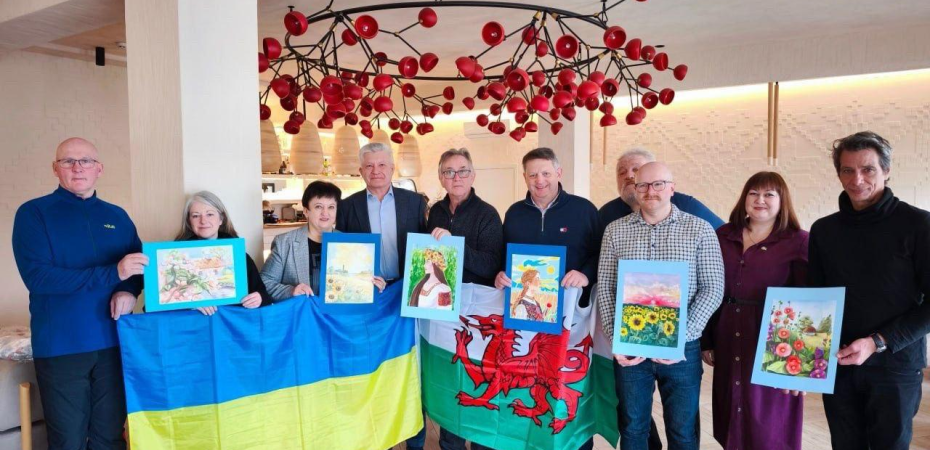
Just returned from a vital aid mission, Mick Antoniw MS reports on the mood among Ukrainians four years on from Russia’s full-scale invasion and sets out what needs to happen now.
Four years ago, I was in Ukraine just before the invasion. I have just returned from Kyiv, Pavlohrad and Dnipro as part of the Welsh Parliament Cross-Party Group Senedd4Ukraine, where I met with soldiers fighting on the front line and the Ukrainian Mineworkers trade unions.
Our team of 13 included Welsh Parliament politicians, former miners and trade union officials, as well as two Americans ashamed of Trump’s collaboration – a truly international team.
We delivered another six vehicles and vital medical supplies and equipment for front line units.
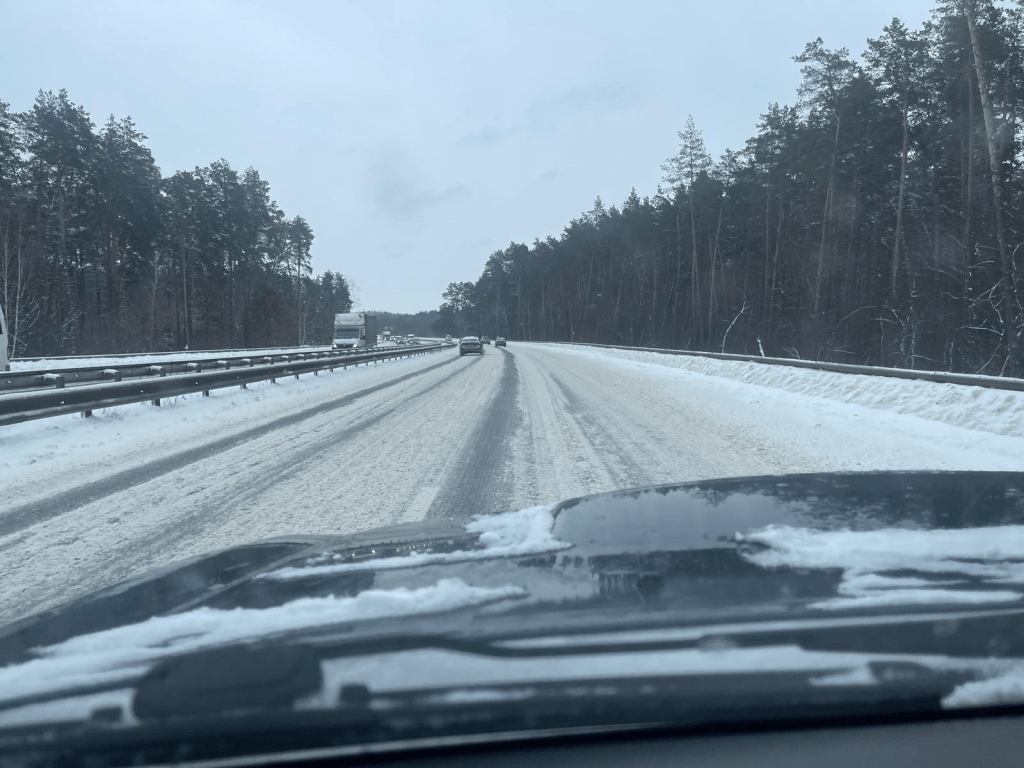
Weather conditions were treacherous. We faced snow, black ice and freezing conditions on the road to Kyiv and treacherous driving 500 miles to Pavlohrad and then Dnipro. It was a round trip of over 2,000 miles.
In Kyiv, we met with the Independent miners’ union and serving members direct from the Kharkiv and Sumy front lines. They came and went, urgent to get back to their comrades. In Pavlohrad, some of the vehicles were already on the way to Pokrovsk where Ukrainian forces are bit by bit pushing back the overstretched and exhausted Russians. Last month, Russia lost an estimated 35,000 killed or wounded.
The mood in Pavlohrad is sombre, angry and resilient. Earlier this month, Russia bombed a bus of miners returning from shift. Nine members were killed and more wounded. Survivors were then hunted by further drones.
The funerals have taken place and there are memorials in their memory. The trade union is ensuring the families are supported and looked after.
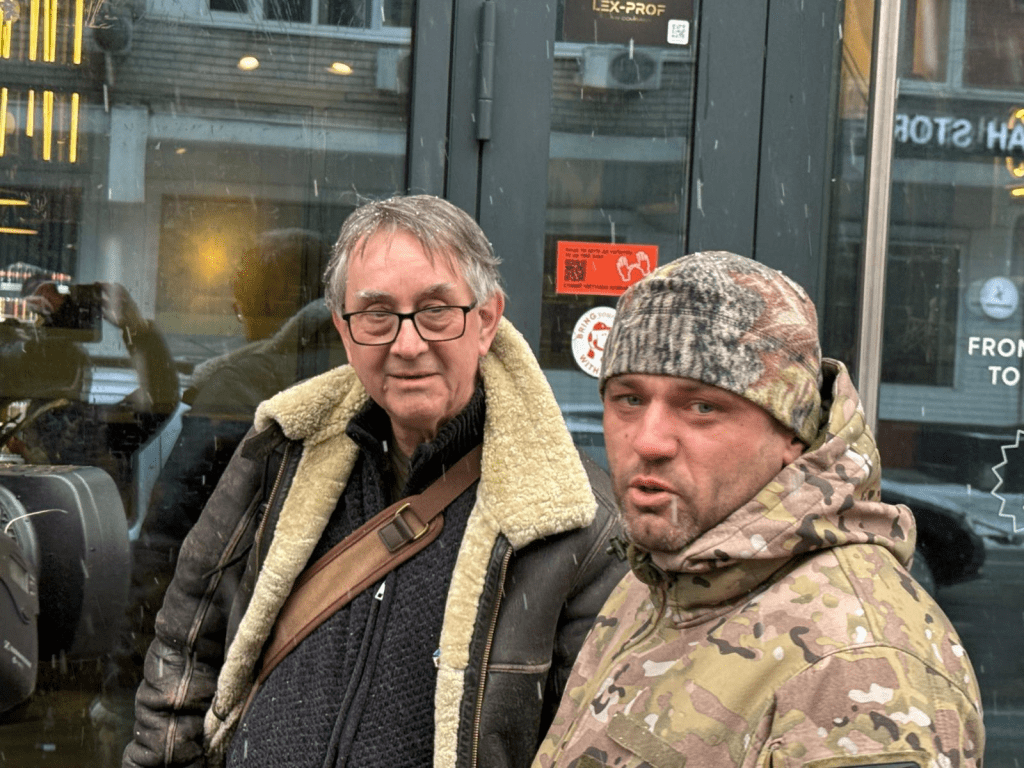
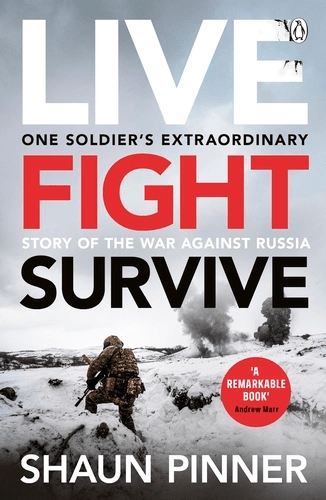
On to Dnipro, where we met with Shaun Pinner a former British soldier who is married to a Ukrainian and joined the Ukrainian army, fought at Mariupol and was subsequently captured, tortured and whose book Live, Fight, Survive describes the brutality of capture under the Russian fascists. Sentenced to death, he was subsequently part of an exchange for Ukrainian traitor Medvedchuk who had been captured by Ukraine as he tried to flee the country.
Our sixth and fifty-fifth vehicle to date went to my cousin’s unit fighting on the Zaporizhzhia front.
So, what is the current situation in Ukraine? It is freezing cold. Attacks on civilian buildings and energy infrastructure are having a disastrous impact on living conditions; yet all around public services are back up and running. The metro is operating. Substitute warm areas and food are provided. Energy is gradually being restored and importantly spring is on the way. The bars and restaurants are still mainly open. Everywhere there is the hum of generators.
Everyone I spoke to was resolute. Russia cannot win. They are losing, their economy is failing. Ukraine is now hitting back with devastating effect on its oil and gas production. Recently they destroyed various air defences deep into the Russian Federation, and missile production factories.
But it is very hard. Everyone wants peace but they do not believe Putin wants peace, not unless he is forced into it. Politically he is clamping down still further on dissent and social media. Russia is truly a fascist state now. Yet dissent is growing in the Russian Federation, those ethnic non-Russian countries still controlled by Moscow which are increasingly dissatisfied with the ruination of social facilities, the lack of investment in public services and the death toll which disproportionately is impacting on the ethnic minorities. Prices and inflation are rising. Food and basic products are increasingly expensive and even not available.
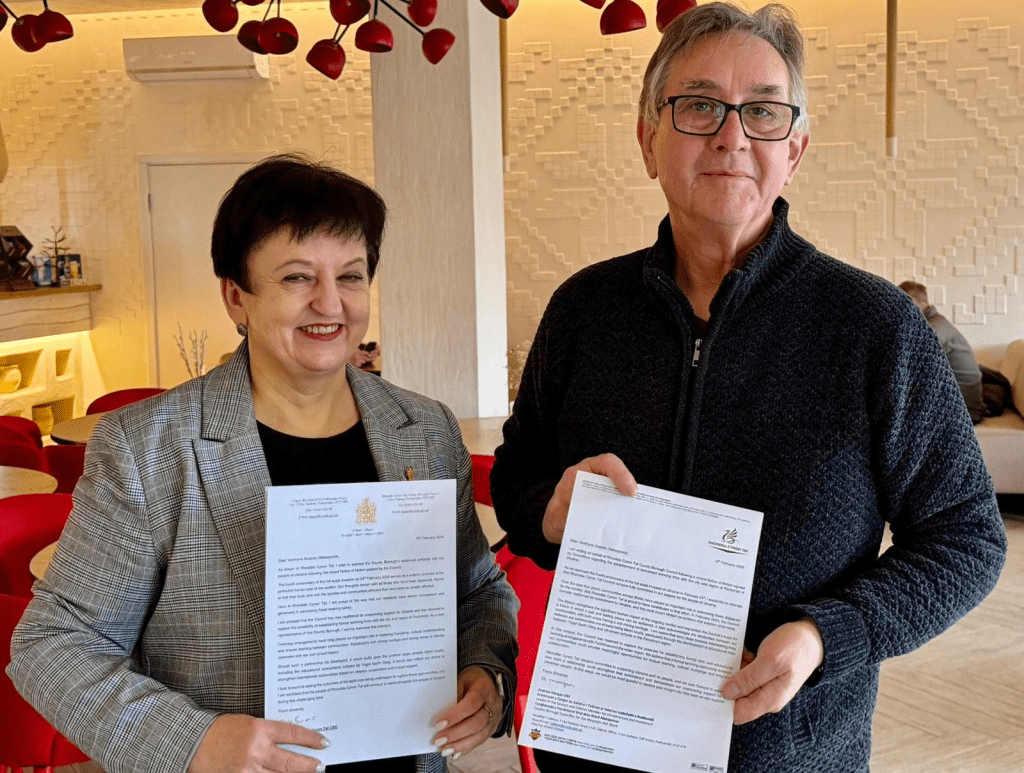
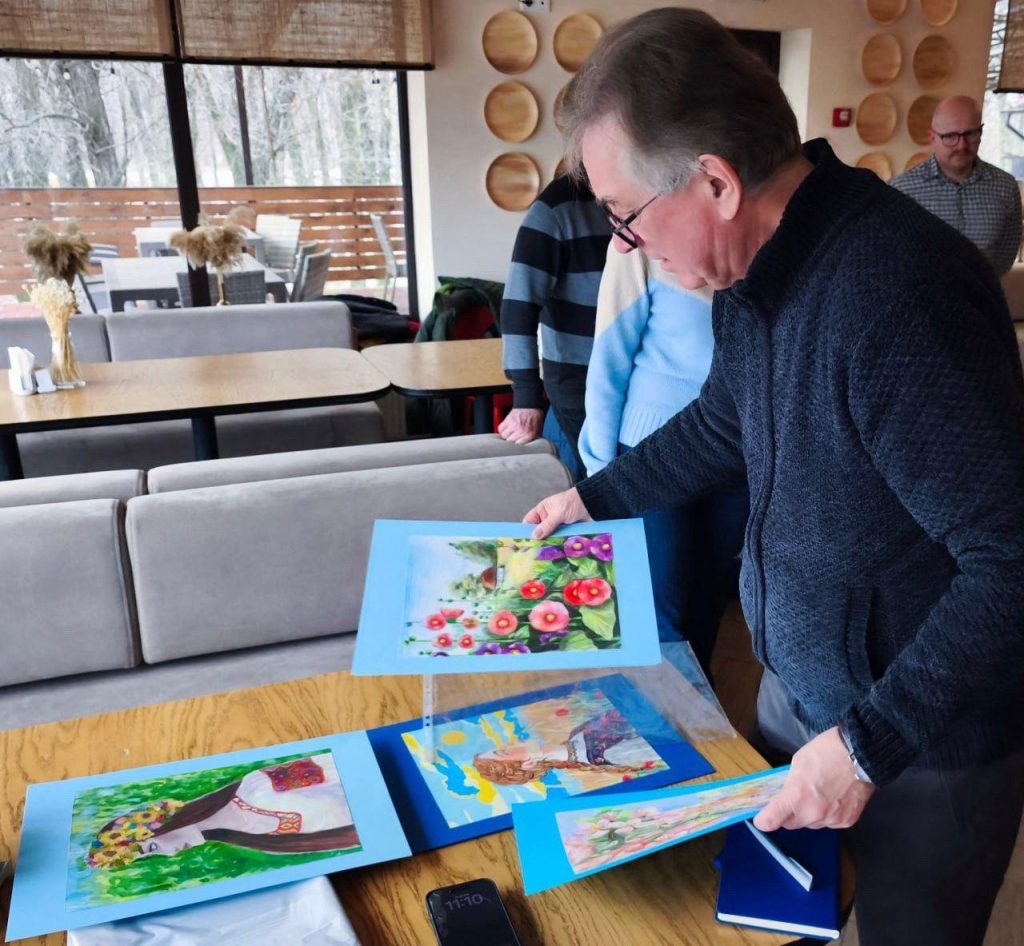
In Pavlohrad I handed letters to the Deputy Mayor from Rhondda Cynon Taf Council to explore twinning – one former mining area with another. This solidarity is truly amazing as were the beautiful paintings from school children who were asked to paint images of how they see a future Ukraine. Optimism and belief ooze through their paintings.
So what are the lessons and conclusions on these latest meetings, discussions and conversations?
There is no faith in the USA. But people do believe that Ukraine is part of Europe and must join the EU. There will be no peace without genuine security for Ukraine. Everyone believes that a peace on any other terms will be only temporary and unacceptable. Ukraine will not hand over unoccupied land. Russian is now being forced back, an example of its deeper weakness. It is losing more men than it can recruit amidst a growing economic deterioration.
Ukraine is still not getting the weapons it needs for air defence but the UK is recognised as probably its most resolute supporter, alongside France and Germany.
Trump’s connivance with Putin is perpetuating the war. Putin is maximising his reliance on Trump’s Presidency prior to the mid-term elections.
Trump is seen as an ally of Putin alongside other far right and proto-fascist leaders of Hungary and Slovakia, Orban and Fico.
They have threatened to cut off electricity to Ukraine unless they are allowed to import Russian oil and gas. Their recent meetings with Russia and the US have consolidated their connivance with Putin.
But geopolitics continue to change. Orban is soon likely to be gone and Trump neutered by the mid-term US elections.
Either way there is no likelihood Ukraine will concede their red lines: no hand over of non-occupied territory, no recognition of Russian sovereignty of Crimea or any occupied area.
The tide is turning. The pressure is now on Putin. Trump has lost his leverage and it is up to Europe to take the lead in diplomacy, but also in sanctions. The events at the Winter Olympics, allowing Russian athletes to participate and to allow Russian flags to fly at the Paralympics, illustrate the corruption at the heart of international sport. Ukrainians want the world to boycott Russia. Just as we campaigned for this against apartheid South Africa, so must we against Putin. Countries that commit war crimes and breach international law should not be afforded the respectability and comfort of International sport and culture. The pressure on Russia now needs to be escalated.
Europe must now step up and exploit Putin’s weakness. Defending Ukrainian skies, to protect the civilian population is now essential. We have the capacity to shoot down missiles and drones. We have the legal right under international law and the Budapest agreement to do so.
All we are missing is the strength or willpower and recognition that this could be the most important step to bringing the war to an end. Putin cannot win on the battlefield so he hopes to win by attacking the civilian population and using terrorism. He must not be allowed to succeed. Press on with the war crimes tribunals and press on demanding the use of Russian frozen assets for the defence and reconstruction of Ukraine.
We are relearning the lessons of Munich 1938. You cannot appease fascism. I still have the belief that Putin and his collaborators will one day face a war crimes tribunal.
Mick Antoniw MS is the Labour Senedd Member for Pontypridd and a founding member of Ukraine Solidarity.
Statement by UK trade unions in solidarity with Ukraine, on the fourth anniversary of the full-scale invasion
The statement below has been issued by UK trade unions, in association with the Ukraine Solidarity Campaign, on 23rd February 2026, for the fourth anniversary of Russia’s full-scale invasion of Ukraine on 24th February. All the signatories are General Secretaries signing on behalf of their unions, all of which have policy in support of Ukraine made by their members through their democratic structures. In addition to support from the Trades Union Congress (TUC), the nine unions supporting the statement represent a clear majority of organised workers in the UK.
On the fourth anniversary of Russia’s full‑scale invasion of Ukraine, UK trade unions reaffirm our solidarity with Ukraine, its workers and their unions. Ukraine’s workers are not only defending their country but are standing up for democratic rights, freedoms and labour standards that underpin our movement. We send our greetings to our sister organisations, the FPU and KVPU, and commit our continuing support for them.
As Putin’s war of aggression enters its fifth year, Ukraine’s workers continue to face unrelenting violence. Systematic attacks on the energy system have plunged towns and cities into darkness, shutting schools and hospitals and placing entire communities at risk. Energy workers are restoring power under fire, often at immense personal danger, to keep people safe through severe winter conditions.
Russia’s deliberate targeting of civilians and infrastructure is a grave breach of international law and is deepening Ukraine’s humanitarian crisis as temperatures fall well below freezing.
Working people always bear the heaviest cost of war. On 1st February, fifteen miners were killed when a Russian drone struck their bus in the Pavlohrad district. In territories under Russia’s illegal occupation, reports expose forced labour, the suppression of trade union freedoms and the violent mistreatment of workers, alongside the wider killing and torture of civilians.
Tens of thousands of children have been abducted by Russia and subjected to abuse on an industrial scale. As always, women, oppressed minorities and children also bear the brunt of war.
We stand with Ukrainian unions in their call for the restoration of labour rights and for a socially just reconstruction that embeds collective bargaining and rejects deregulation and privatisation.
We also stand with Ukrainian and other refugees in the UK and insist that their rights and safety are upheld.
The UK trade union movement has a proud history of standing in solidarity with victims of fascism and imperialist aggression.
A victory for Putin’s regime would embolden authoritarian and far-right forces globally.
We therefore reaffirm our support for the Ukrainian people’s right to determine their own future, call for the immediate withdrawal of Russian forces from all occupied territories, and support Ukrainian trade unions’ appeals for the UK to provide the aid necessary to help secure a just and lasting peace.
Paul Nowak, General Secretary, Trades Union Congress; Andrea Egan, General Secretary, UNISON; Sharon Graham, General Secretary, Unite; Gary Smith, General Secretary, GMB; Daniel Kebede, General Secretary, NEU; Joanne Thomas, General Secretary, USDAW; Fran Heathcote, General Secretary, PCS; Jo Grady, General Secretary, UCU; Dave Calfe, General Secretary, ASLEF; Chris Kitchen, General Secretary, NUM.
 Labour Hub
[…] Oleksandr Kyselov interview/ Resistance to occupation manifesto/ UK unions on solidarity/ Welsh MP: next steps/ Russian socialists: four years of war/ Russian torture & religious persecution/ […]