
280 Sudanese Students – and Britain shuts the door. Alhadi Osman probes the real reasons for the Home Secretary’s latest clampdown.
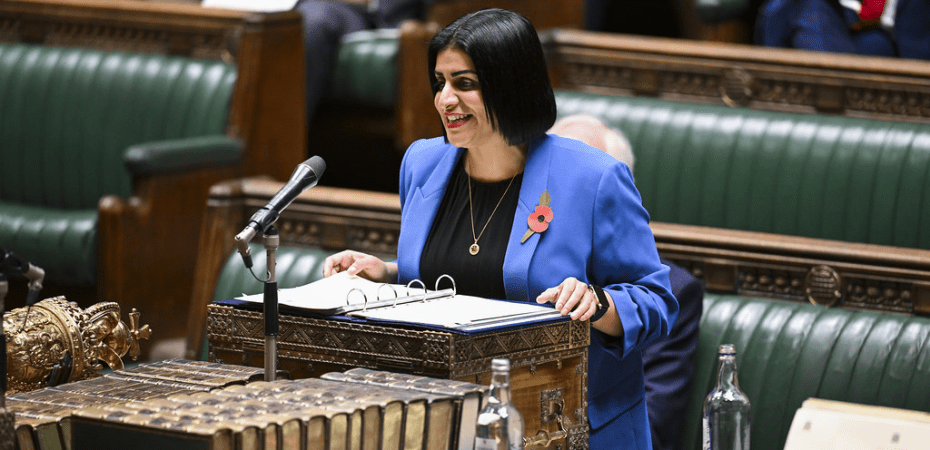
On March 3rd, 2026, UK Home Secretary Shabana Mahmood announced an “emergency brake” on study visas for nationals of Sudan, Afghanistan, Myanmar, and Cameroon. The official justification? Stopping people from “exploiting our generosity.”
Pause on that phrase. Examine it carefully.
Who is “exploiting” whom?
Sudan is currently home to the largest displacement crisis on the planet, confirmed by the United Nations itself. Over 13 million people are forcibly displaced, both inside Sudan and across its borders into neighbouring countries. Nearly two-thirds of the entire population needs humanitarian assistance. 17 million children are out of school. Over 70% of health facilities in conflict-affected areas have ceased functioning. The WHO recorded 63 attacks on healthcare facilities in Sudan in 2025 alone, killing 1,611 people, wiith numbers from LSHTM suggesting a much higher mortality. The surge of asylum cases in the UK is a pure paper trail of a war, the very same war in which UK military equipment was used by the RSF militia accused of genocide in Sudan.
This is the context in which a Sudanese student submits a study visa application to the United Kingdom. Deciding to remain ambitious in such a context is far from exploitation; it should be bravery and courage, at the least, if not determination.
The Sudanese diaspora in the UK (the largest in Europe) contributes to the UK economy primarily through professional expertise, business development, and, increasingly, by facilitating economic connections and humanitarian support, which in turn strengthens UK-Sudan relations. An alumnus of the London School of Economics should not be seen as anything less than an intelligent individual capable of driving policy and business at a large scale. Applying for asylum does not discredit his abilities nor his potential; it’s a mere legal status. Popular examples of public figures who contributed to a forgiving and hospitable culture in the UK include Mo, a Sudanese barber from Derby, who has been travelling the UK giving free haircuts to homeless people, filmed and covered by the BBC. But confidently, the NHS sits on the shoulders of hundreds (if not thousands) of Sudanese health professionals. Applying for asylum did not diminish their humanity or their impact. It was simply a legal status.
Remember Ukraine?
When Russia invaded Ukraine in February 2022, the UK’s response was swift. The Homes for Ukraine scheme was launched within weeks, and visa processing was fast-tracked through a dedicated 24/7 helpline, with application fees waived. By the end of 2024, 218,600 Ukrainians had arrived under the two Ukraine visa schemes. Universities across the country opened their doors. The message was unambiguous: people fleeing war deserve protection, and Britain will provide it. That was the right response, and it should be acknowledged as such.
But it also set a standard. Because the question that now hangs uncomfortably in the air is this: why does the same logic not apply to a student from Khartoum? Sudan’s war has displaced more people; its civilian death toll was more catastrophic; its universities, too, were bombed and looted. The only substantive difference between a Ukrainian student and a Sudanese student arriving in Britain is not the war they fled, it is the colour of their passport. But let’s move beyond basic principles.
The numbers that indicate the policy
The UK hosts over 750,000 international students annually. The number of Sudanese students among them, according to the Higher Education Statistics Agency? 280 (less than 0.04% of the total), and the number has been declining steadily over the last few years. This is the scale of ‘abuse’ that required an emergency government decision. For context, the total number of students from all four banned countries combined is 3,875 out of three-quarters of a million.
If this is genuinely about numbers, consider this: Pakistan accounts for 40% of all student visa asylum claims in the UK. Nigeria ranks among the top three nationalities in asylum-supported accommodation. Neither country was banned on March 3rd. If the policy were truly driven by data, the list would look very different. The fact that it does not tells you something important about what this policy is actually for.
The UK government’s central argument is a 330% surge in asylum claims from Sudanese and Cameroonian student visa holders between 2021 and 2025. This is data manipulation. The issue was clearly not the burden. As I wrote earlier, this surge is a pure paper trail of a war.
The policy has already failed its own test
Britain tried this before. In 2025, it raised short-term study visa refusal rates from 45% to 68%. The result was a 20% reduction in student asylum claims, clearly proving this is not a solution, but a marginal shift, achieved by making the legal route harder for everyone.
The “emergency brake” is not a new policy. It is a tacit admission that the old policy failed, and instead of examining why people flee, the response is to punish the people fleeing.
When legal doors close, people do not stop moving; they simply take more dangerous routes. In 2025 alone, 41,472 people crossed the English Channel irregularly. This new ban will not reduce that number. It will add to it.
When policy language becomes a weapon
“Exploiting our generosity” is not a legal term. It is a political instrument, carefully chosen to summon a particular image in the minds of the British public: the opportunistic outsider, not the student whose university was bombed into rubble.
When that phrase is applied to a student from Khartoum, Wad Madani or Nyala, it is not a drafting error. It is a deliberate narrative choice. And it deserves to be named as such.
And here is what makes this not just unjust but strategically incoherent. International students generate a £37.4 billion net gain for the UK economy. Over a quarter of the world’s heads of state were educated at British universities. The NHS is actively recruiting health workers abroad to fill critical shortages. And the UK is spending £226.5 million in humanitarian aid to Sudan, which requires trained local professionals to be effective. Banning 280 Sudanese students does not protect British interests. It quietly dismantles them.
The question this policy cannot answer
The UK repeatedly claims to support “safe and legal routes” for those fleeing conflict. Very well, if the study visa is closed, the work visa is closed, and the visit visa is closed… what exactly is the safe and legal route you keep promising?
The policy does not answer this. Because an honest answer would reveal that in many cases, no such route exists, and what is being labelled “exploitation” is, in reality, people doing what they must do to grow, prosper at best, or stay alive at least.
That is not a policy. That is a message.
Alhadi Osman is a Senior Health Advisor at Save the Children UK, before which he worked with the Ministry of Health in Sudan. He is a medical doctor from Sudan, with an MPH degree from the KIT Institute in the Netherlands and is currently enrolled in the Global Healthcare Leadership master’s degree at the University of Oxford. This article originally appeared here.
Image: https://www.flickr.com/photos/uk_parliament/54087412451 Copyright: House of Commons Licence: Attribution-NonCommercial-NoDerivs 2.0 Generic CC BY-NC-ND 2.0 Deed
 Labour Hub