
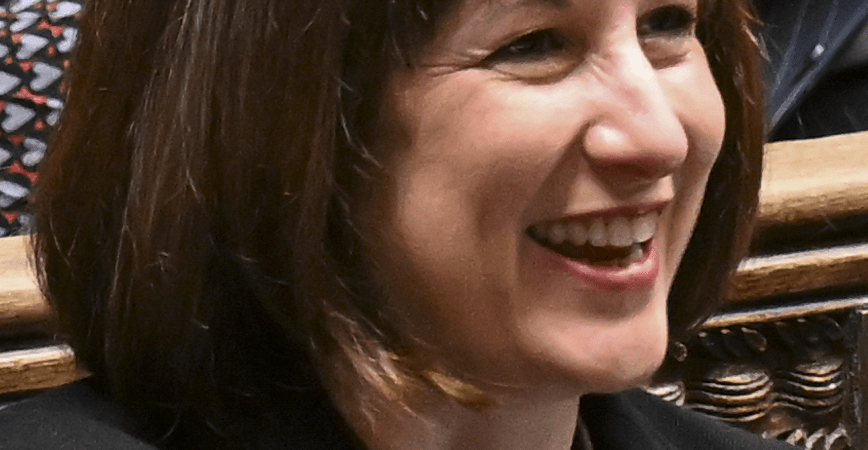
Chancellor Rachel Reeves’ statement today that the Government plans to help “those who need it most” if energy bills continuing spiralling upwards left campaigners baffled and dismayed about her lack of clarity.
Simon Francis, Coordinator of the End Fuel Poverty Coalition, commented: “Households need to know what the Chancellor’s ‘responsive and responsible’ mantra means in practice.” Reeves said contingency planning was under way for “every eventuality”, noting the full impact of the war on the UK economy was uncertain. Detail of exactly who could be helped by the UK government and how remains unclear.
North Sea energy firms are set to make bumper profits, which would lead to increased revenues for the Government under the Windfall Tax, according to new figures. The data shows that for every month that energy prices remain at levels seen on 18th March 2026, profits from these prices could result in over £200m in revenue through the Energy Profits Levy. If prices stayed at this level, this would result in annual income of over £2.4bn. If combined with additional offshore corporation tax revenue on energy firms’ profits, the totals increase even further to £427m a month or £5.1bn a year.
While the Ofgem energy price cap is set to fall slightly from April 2026, rising wholesale gas prices mean bills will rise sharply again from 1st July. Some households are already feeling the impact of rising costs. Off-gas households relying on heating oil have reported refill prices doubling in recent weeks, LPG customers are facing rising prices and some heat network customers could soon face steep increases as energy supply contracts expire.
Today the Tories are forcing a House of Commons vote on ending the UK Government’s ban on new North Sea oil and gas projects, alongside proposals to scrap the windfall tax and approve the Rosebank and Jackdaw fields. At least one Labour backbencher Henry Tufnellagrees agrees with new drilling, arguing: “Britain needs greater energy sovereignty.”
But analysts note that oil and gas produced in the UK are sold at international market prices, meaning higher domestic production does not shield households from global price spikes. In any case, the North Sea is a mature basin in long-term decline, with recent analysis suggesting that 90% of the oil and gas expected to be recovered has already been extracted, with output continuing to fall regardless of new licences, leaving the UK almost entirely reliant on imports by 2050. Robert Palmer, the Deputy Director of the campaigning group Uplift, said the idea that the North Sea could deliver economic growth to the UK was “a fantasy, a pipe dream.”
As the Tories and the industry intensify their demands to scrap the Windfall Tax, the fear is that Rachel Reeves, the UK chancellor, might reduce the levy, or even scrap it and replace it with a lower duty. Experts argue that this would do nothing to help consumers, nor would it give the industry the competitive edge it claims.
Simon Francis, coordinator of the End Fuel Poverty Coalition, said: “Anyone still arguing against the Energy Profits Levy should hang their head in shame. Whenever oil and gas prices spike, energy industry profits rise while households are left to face higher bills, deeper debt and impossible choices. It is only fair that these windfall profits help households who will suffer as a result of the increases in energy bills.
Since 2020, energy firms have already made more than £125bn in profits on their UK operations.
This week, Chris O’Shea, boss of British Gas-owner Centrica, told the BBC that an increase in household bills was “inescapable” if oil prices remain high due to the Iran war. British Gas “has been profiteering for years,” responded Emeritus Professor of Accounting Lord Prem Sikka. “How about cutting its profit margin, changing Ofgem pricing formula?” He added: “Countries with publicly-owned energy sector have more policy options.”
In Scotland, recent polling showed that voters across the political spectrum backed the Windfall Tax on energy profits in its current form. Frazer Scott, Chief Executive of Energy Action Scotland, commented: “The current crisis shows that energy companies continue to make excessive profits at the expense of people. People who cannot heat their homes to a safe level and are burdened by £5.5bn of unrepayable domestic energy debt. Until there is reform that puts people at the heart of the energy system it is right for big business to put its fair share back to help those that need it most.”
Uplift Deputy Director Robert Palmer said: “Billpayers didn’t ask for this war and are now facing a huge Trump Tax on petrol, mortgages and food, with sky high energy bills looming once the current price cap ends. Yet once again, as we saw in Ukraine, oil and gas companies are profiting from what is a humanitarian crisis.”
Jonathan Bean, spokesperson for Fuel Poverty Action, said: “Instead of the £300 bill saving the Government promised us, we now face a £300 bill jump from July. The Government failed to fix the market after the 2022 crisis, so we’ve been left vulnerable to price spikes. The Prime Minister needs to get a grip on the obscene profiteering from war, close windfall tax loopholes, and bring down our bills.”
The End Fuel Poverty Coalition recently asked the Government to prepare an emergency energy support framework to protect households from rising gas and oil prices which will filter onto energy bills. The Coalition’s proposals focus on targeted support for households most exposed to high energy costs, while retaining the ability to expand support more widely if the crisis deepens. It recommends a new, longer-term, Alternative Fuel Support Scheme for households relying on heating oil, LPG and other off-gas-grid fuels; support for heat network customers who face rising commercial energy prices; preparing a targeted reduction in energy unit rates from July if the Ofgem price cap rises significantly; and a rollout of a national energy debt relief scheme to address record levels of household debt.
For the winter, the Coalition is calling for an expansion of the Warm Home Discount and strengthening Cold Weather Payments so support reaches vulnerable households earlier. Ministers are also urged to speed up reform to electricity pricing and prepare a scalable universal support package that could be activated quickly if energy prices spike further.
The End Fuel Poverty Coalition brings together more than 100 charities, health organisations, housing groups, trade unions and consumer bodies working to end fuel poverty across the UK.
Image: https://commons.wikimedia.org/wiki/File:Rachel_Reeves_2024.jpg Source: UK Parliament. Author: © UK Parliament / Maria Unger, licensed under the Creative Commons Attribution 3.0 Unported license.
 Labour Hub
