
By Rathi Guhadasan, Socialist Health Association
Today is World Health Day. The World Health Organisation (WHO) has launched its 2026 theme: “Together for Health. Stand with Science” — a call to choose evidence over disinformation and back the science that keeps us alive.
It’s a message we support. Which is why we need to be honest about the ways our leaders in the UK are letting it down.
Politics is driving childhood illness
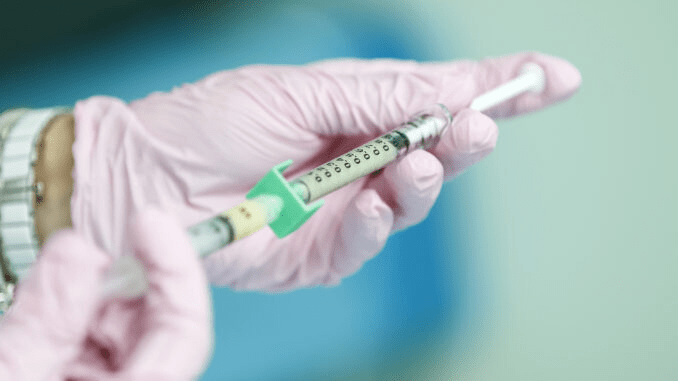
Vaccines are one of humanity’s greatest achievements. They are why most of us have never seen a child paralysed by polio or lost a friend to measles. That protection is now being chipped away — not because the science has changed, but because some politicians are undermining it.
Several Reform UK council leaders have publicly questioned vaccines, helping fuel a rise in hesitancy. The results are real and tragic. A child died of measles in Liverpool, and Dr Simon Opher MP, an experienced GP, reported seeing his first measles case. Vaccination rates have dropped below the 95% needed to stop the disease spreading.
The UK has lost its WHO measles-elimination status for the second time this century, with a number of measles-related deaths in recent years. These were preventable. Think of the Health Visitors and GPs we’ve lost – each one of them invaluable in helping families understand the value of vaccines. Every politician who has stoked doubt — through conspiracy, coded language, defunding public health or simply staying silent — bears responsibility.
Standing with science means calling this out clearly. It means funding NHS outreach in under-vaccinated communities. And it means leaders in every party saying plainly: vaccine hesitancy kills.
The NHS is being hollowed out
You can’t stand with science if you’re dismantling the system that delivers it. Free healthcare for all — regardless of income, postcode, or background — is both a socialist principle and a scientific one. The evidence is overwhelming: universal health systems produce better outcomes for everyone.
Yet NHS waiting lists remain at crisis levels. Ambulance waits and corridor care have become routine. NHS dentistry has disappeared in many working-class areas. And the government’s response has been to funnel public money into private providers, widening health inequalities in the process. Not to mention an austerity-driven decline in the population’s health in the UK – the world’s sixth largest economy.
Adding another barrier to our ability to access healthcare is the UK’s recent drugs deal with the US, doubling our drug costs. Diverting £3 billion for increased drug costs could cost 15,000 lives a year. Similar bilateral deals around the world pose even higher risks for the poorest – leading Kenya’s high court to suspend their agreement with the Trump administration. By pushing back on our deal with the US, the UK could show real leadership here, not just for itself but the rest of the world.
Globally, around 4.6 billion people still lack access to essential health services, and out-of-pocket health costs push 1.6 billion people into poverty every year. The treatments exist. The will to share them universally does not. The same forces cutting NHS services here are blocking universal healthcare abroad. Meanwhile, our foreign, economic and trade policies are making the poorest people poorer.
War destroys health — and our government is complicit
Nothing destroys health faster than conflict. The WHO has documented almost 1,000 attacks on healthcare in Gaza alone since October 2023 in a genocide armed and facilitated by Conservative and Labour governments, who refused to call out these clear violations of international humanitarian law. In Sudan, attacks on health facilities have been devastating. Britain has supplied arms and failed to act on atrocity prevention, turning a blind eye as the world’s largest humanitarian crisis unfolds.
The indirect health effects of conflict compound the direct ones. In conflict zones, maternal and neonatal death rates can more than double. Research across 28 years of conflicts found that for every person killed directly in war, eleven more die from its indirect effects — from disease, hunger, and collapsed health systems.
Then there is Palantir — the US tech firm that boasted about helping to “scare our enemies and, on occasion, kill them” and was awarded a £330 million contract for the NHS Federated Data Platform (FDP). It also won a £240 million MoD deal without competitive tender — reportedly helped by Peter Mandelson. When MPs asked whether these contracts could make Britain complicit in war crimes, Palantir’s UK boss refused to answer.
The BMA has passed a motion against the FDP rollout and told doctors to limit their engagement with the platform. Over 50,000 patients have written to their local trusts to reject it. Patient data should save lives, not help end them.
Beyond Palantir is our growing dependence on “Big Tech” through the NHS Ten Year Plan. These tech giants profit from public money and patient data, while their immense environmental harms fall disproportionately on the world’s poorest communities.
Climate change is a health emergency
The 2025 Lancet Countdown report found that 12 of 20 key health indicators tied to climate change have hit record highs. Heat deaths among over-65s are up 70% in two decades. In 2023, an extra 124 million people faced food insecurity due to droughts and heatwaves. The WHO projects a minimum of 250,000 additional deaths per year by the 2030s from malaria, flooding and heat alone.
These aren’t future predictions — they are happening now. Vector-borne diseases are spreading into new regions. Floods are destroying clinics in low-income countries. People forced from their homes by climate breakdown are among the least able to access care.
The deepest injustice: the countries least responsible for climate change suffer its worst health impacts — while wealthy polluters like the UK cut climate finance and water down global commitments. Standing with science means accepting that fossil fuels kill people — and acting like it.
Labour’s aid cuts will cost millions of lives
In February 2025, Labour cut UK overseas aid to 0.3% of national income by 2027/28 — its lowest level in two decades — to fund a defence spending increase. A Labour government chose to protect military budgets on the backs of the world’s poorest people.
UK health aid fell by 45% in a single year, from £1.77 billion to £975 million, and will halve again to £527 million in 2025/26. The Fleming Fund — which helped 25 African and Asian countries fight antibiotic resistance — has been closed. The UK’s pledge to Gavi, The Vaccine Alliance, was cut by £400 million. In today’s interconnected world, such global health decisions should concern us all.
Africa will receive 40% less bilateral aid in 2026/27 than the year before. Estimates suggest these cuts, combined with reductions from other governments, could cause 22 million avoidable deaths by 2030 — including 5.4 million children under five. That is not a statistic. It is a political choice.
This is what “Standing with Science” actually means
World Health Day reminds us that health is a human right, not a commodity. Protecting it takes money, political will, and the courage to follow the evidence wherever it leads — even when it means confronting powerful interests.
Global health needs global solidarity. It needs a habitable planet. It needs patient data that serve care, not conflict or profit. And it needs a publicly funded NHS, not a privatised one, and the resolve to make universal health care a global reality.
Rathi Guhadasan is the Chair of the Socialist Health Association. To find out more about its work or get involved, email admin@sochealth.co.uk.
Image: https://www.hambletontoday.co.uk/north-yorkshire-gp-practices-start-administering-covid-19-vaccine/ Creator: Copyright: 2018 © Qapta.es. Licence: Attribution-NonCommercial-ShareAlike 4.0 International CC BY-NC-SA 4.0Deed
 Labour Hub