
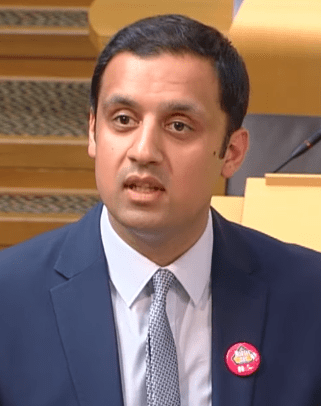
Stephen Low looks forward from Labour’s disastrous Scottish Parliament results.
Labour went from third to second place despite losing four seats. Keir Starmer will doubtless be blamed, and he is hardly guiltless, but the reality is this was a defeat made in Scotland.
Those responsible should depart. Now.
This was Anas Sarwar’s and Jackie Baillie’s second Scottish Parliament election in charge. Like their first effort, we have seen Scottish Labour losing seats and votes. Compared even to the 2021 result, Scottish Labour were 107,684 votes down in the constituencies, and 117,034 votes down on the Regional vote. That’s 24% in each. Decline in turnout was only 10%.
This comes after Anas Sarwar and Jackie Baillie have had complete control of the Party’s policy, strategy and messaging, for years. They failed to construct a coherent platform, for years. They misread the situation, for years. Party procedures and decision making have been systematically manipulated, for years. This has been done by and at the behest of people with a sense of entitlement in proportion to their judgement that is roughly on the scale of the gap between Real Madrid and Hamilton Academicals.
The vetting committee, chaired by Jackie Baillie, went far beyond its remit of ensuring that candidates were fit and proper. Instead people were told ‘We will approve you if you agree to stand in seat X rather than seat Y.’ Motions which had gone through Scottish Conference unanimously were set aside in favour of more leadership-preferred options.
Although the headline pitch was “change”, on examination this would more accurately be followed with ‘of personnel’ than ‘society’. The 2026 manifesto wasn’t a coherent and radical alternative to the current system. While it certainly contained worthwhile individual measures, it was at best ‘managerial tinkering’ and in places almost as gimmick-ridden as the SNP offering. It certainly contained worthwhile individual measures ( even though some of them were contradictory, for example, a Local Democracy Act to both empower communities and set up regional mayors). Incidentally, as is now standard practice, if the gimmick is popular, the SNP will adopt it during the election; as happened with banning phones in schools and establishing a pothole fund. It could be argued that were such policies anchored more in a view of how society could be better, rather, as is the case, merely pointed to as an example of how it could be better managed – this kind of thing would be more difficult.
Instead, an attempt was made to be all things to all people. Maintain all the existing social protections and in some cases expand them, but advocate for tax cuts. The solution to the – acknowledged by all but seldom mentioned by anyone during the campaign – yawning fiscal gap facing whoever is the Scottish Government was the same as the SNP’s – “efficiencies” and “economic growth. People were urged to vote for Anas Sarwar to be First Minister, and the campaign was very focused on him (33 pictures in a 94-page manifesto). The overall pitch was, to paraphrase The Who – “meet the new boss, bit more competent than the old boss”. This, putting it extremely mildly, just didn’t cut it.
Since the election, which Anas, like Keir Starmer, conceded when very few votes had been counted, Anas has insisted that he will “absolutely,” stay on as leader in order to “hold the party together” Really? He becomes vague when asked if he will lead the Party into the next election, or even be around for it. It doesn’t take a massive amount of cynicism to reckon that what is going on here is an aim to be in post during the inevitable UK leadership election in the hope of being useful to the victor and being rewarded with some sort of sinecure in the Lords or similar.
While blaming “a national wave” he has also said that he will take responsibility. The only way that can happen is for him to resign. He should do so now as leader – and ideally as an MSP also. That would have the result of returning Monica Lennon to the Scottish Parliament. Ms Lennon has been a competent MSP with some achievements to her credit. Being fourth on Labour’s Glasgow list, meant it was she who paid the price of Anas’ and Jackie Baillie’s ineptitude.
Anas of course doesn’t bear sole responsibility, and neither should he be leaving on his own. It’s absolutely crucial if Scottish Labour is to have any hope of any kind of future that he takes Jackie Baillie with him.
Jackie was absolutely central to this campaign, and the one before it. Indeed she has been close to or at the centre of things all through Scottish Labour’s long decline. There have only been two points when she hasn’t been on the front bench, once, when Jack McConnell refused to have her in the cabinet, and then when Richard Leonard had to sack her for undermining him. Richard was the only Scottish leader Jackie hadn’t supported for the job and the most systematically briefed against – a coincidence, obviously.
For over twenty years Jackie Baillie has been at or close to the centre of things. As either a minister or a frontbencher, Jackie has spoken for the Party – on social justice, parliamentary business, she’s been chief of staff in the Parliament, health equalities, welfare. finance, constitution equalities, economy, jobs and fair work, public services and wealth creation, business and tourism, and latterly health and social care. You can’t be at the heart of things for so long and credibly insist that that you aren’t part of the problem.
Jackie’s long track record is of course a consequence of her achievement in holding on to her seat – while all about were losing theirs. This Jackie has assured people is because she is “a winner”. Might though being virtually the sole survivor of a shipwreck be more a matter of luck, rather than skill? Might it perhaps be something that ought not to be boasted about if you were on the bridge of the ship as it steered onto the rocks?
That the figures at the top have to be replaced is beyond argument. This level of repeated failure cannot be tolerated. This, however, won’t be enough. We need to be, and seen to be, committed to addressing the big issues, through a commitment to radical change. What has been clearly demonstrated is that we need to change not just the singers, but the song.
Stephen Low is a member of Glasgow Southside CLP. He is a former member of Labour’s Scottish Executive and part of the Red Paper Collective.
Image: Anas Sarwar https://commons.wikimedia.org/wiki/File:AnasSarwarMSP_%28cropped%29.png Source: YouTube: https://www.youtube.com/watch?v=yj-kOcOKuG0&ab_channel=TheScottishParliament – View/save archived versions on archive.org Author: Scottish Parliament, licensed under the Creative Commons Attribution 3.0 Unported license.


