
Voters may have cast their ballots in Sunday’s presidential election, but it could take weeks to count them, reports Mike Phipps.
Pollsters predicted an extremely tight vote, similar to the last three election runoffs in Peru. And that appears to be how it has played out.
Right-winger Keiko Fujimori and former Pedro Castillo supporter Roberto Sánchez are neck and neck in the presidential race. With about 96 per cent of the vote counted, Sánchez is around 20,000 votes ahead. Earlier, a quick count by pollster Ipsos, from a sample of ballots, projected Sánchez to win with 50.3 per cent of the vote to Fujimori’s 49.7 per cent. However, a binding result is not now expected until next month, after electoral judges have adjudicated the result and legal challenges have been settled.
The lack of a decisive result, between two polarised candidates, indicates a future marked by more distrust, parliamentary obstruction and likely attempts to remove the president from office, whoever it may be. A Sánchez win, however, would at least halt the current trend of right wing victories in the continent, which has seen Bolivia, Chile, Argentina, Costa Rica and Ecuador all elect right wing presidents in their latest elections, many modelling themselves on Donald Trump.
A controversial election, again
The election has been mired in controversy. It took two months for the two rivals to be confirmed for the run-off. Despite a field of 36 candidates in the first round, many voters were unimpressed. Polling stations opened hours late, resulting in long queues that impeded over 50,000 people from voting. Right wing populist Keiko Fujimori topped the poll with 17 per cent of the vote. Her left wing opponent Roberto Sánchez got 12 per cent.
But of the more than 27 million eligible voters, 7.16 million did not cast a ballot, despite voting being mandatory. Of those who did vote, nearly 12 per cent of voters cast a blank ballot, and another 5 per cent cast a spoiled ballot, nullifying their vote. A very high rate of absenteeism marked the second round too: a quarter of voters stayed away.
There was an element of déjà vu about this week’s presidential election, billed as a choice between a right wing populist, Keiko Fujimori, and a left wing ‘surprise’ candidate, Roberto Sánchez. Five years ago, another left wing ‘surprise’, Pedro Castillo, defeated Fujimori, daughter of one of the country’s most authoritarian presidents, to become President, only to be forced out the following year.
His attempted ‘self-coup’, a bungled tactic to avoid impeachment by a politically hostile Congress, led to his arrest, and eventually an eleven-year prison sentence. The massive protests that immediately followed Castillo’s detention resulted in dozens of deaths, mainly at the hands of the army or the police. Roberto Sánchez has pledged to pardon him, if elected.
Castillo’s replacement, Dina Boluarte, quickly became the most detested head of state in Latin America. Her brutal crackdown on pro-Castillo protests, involved two state massacres and multiple human rights violations. It was followed by her reneging on her promise to call early elections. Under investigation for both genocide and illicit enrichment, she was eventually impeached out of office in October 2025. In February 2026, her successor, also accused of illicit enrichment and influence peddling, was also removed from office.
Elite corruption, escalating organised crime
To Peruvians, this is not shocking. “In the past ten years the country has had eight heads of state of varying political stripes,” according to one analyst. “Seven of them are under house arrest, in prison facing charges or barred from leaving the country for offences ranging from an attempted coup to corruption and money laundering.”
The legislature is no better. “In the outgoing Congress, the public prosecutor’s office was investigating around half of the elected representatives. The newly elected Congress also contains nearly two dozen people with criminal records, ten of them in Fujimori’s party alone. No wonder 90 per cent of Peruvians regard parliament as a den of thieves.”
Meanwhile, organised crime has taken advantage of Peru’s misgovernment, which in recent years has included the passage of laws limiting the power of the public prosecutor’s office and the police to fight illicit activities such as illegal mining, drug trafficking and money laundering.
“A nationwide spate of violence and crime has gripped Peruvian communities, disproportionately affecting the most vulnerable,” reports the New Humanitarian. “Bordered by Colombia, the largest producer of cocaine, and Ecuador, a major transshipment hotspot, the country has progressively fallen captive to criminal cartels that have taken advantage of the COVID-19 pandemic and an unprecedented crisis of governance to consolidate their presence.”
Overwhelmingly, the victims are ordinary people. Between January and August 2025, at least 180 taxi and bus drivers were killed for refusing to pay extortion money. In the last five years, the murder rate has nearly doubled. Hundreds of protests against the rise of extortion have been mounted and the issue has become an election priority, with Sánchez proposing purging the police and strengthening the authorities’ investigative capacity, and Fujimori proposing greater deployment of the military. Part of her strategy, if elected, is to implement a 60-day state of emergency to “combat citizen insecurity”.
Sánchez’s offer
Besides police reform, Sánchez is promising anti-poverty measures and a new constitution. However, he has tempered his economic rhetoric in the second round, talking up the benefits of an “open market economy”, in the pursuit of more centrist voters. He further pledged to maintain fiscally responsible policies, protect private property and preserve the central bank’s autonomy.
But he has also called for reparations for the victims harmed under Alberto Fujimori’s brutal government and a repeal of amnesty laws designed to shield military and law enforcement from accountability. He is unlikely to have sufficient support in Congress, however, for many of these policies.
How much the outcome of this election will change life in Peru’s militarized hinterland is doubtful. “In peripheral zones of the country, ‘democracy’ is seen as nothing more than elite doublespeak as the state’s politics of impunity denies justice for so many,” suggests George Ygarza.
A few weeks ago, the military killed five young men travelling in a truck they had rented for their soccer game. The military reported they had been fired on by narco-traffickers, despite no weapons being recovered and the vehicle containing only traces of marijuana. Such incidents are not atypical. The families’ quest for justice will be protracted as state agents operate with virtual legal impunity. Whoever wins this presidential election, such abuses are unlikely to end soon.
Mike Phipps’ book Don’t Stop Thinking About Tomorrow: The Labour Party after Jeremy Corbyn (OR Books, 2022) can be ordered here.
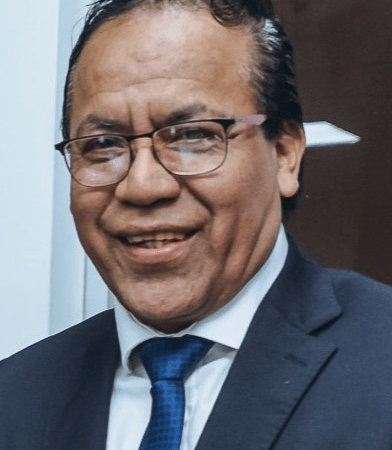
Image: Roberto Sánchez https://commons.wikimedia.org/wiki/File:Roberto_Sanchez_Palomino_(cropped).jpg Source: https://www.flickr.com/photos/56115295@N08/52408690694/. Author: WIPO | OMPI, licensed under the Creative Commons Attribution 2.0 Generic license.


.jpg)