
It’s fifty years today since The Clash played their first gig. George Binette marks the anniversary.
4th July 1976, Sheffield: against the backdrop of the hottest summer in 20th century Britain, three bands embarked on what was supposed to be a national tour. Headlining the bill was an increasingly notorious outfit, The Sex Pistols, providing support were the Manchester-based Buzzcocks and a previously untested London-based quintet, The Clash. (They would by the autumn of 1976 be a four-piece with the departure of guitarist Keith Levene. In addition, the drummer on that sultry night in Sheffield, Terry Chimes, would leave the band, ostensibly on the grounds that he objected to the band’s leftist leanings, only to return for the recording of the eponymous first album and again nearly six years later as a substitute on tour for percussionist Nicky “Topper” Headon after his de facto expulsion.)
A crowd of around 50 at the long since shuttered Black Swan pub heard the band tear through all of four songs, only one of which, “Protex Blue” (the title derived from then a popular brand of condom), would feature on their debut album released the following spring.
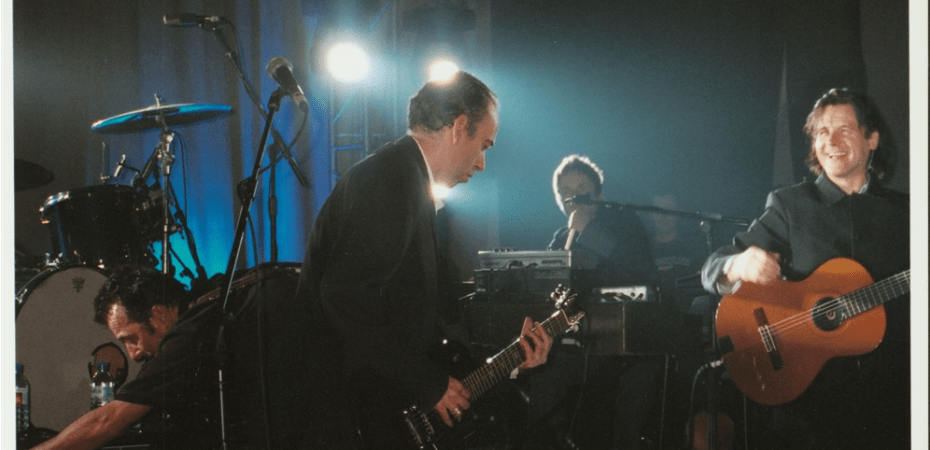
“The three-day week, the blackout, the Grunwick strike and pickets. Pretty socio-politically active times,” the words of Joe Strummer, The Clash’s lead vocalist and principal lyricist, reflecting on the mid-70s in an interview only months before his sudden death in December 2002. Just weeks before his untimely passing from an undiagnosed heart defect, he had performed with his last band, The Mescaleros, at a west London benefit concert for striking members of the Fire Brigades Union (FBU).
In the weeks and months after their Sheffield appearance, the band gigged relentlessly and with a surge in media interest in the punk phenomenon, The Clash inked a major label deal with the British subsidiary of Columbia/CBS Records by late January 1977. The contract was for the then princely sum of £100,000, apparently negotiated by the band’s would-be svengali Bernie Rhodes, though that sum would have to cover the expenses of recording and touring. While some in the vanguard of the nascent punk movement accused The Clash of “selling out,” the band swiftly gained a fanatical following, drawn to frenetic, passionately intense performances. Few successful bands had ever seemed so accessible to their fans.
In an early interview with the New Musical Express, then a hugely influential publication in a pre-digital age, Strummer declared, “people ought to know that we’re anti-fascist, anti-violence, anti-racist and pro-creative.” And there’s little doubt that Britain’s inky music weeklies contributed both to the band’s early success in the absence of much radio airplay and the perception of The Clash as serious rock rebels. The band cemented that reputation in April 1978 as part of the legendary Anti-Nazi League/Rock Against Racism carnival in East London’s Victoria Park as part of a bill that included British reggae giants Steel Pulse, X-Ray Spex, fronted by mixed-race 20-year-old Marianne Joan Elliott-Said performing as Poly Styrene, and the Tom Robinson Band.
The Clash would go on to record six studio albums including the double LP London Calling and the still more ambitious treble disc Sandinista!, as well as release “The Cost of Living” EP in 1979. They gained an international following beyond the Anglophone world before fame, but personality conflicts and all-too familiar rock ‘n’ roll demons ultimately exacted their toll. In 1982 the band effectively expelled drummer Nicky “Topper” Headon due to a spiralling heroin addiction.
Little more than a year later, lead guitarist and Strummer’s musical foil, Mick Jones, got the order of the boot for reasons that remain unclear 43 years later. The pair subsequently worked together in recording studios but never played on the same stage until they were reunited at the aforementioned FBU benefit concert in November 2002. The Clash finally disbanded early in 1986 and ultimately never mounted a reunion tour despite lucrative offers.
Fifty years on from Sheffield in July 1976 and summer temperatures in much of Britain have climbed even higher, a Labour government is once more in deep trouble and an emboldened far right can occasionally mobilise tens of thousands on London’s streets – many more than the National Front did at the height of its influence.
So, more than 50 years later does “the only band that matters” (a phrase apparently coined by a CBS Records employee) still matter as a component of a radical sub-culture?
The left-wing academic and Clash obsessive Gregor Gall sought to answer a similar question with his 2022 volume The Punk Rock Politics of Joe Strummer: Radicalism, Resistance and Rebellion. In a review for the Camden New Journal, I described it as “A sober analysis of Strummer’s shifting political outlook and the influence he’s exercised on fans’ views and activism.” The range of publications, which featured largely positive reviews of Gall’s book, attested to the lingering interest in The Clash and Strummer specifically across a broad cross-section of the far left and labour movement. The ASLEF and FBU journals provided coverage and there were generally favourable notices in the Morning Star, Red Pepper, Socialist Worker and even Capital & Class.
A distinctive feature of Gall’s work was his effort to conduct “a form of ethnographic social science research” among Clash/Strummer fans. A questionnaire elicited 120 responses, largely from white men in Britain and North America, quite a few of them active trade unionists. The testimony of these fans led him to conclude: “Preaching to the converted served a role in culturally sustaining the converted as well as gathering new members of the congregation.”
Numerous bands as diverse as the Gang of Four and The Pogues, and performers such as Billy Bragg, who emerged in the immediate wake of punk and were overtly “political,” acknowledged a debt to The Clash. Public Enemy’s lead rapper Chuck D also cited them as an influence as did the Manic Street Preachers and Rage Against the Machine in the early ‘90s. Primal Scream frontman Bobby Gillespie, himself now 65, can still wax lyrical about the band’s importance.
Though undeniably a political group, the band’s members were never really activists at any stage, (although a partial exception since the band’s demise has been bassist Paul Simonon, who recently backed fundraisers for victims of the Gaza genocide as well as participating in Greenpeace-organised direct action, which resulted in his arrest off the Greenland coast in 2011). Indeed, Gall takes Strummer to task for the band’s failure to play a significant role in garnering support for the 1984-85 miners’ strike until it was effectively too late, staging “Arthur Scargill’s Christmas Party” at the Brixton Academy in December, months after the likes of Bragg and Paul Weller had visited picket lines and bands such as New Order and WHAM! (yes, WHAM!) had performed at benefit gigs.
Musically, they were more magpies than innovators, but the band’s borrowings from first reggae and later several other genres served to break down barriers and broaden horizons. In this respect, they were so much more than a punk band and so made a genuine contribution to the emergence of a more multi-cultural Britain. Arguably, Strummer also pushed the envelope in defining what was legitimate territory for lyrics in the rock idiom.
To my mind, the enduring influence of a Clash-like spirit now comes primarily from across the Irish Sea from bands such as Fontaines DC, the Gurriers and Sprints, who have been forthright in their opposition to the far right and in expressing solidarity with the Palestinian people.
George Binette co-authored and edited The Last Night London Burned, an account of Joe Strummer and the Mescaleros’ final London gig, a benefit for the FBU at Acton Town Hall in November 2022.
Image: 15th November 2022, the FBU benefit at Acton Town Hall with Joe Strummer & the Mescaleros joined by Mick Jones (stage left). c/o author.

