
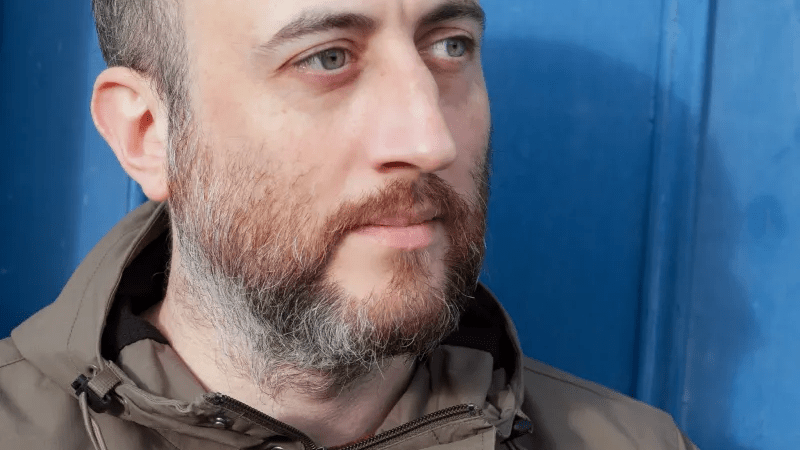
Labour Hub interviews journalist Daniel Trilling, whose book If We Tolerate This: How the British Establishment Made the Far Right Respectable was published earlier this year.
LH: You divide the book into three chapters: on fanatics – the openly far right, opportunists – the Conservatives, and cowards – mainly Labour politicians. Only 14 Labour MPs – plus Diane Abbott, who still has not had the Labour whip restored – voted against the Second reading of the Government’s draconian Immigration and Asylum Bill last week, a Bill which Andy Burnham supported. Does this mean a break with Labour’s capitulations to the right on immigration policy looks unlikely under the new leadership?
DT: As we can see from Burnham’s decision to keep Shabana Mahmood in post, on immigration policy we’re likely to see continuity, rather than a break from Starmer. There were hints before Burnham took over that some of the rough edges might be smoothed off Mahmood’s reforms, most likely to placate Labour backbenchers who are uncomfortable with the direction of travel. We might also see a less craven attempt to chase after Reform voters rhetorically — which matters, because Labour under Starmer did a huge amount of damage to the public conversation, particularly in the first half of 2025 with a media blitz that began with the Home Office releasing footage of people shoved onto deportation flights and culminated in Starmer’s “island of strangers” speech.
“Labour is unwilling to think seriously about why immigration takes place at all”
But the central problem remains, which is that Labour — like its predecessors in government — seems unwilling to think seriously about why immigration takes place at all. Our economy is designed to draw on immigration to generate profits for employers and to keep services running. If a government genuinely wants lower immigration long-term then it needs to radically redesign the economy, and if a government is going to radically redesign the economy then there are far better reasons to do so than “we want to lower immigration”. In the absence of that we are likely to see a continuation of the boom-bust immigration cycle, where short-term changes in the scale and pattern of movement are followed by a political backlash and harmful, self-defeating crackdowns from ministers.
LH: People have attributed Labour’s rapid decline in popularity to Keir Starmer’s lack of vision, but would you agree that it is more a collapse of any belief in the possibility of social progress that has allowed to flourish a narrative that ‘things were better in the old days’ – which is the ideal ground for the far right to magnify its anti-migrant, anti-EU, socially conservative rhetoric?
DT: I would agree! Burnham at least knows how to play the right mood music. We’re yet to see if he can do any more than that.
LH: In the book you identify a contradiction between the promise of equal rights for all embodied in the ideology of liberal democracy and the essentially unequal nature of capitalism. How far has rising social and economic inequality undermined empathy and facilitated an ‘othering’ of minorities?
DT: It’s been a major factor, though I think the left has a tendency to mistake inequality for poverty. It’s true that extreme poverty has risen since the austerity of the early 2010s, but by and large it’s not the worst off who are voting for far-right parties or engaging in racist violence. Look at the profiles of the people arrested for rioting over the past few years — you’ll see quite a few small business owners and others in there. You also have to account for the success of far-right politics in countries that have been rapidly growing economically, such as India.
The far right feeds on resentment
My take on this is that the far right’s principal emotional appeal is resentment — of media and political elites; of immigrants and benefits ‘scroungers’ seen as taking an unfair advantage; of a more nebulous sense of cultural decline. These are all things that fester in unequal societies where traditional community resources are allowed to decay, and where people are told they’re either winners or losers and if they’re the latter it’s their own fault. If you’re somewhere in the middle, it’s very easy to feel insecure about your social and economic position, and the far right has a ready-made set of scapegoats to blame.
The thing is, none of this is particularly new. Traditionally, parties of the centre were quite good at containing such resentments. The question I try to answer in my book is: what’s changed?
LH: You talk about the rise of far right influencers on social media. It’s now clear that such influencers can make substantial sums of money by attracting advertising revenue from well-known companies to the content they upload – and the more confrontational the content, the more it’s promoted by the algorithm and the more attractive it is to corporate advertisers. How significant is this and – apart from naming and shaming the companies that advertise on far right sites – what can be done about it?
DT: You can’t understand today’s far right without understanding how it benefits from — and successfully exploits — a fragmented, algorithmically-driven media landscape. As has been said before, if an online service is free to use, then you’re the product. And what the major social platforms want from us is our eyeballs: there have been plenty of investigations by journalists and accounts from whistleblowers to show that the platforms aren’t particularly worried about how they maintain our attention.
Better regulation would help: you could see the difference it made when major platforms like Facebook and Twitter were pressured into removing the worst extremist accounts in the late 2010s and early 2020s. But that’s not a perfect solution: neither corporations nor the state can be trusted to have minute control over our daily speech (which, after all, is what social media now constitutes for many of us.)
Demand control of the algorithms
Despite everything, I still believe that digital media is an important democratising force — if more in potential than reality these days. So the bigger question is how we exert greater collective control over this resource, in the way we have been done so over other important resources in our history. For me that means demanding control of the algorithms that shape so much of what we see and hear. Why should these be the private property of corporations, their precise workings kept secret like the recipe for Coke? What would it take to build alternative mass platforms where users had a greater say in how they worked?
LH: It is clear that the far right bring out or encourage a desire to be cruel to the vulnerable and to find scapegoats, and this is part of their attraction. What do you think are effective ways to tackle this?
DT: Challenge it head on and call it out for what it is. The far right wins when we underestimate one another’s capacity for empathy, including that of people we disagree with politically.
LH: You list ways of stopping the far right at the end of the book. Do you have any further thoughts on that since you wrote it? How successful have they been? And would you agree that part of the way we do this is to assert a different narrative about the UK, one that looks forward to a better society, rather than backwards?
DT: Since the book is focused on current UK politics, one thing I tried to stress was the extent to which Nigel Farage and Reform UK are busking. Farage is a skilled political operator, certainly, but he sits on top of a contradictory project prone to internal splits and vulnerable to challenge from the outside. That argument is vindicated by recent events: Farage is struggling to placate a base that demands increasing radicalism at the same time as win over more moderate voters whose support is crucial to building a winning electoral coalition. A left-wing challenge from the Greens and slightly more leftish-sounding rhetoric from Burnham, combined with persistent investigative journalism on Reform’s sources of funding, have caused him real trouble.
Creeping fatalism
The reason I stress the vulnerability of his project is not to be complacent: it won’t fail of its own accord. But it’s in the hope of shaking people out of a fatalism I felt has been creeping over Britain in the past few years.
That’s the easy part. The harder part is how to make the most of the opportunities we have to show there’s a better way of doing politics. I think we actually have lots of opportunities to do that, from pressuring our current government to be better, to the experiments in government now going on in local and devolved politics, to building networks that defend people’s rights and security in the here and now — for instance, over access to food, or in countering the violence of the immigration system — and which will be vital in resisting a far right government if we ever do reach that point.
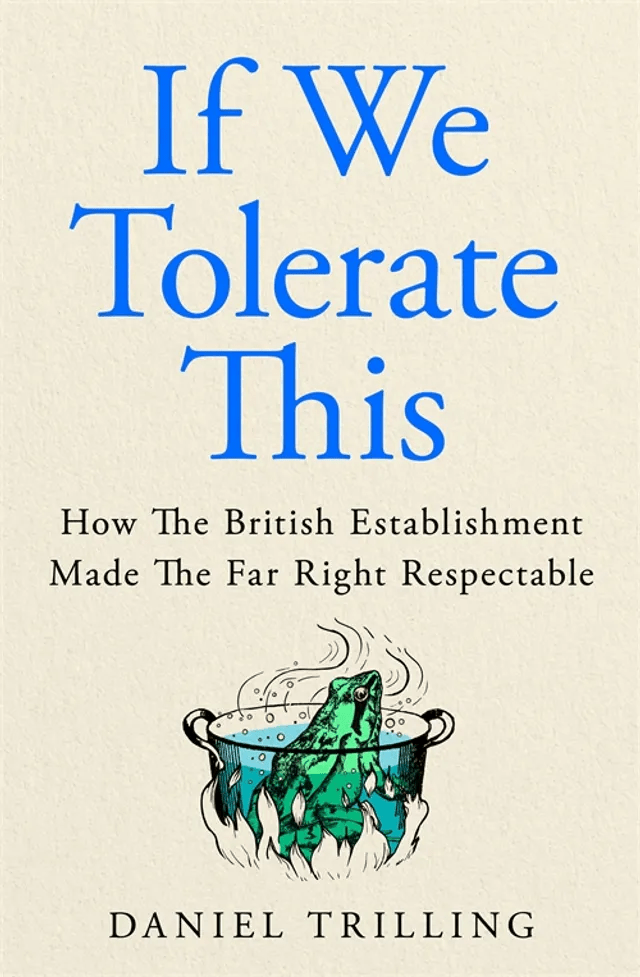
Daniel Trilling’s new book If We Tolerate This: How the British Establishment Made the Far Right Respectable is available here.


[…] interview appeared Labour Hub, 11 July […]