
By Carol Turner
Learning that Saudi Arabia wants a nuclear programme is nothing new. But news of an agreement between the US and Saudi Arabia this week set phones around the world buzzing. No wonder. President Trump will have been at war with Iran for six months to the day next Tuesday. If he’s that determined to stop Iran developing nuclear weapons capability, why is he offering a start-up deal to the Saudis? That’s pretty obscure, even by Trump’s standards.
The next day’s news, Wednesday, was about the Trump administration planning to have a deal signed by the US Energy Secretary and Saudi Energy Minister before Congress for approval within days. This was not entirely surprising to Gulf-watchers. The likelihood of a US-Saudi agreement came to light in April, when Energy Secretary Chris Wright told reporters during a visit to Riyadh that the US was on “a pathway” to reaching an agreement with Saudi Arabia.
Later, on Wednesday, the follow-on news was about there being no clear provision in the agreement for checks and inspections. Yikes! The Trump administration, we were told, plans to ask Congress to back a deal with no safeguards built in to stop Saudi’s nuclear energy programme becoming their weapons programme a bit later down the line.
During Thursday, the news took a Trumpian turn that’s becoming all too familiar. White House Press Secretary Karoline Leavitt told the assembled journos that the agreement would only go ahead if the Saudis joined the Abraham Accords. Saudi Arabia has responded to Trump’s normalisation condition with a firm ‘no’. So it now looks as if all bets are off.
Trump negotiated the Accords during his first term of office, with the aim of improving relations between Israel and the Arab states. The Accords never really got off the ground, with just three countries signing up, only two of which subsequently went on to ratify the Accords. Just as the Abraham Accords stalled over the issue of Palestinian statehood first time around, so Trump has been unable to revive the Accords during his second term mainly because of Israel’s genocide in Gaza. Saudi rejected the Accords without an agreement on Palestinian statehood and now it’s sticking to that even with a nuclear power deal on offer.
While Trump would welcome an agreement that enabled US companies to profit from contracts to build and develop Saudi’s nuclear capacity, this wasn’t the deal’s only attraction for him. It would have gone a long way to helping re-establish the United States flagging influence in the region which has accompanied Israel’s genocide in Gaza and Trump’s second term.
Military might is important, and the US has plenty of that, but hard power alone is rarely enough to maintain control, as Trump is now finding out. His reputation has nosedived in recent months, as his inability to grasp the implications and control the outcomes of his war on Iran has revealed itself during the struggle over the Straits of Hormuz. The battle, let alone the war, is far from over yet, of course, and Trump’s apparent inability to find a way out of the mess he’s created for himself is more than hazardous. There could be big trouble ahead if he lashes out from the corner he’s dug himself into.
One of the unanticipated consequences of the war on Iran has been the room he’s inadvertently created for the Arab states to put a bit of distance between themselves and the USA, and investigate opportunities to pursue their interests in other ways, although they must keep a weather eye on Trump at all times. There are initial signs – uneven and somewhat contradictory – that Saudia Arabia is not the only Gulf state that has pivoted away from normalising relations with Israel, and towards establishing better relations with neighbours. The region is beginning to think a secure future might be pursued by strengthening regional ties rather than continuing to rely on an unreliable US. Indeed, since October 7th, the Saudis have already taken steps to improve relations with Iran.
All modern states need energy to power their economic engine. Saudi Arabia wants a civil nuclear programme to ensure its plans for bringing the kingdom into the 21st century run smoothly. Normalising relations with Israel, however, is still a step too far. Building bridges with Netanyahu would diminish the kingdom’s own influence in the Middle East at this point in time.
Saudi Arabia is mulling over other options for its future security too. In September 2025, the Saudis signed a Strategic Mutual Defence Agreement (SMDA) with Pakistan – a development which establishes a binding framework for joint military engagement. The pact seeks to strengthen defence cooperation and joint deterrence against potential threats.
Saudi and Pakistan statements about the SMDA have highlighted a “wartime” clause, that an act of aggression against one will be treated as an act of aggression against both. In the event of military conflict, it appears, each country is obligated to intervene militarily in support of the other. This may or may not include pre-emptive self-defence – acting first in response to imminent threats.
Pakistan has not officially said it has extended nuclear protection to Saudi Arabia. When asked if the SMDA included the use of Pakistan’s nuclear arsenal, however, a Saudi official said: “This is a comprehensive defensive agreement that encompasses all military means.”
Just as the agreement offers Saudi Arabia opportunities to pursue its modernisation programme, so the Pakistan Chamber of Commerce and Industry welcomed the SMDA for similar reasons, suggesting that strengthening the partnership with the Saudis means “unlocking vast opportunities in trade, investment, energy, and technology.”
What the SMDA means by joint deterrence and acts of aggression remains to be clarified. The official text is classified. It does not mention nuclear weapons, according to ICAN, the International Campaign Against Nuclear Weapons. But ICAN warns that the way it has been presented raises concerns that it could be a de facto Pakistani nuclear umbrella for the Saudi.
This seems a little far far-fetched right now. But that doesn’t mean we should take our eye off the ball. The danger of nuclear expansion in the Middle East is ever present so long as an aggressive Israel is the only nuclear kid on the block, as is the threat of the war on Iran spreading further across the region than it already has.
Carol Turner is CND Vice-Chair. This article originally appeared here.
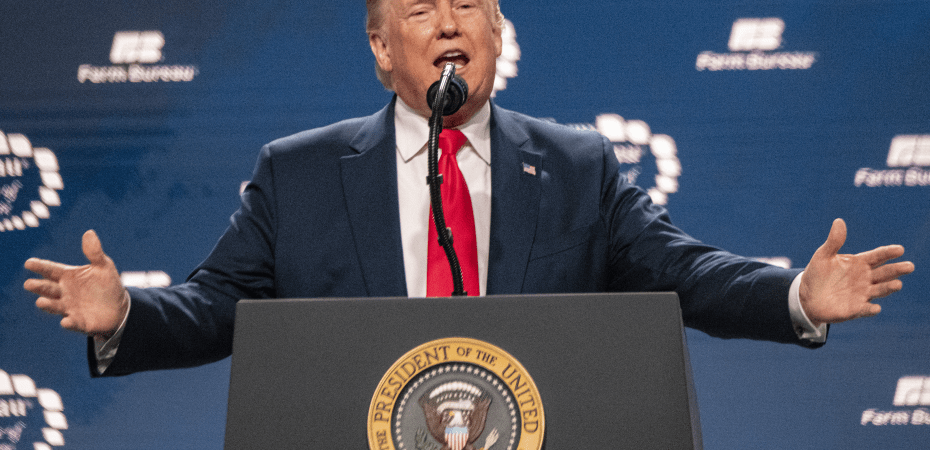
Image: https://www.lawfaremedia.org/article/don-t-overread-the-court-s-immunity-opinion U.S. President Donald Trump (U.S. Department of Agriculture, https://www.rawpixel.com/image/3307019, CC0 1.0)


[…] Labour Hub 25th July 2026 https://labourhub.org.uk/2026/07/25/the-us-saudi-nuclear-deal/ […]
[…] US-Saudi nuclear […]
[…] US-Saudi nuclear […]