
Mike Phipps analyses the result and looks ahead to what comes next.
“Manchester mayor race direct fight between Greens and Reform, claims Zack Polanski,” reported the Standard on June 22nd. But if a week is famously a long time in politics, a month seems like an eternity. Polanski’s prediction could not have been more wrong.
Labour’s poll bounce since Andy Burnham became leader has been nothing short of remarkable. Burnham’s approval rating is already higher than Keir Starmer’s ever was. Overall, Labour shot up six percentage points in Burnham’s first week, enough for Labour to win two by-election seats on Thurrock Council from Reform in the latter’s Essex heartlands. Polling this week had Labour overtaking Reform with its largest lead since March 2025.
Way more importantly, Labour have retained the Greater Manchester mayoralty and that is a very big deal. As Rob Ford explains: “While Sadiq Khan has by far the largest personal mandate in British politics, representing an electorate of over 6 million, Andy Burnham’s successor as the second elected mayor of Greater Manchester will have the second largest, with a 2024 registered electorate of nearly 2.1 million voters. That is larger than the electorates of six EU member states.”
Notwithstanding the strong vote for Reform in parts of this constituency in earlier local government elections, Labour’s continued hold on the Manchester mayoralty was never really in doubt – particularly given the reinstatement of the Supplementary Vote system which allows voters to cast both a first and second preference vote.
But the size of Labour’s victory is important. Bev Craig won 47% of vote in the first round, just short of the 50% needed to win outright in the Supplementary Vote system, with Sian Astley of Reform Uk on 21%. The Greens’ Geraldine Goggins came a distant third with12%. The final result had Bev Craig on two-thirds of the vote, with 309,525 first and second place votes, ahead of Sian Astley on 157,178, a comfortable win for Labour. Turnout was low at 25%, partly reflecting voter fatigue in some parts of this vast constituency.
Bev Craig won most votes in every borough, with Sian Astley’s Reform finishing second in all but two. In Manchester, the Green Party’s Geraldine Coggins finished second, and in Trafford, Conservative Phil Eckersley was runner up. Reform’s poor showing in Manchester itself mirrored a low-key campaign there, whereas the Greens’ better showing in the city reflected their focus on the housing crisis in the city core and their efforts to paint Craig as the stooge of developers.
What now?
In her victory speech, Craig said: “I never believed as a girl growing up on a council estate that one day I would have the chance to stand for the place that I love, the place in this world that I’m proud to call home and to offer my service to make our city region better.” She added: “I will defend this city region with every bone in my body and I will fight for a better life for all of us.”
But what will a Bev Craig mayoralty look like? At the launch of her Manifesto, she promised to use her powers to make life “cheaper, safer and fairer”. Her Manifesto pledges focused on making transport more affordable through a Bee Network fare freeze and expanded free travel for young people; improving opportunities for children and young people through measures including baby boxes, school support and training opportunities; delivering 50,000 council and genuinely affordable homes; restoring pride in town centres through investment in local businesses; and making communities safer through expanded neighbourhood policing and a new Neighbourhood Guarantee to tackle antisocial behaviour. She also announced plans for a Gen Z Commission, a Community Ownership Fund and community banks.
Craig was first elected to Manchester City Council aged just 26 and rose quickly through the ranks to replace the long-serving Richard Leese as leader in 2021. As leader she was also a member of the Greater Manchester Combined Authority and held the combined authority’s portfolio lead for Economy, Business and Inclusive Growth. She is also a founding signatory of Open Labour, a ‘soft left’ grouping in the Labour Party.
People who have worked with Craig see her as pretty close to Andy Burnham politically, but different in style, in particular less fond of the flashy celebrity culture that Burnham promoted. And unlike him, she is unlikely to have one eye on Westminster: her political ambitions seem to be genuinely local.
“Her record in Manchester has been to move the council quite considerably towards more social housing compared to her predecessor,” one housing activist told me. “Things like the local plan are being redone to up the quota of affordable housing from 20% to 30% and initiatives like ‘Project 500’ have seen an increase in social housing across the city. While a lot of this is still not for true social rent, it’s nevertheless an improvement on her predecessor.”
“I’ve always found her persuasive and friendly,” another activist told me. “She came to be Manchester City Council leader through a fight against Luthfur Rahman, whose cabal had dominated under Leese for some time. She’s tough, getting lots of vile online abuse as a lesbian and a woman, and she’s an astute and effective political leader and a good ward councillor, carefully keeping all sides on side.”
She added: “She’s addressed the affordable housing shortage, increasing the affordable element in planning to 20% plus, and has committed far more money to building. She has also supported traffic reduction initiatives, albeit very stealthily.
“She’s been a champion of women’s rights and domestic abuse support too. In the past she’s been at pro-Palestine events, but I suspect she’ll be carefully avoiding those at the moment.”
The result will have national repercussions, being seen as a significant boost for the new Prime Minister, suggesting, according to the Guardian, that “Labour can win back both left- and right-leaning voters who deserted the party under Keir Starmer.”
The paper added: “It also poses troubling questions for Nigel Farage, whose party has surrendered its year-long lead in the national polls and is in a deepening crisis over questions about its funding.” Reform UK was also squeezed by its hard-right rival Restore Britain which won 8.7% of the vote to beat the Conservatives into fourth place.
Mike Phipps’ book Don’t Stop Thinking About Tomorrow: The Labour Party after Jeremy Corbyn (OR Books, 2022) can be ordered here.
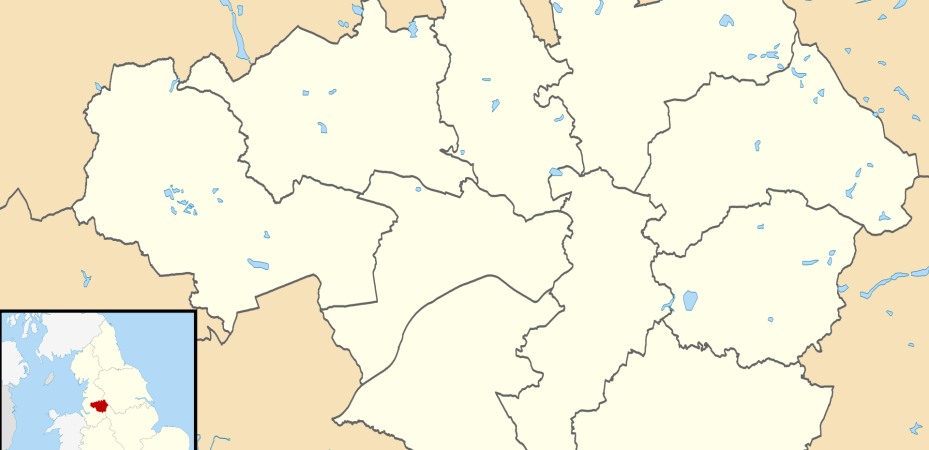
Image: https://commons.wikimedia.org/wiki/File:Greater_Manchester_UK_district_map_(blank).svg Source: Ordnance Survey OpenData. Most data from Boundary-Line product. Lake data from Meridian 2 product. Inset derived from England location map.svg by Spischot. Author: Nilfanion, created using Ordnance Survey data, licensed under the Creative Commons Attribution-Share Alike 3.0 Unported license.


.svg)
