
By Dashty Jamal
Iraq is passing through a sensitive and decisive juncture. On one hand, there is a domestic and international push to restore state sovereignty and implement the principle of “arms exclusively under the authority of the law.” On the other hand, the country faces political volatility and regional complexities in which the role of armed groups remains a determining factor.
Amid these ongoing regional tensions, the visit of Mohammad Baqer Qalibaf, the Speaker of the Iranian Parliament, to Baghdad and his meeting with the Prime Minister, has had deep implications for political balances. This visit was not merely within the framework of bilateral relations; it was a clear message regarding the preservation of the hegemony of regional allies and a move to prevent any sudden security steps that might upset the balance of political decision-making in Iraq.
The Prime Minister is navigating a difficult path, attempting to balance the demands of both Washington and Tehran. This is particularly challenging since he assumed office with the support of the Shia Coordination Framework (which is loyal to Iran) and the tacit approval of the United States. His government is under constant American pressure to dismantle militias linked to the Iranian Revolutionary Guard Corps (IRGC), halt the smuggling of hard currency from Iraq to Iran, create investment opportunities for American companies and strengthen economic ties with Syria. For the United States, the priority is for Baghdad to distance itself from Iranian influence, integrate with American allies in the region, and maintain a strategic balance.
During Qalibaf’s visit to Baghdad, the Iranian demanded – discussed in meetings with official – a portion of the armed groups’ heavy weaponry to be temporarily transferred to Iran as a “trust” (deposit), or for these weapons to be stored in specific locations (rendered inactive) without being directly handed over to the Iraqi government. These proposals are aimed at reducing the likelihood of a direct confrontation between the Iraqi government and the armed groups. In contrast, Iraqi government sources have stated that Baghdad insists on state control over all weaponry.
In the face of these political and security tensions and external and internal pressures, a source within the Coordination Framework revealed that prominent Shia leaders (such as Nouri al-Maliki, Ammar al-Hakim, and Hadi al-Amiri) have presented proposals to the armed groups aimed at calming the situation and reducing friction with the Prime Minister. The core of these proposals is to shift the concept from “disarmament” to “arms management.” This would mean that the use of weapons falls entirely under the command of the Commander-in-Chief of the Armed Forces to prevent any military movement outside of state decisions, particularly regarding Kataib Hezbollah and Harakat Hezbollah al-Nujaba. Simultaneously, a special committee led by Amiri and Hakim has been formed to act as a mediator between these groups and the Prime Minister to prevent political disputes from escalating into field confrontations.
The overall equation suggests that the Prime Minister cannot use swift or forceful methods to disarm militias close to Iran. From a practical standpoint, government policy is leaning toward integration or placing these groups under the official state umbrella rather than total disarmament. The success of any step is tied to the state institutions’ ability to manage crises without collapsing the country’s political stability in the face of domestic and foreign demands.
It is clear that neither can the United States easily and completely pull Iraq out of Iran’s sphere of influence, nor can Iran remain the ultimate and decisive power in Iraq indefinitely. Therefore, Iraq remains a primary arena for the conflict and competition between the US and Iran—a conflict whose effects are not limited to the political and security spheres but also directly influence the direction of Iraq’s domestic policy.
Consequently, the normalization and stabilization of Iraq-US relations cannot be achieved solely by shifting the internal balance of power. Without a reduction in tensions between Washington and Tehran, this remains an arduous task fraught with obstacles. As long as Iraq remains a zone of strategic competition between these two powers, any attempt to establish a balanced and stable relationship with one will inevitably be affected by the nature of the relationship between the US and Iran.
On the other hand, all the forces that have held power in Iraq over the past years – despite their internal conflicts – have shared a consensus. This consensus among militia and sectarian groups aims to impose reactionary rules and regulations to preserve their own positions of power, rather than disagreeing on the actual essence of governance.
Ultimately, the solution lies in launching a broad grassroots movement against sectarian and dynastic rule. This movement must aim to push both the US and Iran out of Iraqi affairs and curtail the influence of Islamic and nationalist forces over the lives of the people. This would create the conditions under which the people of Iraq can freely decide on the future system of governance. Power must return to the Iraqi people and be established based on their will.
Dashty Jamali is Secretary of the International Federation of Iraqi Refugees.
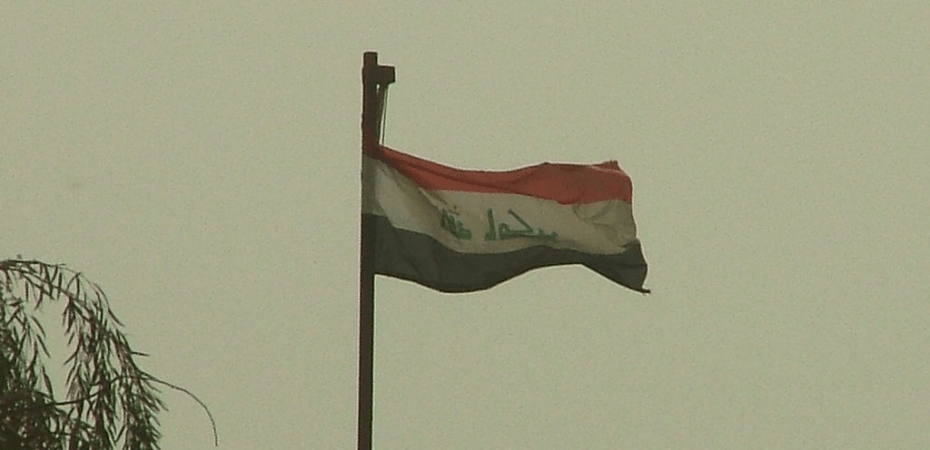
Image: https://openverse.org/image/84681159-7e83-4027-9a3b-5438d94df6ab?q=Iraq+flag&p=7 “Iraq Flag” by Freelancer1 is licensed under CC BY 2.0.

