
The Right to Food Commission comments on this week’s review published by Alan Milburn.
The Commission welcomes the focus on supporting young people into work and believes the review gets a lot right. However, it is concerned that the Milburn review will penalise disabled young people and that it has not focused enough on the types of jobs actually available to young people and whether those jobs pay well enough to ensure they can eat and meet their other basic needs.
When looking at welfare reform, the Commission believes Milburn and the government might be looking at the issue the wrong way around. Rather than focusing primarily on saving money, welfare reform should focus on ensuring we have a system that works for people, provides an adequate income, and ensures they can meet their basic needs like having enough food to eat.
Chair of the Right to Food Commission Professor Barrie Margetts said: “Our evidence from the Right to Food Commission shows that of the 17.6 million people experiencing food insecurity, young people are disproportionately affected. This is often driven by low wages and inadequate social security. Disabled people are also disproportionately affected, making up the vast majority of people using food banks.
“These are exactly the groups the review’s proposals will affect most. It is disappointing that the review does not address the link between food insecurity and being ready to work or learn. Hunger damages both physical and mental health. It saps energy, concentration and confidence. A review that rightly puts mental health at the centre of youth economic inactivity cannot ignore the role hunger plays in creating it.
“The Right to Food Commission calls on the government to commit to ensuring that any reform must start from an adequate income floor that covers the cost of food and other essentials, and that is never taken away. That there is an assessment of the impact of the proposed welfare changes on young people’s access to food, before they go any further. That we create a simple, dignified system that people can access without having to prove themselves again and again. And that young people and disabled people with lived experience of food insecurity shape the design of any new system. Finally, we must protect the Right to Food in Law to ensure that the government doesn’t pass policy which makes access to affordable, adequate food worse.”
Ian Byrne MP, Commission Vice-Chair and Political lead said: “The Milburn Report gets a lot right. But young people’s futures must come before cost-cutting. We need to ensure young people can get jobs that pay enough for them to eat and cover other basic needs. “We absolutely need to support young people whom the system has failed and who are outside employment, education or training. Young people are not to blame. Responsibility lies with political decisions and the wider failures of our economy and society. Improving their lives must come first. We cannot penalise disabled young people or use helping people into work as an excuse to cut their support.
“Too many young people are leaving university saddled with debt or being let down by apprenticeships that fail to provide the practical experience promised. Meanwhile, experienced tradespeople are approaching retirement without the next generation coming through. Skills are being lost and young people denied a future. We need proper apprenticeships linked to real jobs, with support for small businesses to hire people and ensure they can complete their training.
“But getting a job must also mean being able to afford to live. People are working and still going hungry. That is a structural failure and a stain on our country. Public money tops up wages because too many employers do not pay enough to live on. Taxpayers cannot keep subsidising poverty pay while workers struggle to put food on the table. Employers must take responsibility. Any serious plan must tackle low pay, insecure work, poor apprenticeships and the poverty holding young people back. Young people deserve dignity, opportunity and support from cradle to grave.
“Work must provide a route out of poverty. Our political choices must make that possible.”
General Secretary of the Bakers Food and Allied Workers Union and Vice Chair of the Right to Food Commission, Sarah Woolley, said: “It is very concerning that this review from Alan Milburn does not address the structural flaws running through our economy that drive down wages whilst enabling even more corporate profiteering. It does not solve the issue of low incomes experienced by young people if for example they are forced into employment by cutting their social security and forced into temporary part- time work on the minimum wage, whilst working for companies who are still making millions in profits.
“if young people are forced into work on low pay, with insecure hours and temporary contracts, this will entrench them in poverty and food insecurity. Surely, the focus should have been on the number of jobs, as well as the type of employment that is available to young people and indeed across all age groups.
“The reality is that work for far too many people is not paying enough. We know through research we have conducted that our members have to choose between heating and eating, are often skipping meals, reducing their food intake and are reliant on foodbanks, while living in cold homes because they can’t afford to put the heating on because their wages are so low. As a society we need to improve the lives of the millions of people, in and out of work, who are suffering in this way due to the economic imbalance in our country that sees over 17 million people feeling food-insecure due to low incomes.”
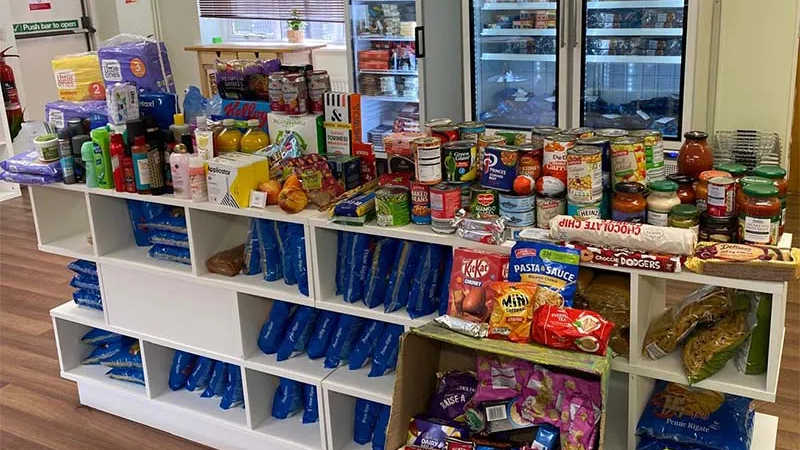
Image: Neater Heat Partners with Aldershot GrubHub. https://www.neaterheat.co.uk/neater-heat-supports-aldershot-grubhub-warming-hearts-homes-and-heaters/ Licence: Attribution-NonCommercial 4.0 International CC BY-NC 4.0 Deed

