
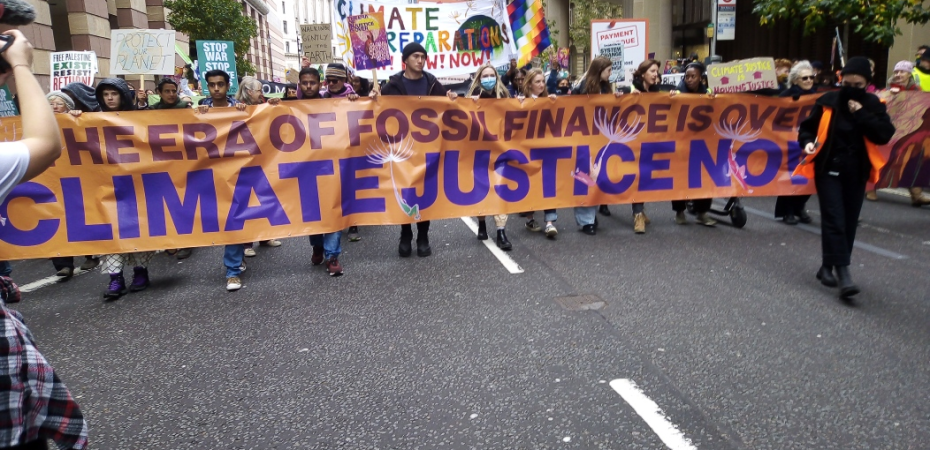
Bumper energy company profits underline the need to accelerate the transition to a green economy.
Hard on the heels of BP’s bumper profits announcement, two more energy firms have posted results. BP reported underlying profits of £2.4 billion in the first quarter of 2026 alone, more than double the same period last year.
Now Scottish Power owners, Iberdrola, have reported a rise in profits in the first quarter of 2026, claiming growth is driven substantially by its regulated network operations in the United Kingdom.
The total profits made by the firm in the UK amount to just under £1 billion in the first three months of the year alone, up from £0.8 billion in the first quarter of 2025 – a 19% increase year on year.
TotalEnergies, which via its NEO NEXT+ arm calls itself the largest producer on the UK Continental Shelf, has also posted improved results. Adjusted net income (a profit measure) for the firm’s first quarter came in at $5.4 billion, up from $4.2bn in Q1 last year and it has now launched a share buyback plan and increased dividends for shareholders.
Questions are also being asked about TotalEnergies’ broader role in UK energy supply, including a government gas contract worth up to £8 billion to supply public sector buildings, from Downing Street to schools and hospitals.
Simon Francis, End Fuel Poverty Coordinator, commented: “Another good day for the energy industry means another kick in the teeth for consumers. Energy network infrastructure is generating strong and growing returns for shareholders, yet these returns ultimately mean higher bills for households.
“What makes this worse is that gas prices, which had shown some signs of easing in recent weeks, are now climbing again. UK gas futures are now 52% higher than this time last year, pushing up the wholesale prices that feed directly into household energy bills. Household bills are forecast to surge again from July, up 90% on pre-crisis levels. The This is not a temporary blip, it is the fossil fuel price rollercoaster in full motion, and millions of households will feel it in their bills.
“Meanwhile, the consolidation of North Sea assets into ever-larger corporate entities reveals where this industry is heading, companies positioning themselves to extract maximum profit from a dying basin while bills remain high.
“As well as taxing profits to ensure Ministers can provide help to those in fuel poverty, the Government must focus on reforms that will actually bring energy bills down. That means breaking the link between electricity prices and volatile gas markets and accelerating insulation and clean heat programmes.”
Robert Palmer, Uplift deputy director said: “It’s appalling that while millions are worrying over energy bills, oil giants like BP are raking in billions. Today the oil major has been given a further boost with an unearned windfall because of the Iran conflict. It’s just the first of the bumper profits oil and gas firms will make as this crisis drags on.
“Worse, BP is also rowing back on the very things, like investment in wind energy and solar, that will get us off the fossil fuel rollercoaster. It wants us to stay hooked on oil and gas so it can keep profiting. The only sensible way to counter energy shocks is by getting off oil and gas through renewables and upgrading our homes with solar power and heat pumps.”
Greener Jobs Alliance
The Greener Jobs Alliance are also calling for a transformative response to the fossil fuel energy crisis. The current crisis incentivizes energy companies to prioritise short-term investment in fossil fuels, while at the same time making excess profits and driving up costs not only of energy, but of everything that requires transportation.
The right, they point out, are promoting a clear agenda on the back of the crisis. It entails:
- Reducing taxes on fossil fuels (which in past experience benefits retailers not consumers)
- Reducing windfall taxes on fossil fuel companies, even as they are making gigantic windfall profits
- Investing in new North Sea oil and gas, even though they know this will make no difference to costs, a tiny difference to supply, and will not halt the decline in jobs as the basin dries up; and/or put fracking back on the energy agenda, even though they know that the UK is geologically unsuitable for doing this viably
- Relaxing mandates on car companies to transition to EVs and developers to build homes that aren’t expensive to heat or don’t use gas to do it
- Pushing hard for more investment in nuclear power, which is the least flexible ‘back up’ available, produces electricity at a cost greater than that of fossil fuels and renewables and would take too long to build to have any impact at all.
These are all non-solutions. In reality, the only answer is to accelerate the transition away from fossil fuels and to do it in a way that creates millions of jobs, is socially equitable – and is therefore transformative.
The Greener Jobs Alliance is proposing four basic principles to tackle the crisis:
- To stop the crisis, stop the war – so the Government should give no support for it in any form and press for peace instead on the same lines as the Spanish Government.
- War profiteering is unacceptable. All windfall profits should be taxed at 100% to fund short term targeted measures like energy price caps to support people through the immediate crisis, and accelerate investment in the transition. Freezing military expenditure at its current level and using the funds earmarked for increases to accelerate the energy transition, including restoring climate funding in overseas development, will be better for national security in all respects too.
- The transition is the solution. All possible measures should be taken to get off fossil fuel dependence and this can only effectively be done through collective measures. For example, an accelerated effective insulation campaign requires properly funded local authority direct labour organisations with workers properly educated on the climate crisis as well as technical skills, targeting areas in fuel poverty as a social measure and not cutting corners as private sector micro companies all too often do. There needs to be planned retraining and redeployment alongside increased investment in the accelerated deployment of renewable energy. This could most effectively be done through public ownership.
- Crisis measures must be socially just. Rationing by price is inherently inequitable. Instead, reduce fossil fuel demand (and therefore prices) by banning private jets, slashing public transport fares (states from Tasmania to the Punjab have made it free) to encourage a shift, and encouraging equitable distribution measures.
Image: c/o Labour Hub

