
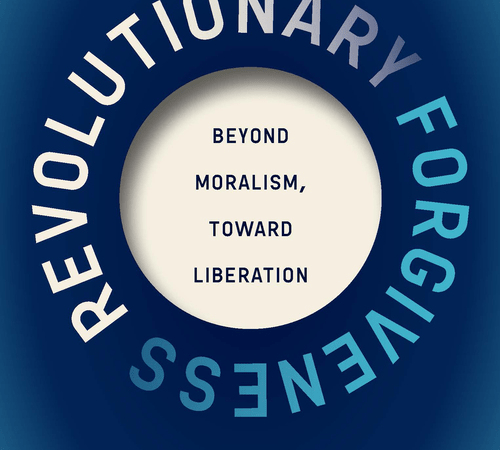
David Renton introduces some of the themes in his new book, published by Haymarket this month.
Many thanks to the editors, who invited me to send over this piece explaining the thinking behind my new book Revolutionary Forgiveness. The first thing I’d like people to grasp is that my book isn’t really a product of the left we’ve got now, which largely seems to be controlled by bureaucratic parties and the time-servers who want to run them. I’m shaped by this moment (how could anyone not be?) but the left I believe in is just as much the one of 100 years ago, of workers’ choirs, of Socialist Sunday Schools, of people who set out from the cities carrying copies of the Clarion newspaper with them hoping to make Socialists wherever they could find them. The book is about revolution, and what we would do afterwards.
The book has the word “forgiveness” in its title, which could be misleading, as I want readers to ask themselves whether “forgiveness” is the sort of virtue in which radicals should believe. There is a chasm between forgiveness and its pair of justice. When people try to imagine a society after the transition, all our recent examples are of societies which forgave before they had justice, and one of my book’s distinctive claims is that movements should call for justice first, should learn to turn the world upside down and that the aftermath of victory is the first point at which forgiveness becomes any sort of worthwhile demand.
To get there, I take readers through the stories of several generations of radicals: Marx (Eleanor, not Karl), Lukács, Trotsky, as well as socialists who we don’t always read, like the existentialist philosopher, Holocaust survivor, and advocate of resentment, Jean Améry. The rules for achieving justice, I argue, don’t change with scale. They’re the same whether the unit you’re thinking about is a (ruptured) friendship, a leftist collective, all of human society.
One trick I learned long ago is that if you want your causes to win, you need to talk as if that victory is already incarnate just in front of you – if you’re a union, a housing campaign, a group of people occupying land as a protest, you need your comrades to believe that they’re about to win, they only have the last and smallest step to take, so that when they act victory is inevitable, and all that’s left is to bask in its achievement.
In a very similar spirit, I argue in this book that a neglected part of the leftist repertoire of protest is the skill of winning gracefully. Causes which have won, albeit temporarily or partially, can usefully learn to tolerate and welcome any repentance on the part of their opponents, as part of the trick of making a victory permanent. You can call this forgiveness, or call it mercy; either way, I’ve written my book to give readers a sense that socialists can win, and win everything.
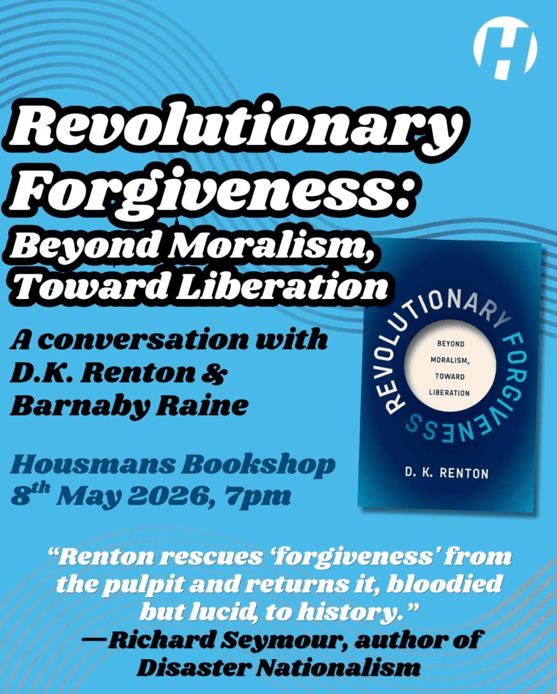
David Renton will be in conversation with Barnaby Raine about his new book at Housmans Bookshop on May 8th at 7pm.
David Renton appears in our latest Labour Left Podcast: How do we Stop Nigel Farage and the Far Right?
 Labour Hub