
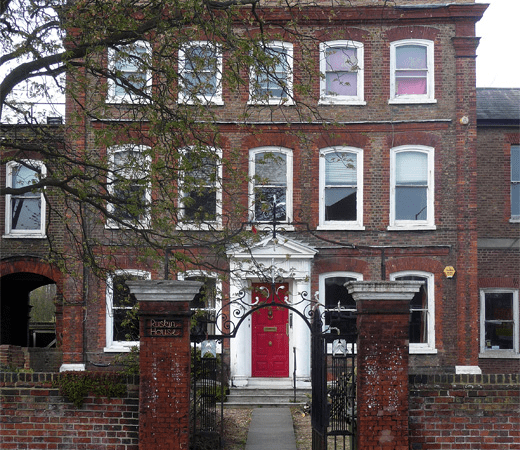
This is an amended version of a talk by Daniel Frost, which was given to a Unite the Union GPM&IT Sector event celebrating the centenary of the General Strike, held at Ruskin House in Croydon on Saturday 2nd May.
On 4th May 1926, workers in many key industries – transport, printing, metal and chemical manufacture, construction, power generation – went on strike in support of the 1.2 million miners who had just been locked out as part of a dispute which stretched back many months.
Other workers soon joined this ‘first line’, often to avoid working with strike-breakers, but sometimes out of sheer enthusiasm. The General Strike had begun.
The possible necessity of a “national strike” – the TUC’s preferred term – had been recognised for some time. It was a decade tense with hopes of revolutionary change. In September 1925, at the TUC annual Congress, the outgoing leader of the engineers’ union, Alonzo Swales, even proclaimed that the world had “entered upon the next and probably the last stage of revolt.”
The central controversy was the future of the mines. On 10th March, a Royal Commission report was published which called for partial nationalisation but also a 13.5% cut in miners’ wages. The mine-owners responded by offering new terms, including wage cuts and longer hours, in defiance of the miners’ slogan: “Not a penny off the pay, not a minute on the day.” The key month would be May, when a nine-month coal subsidy was to come to an end.
Yet despite this long buildup, much of the initiative to prepare for the strike came from below. On 21st March, a “special conference of action” was organised in Battersea, with hundreds of delegates representing nearly a million members. Central to its programme was the creation of local Councils of Action. This “great positive programme” – as local activist Harry Wicks argued in a recently republished pamphlet – “served the class in the nine days of May.”
In Bermondsey, for example, the local Council of Action produced a 6,000-copy daily bulletin, and the Labour council permitted the use of both town halls for strike meetings – including ‘afternoon meetings’ aimed at women. The Councils of Action also played a role in keeping order, with stewards in red armbands stopping traffic to check for TUC permits. Bermondsey reported that they had no arrests, but there were “one or two disturbances” in Borough and Southwark.
However, historian Edd Mustill has described South London as a “hotbed of sabotage and vandalism”, and striking workers sometimes went beyond the bounds of official advice. TGWU pickets at New Cross jammed objects into the rails to keep trams from running; the Guardian claimed that women in Camberwell were laying their children in the road to stop vehicles from passing.
Meanwhile, at the Woolwich Arsenal munitions factory, 7,000 workers went on strike on 4th May only to be ordered back to work by the TUC. Across the country, local councils and union branches struggled to interpret the instructions coming down from above.
The TUC’s approach was especially chaotic when compared to the carefully-laid plans of the government. The Prime Minister, Stanley Baldwin, had been quietly preparing for a general strike since the middle of 1925, with schemes in place to keep power stations operating and the organisation of volunteer strike-breakers.
Most famous were the Organisation for the Maintenance of Supplies, or OMS, which recruited heavily from the middle and upper classes. As Mustill notes, the ‘Order of Mugs and Saps’ often provided an opportunity to realise “long-forgotten boyhood dreams to work on the footplate of a steam engine or behind the wheel of a bus.” But as he also points out, the expectation of the Chief Civil Commissioner – Croydon South MP William Mitchell-Thomson – was that OMS volunteers would be subordinated to the government’s plans.
Croydon in the 1920s was still primarily a middle-class suburb, with a significant blackcoated ‘dormitory population’ that the Croydon Advertiser saw as the “hardest hit” by the strike. I am not sure whether the miners would agree!
On the night of Monday 3rd, an OMS meeting was held at Croydon Town Hall; a local Lloyd’s Bank employee served as their treasurer. Immediately outside on Katharine Street, the British Fascisti – Britian’s first fascist organisation – met in the open air. While the government had officially declined the fascists’ organised support, they were permitted to join the OMS in an individual capacity.
In Croydon and in other boroughs, volunteer strike-breakers tried to operate the trams and buses, or transported people in private cars. They struggled to keep up with demand; the local press described crowds of people milling about or slowly traipsing toward central London. And the strikebreaking could sometimes have disastrous results: on May 7th, a South London bus driven by a volunteer was waylaid by a picket and drove onto the payment, killing a bystander.
Yet while middle-class volunteers did flock to support the government, Croydon was also home to the workers who had stopped the buses and trams in the first place. The local Council of Action was notably successful, even publishing its own paper: the Croydon Worker, which had a circulation of about 3,000. Like Bermondsey, Croydon had a sizeable printing industry, and the Council of Action must have benefited from the expertise of those that had otherwise downed tools.
The old Ruskin House, close to West Croydon, was a major organising centre, with a ‘workers defence corps’ keeping order, and a canteen to raise money for the Miners’ Hardship Fund. It had been founded in 1912 with money from a temperance activist, and moved to its then-site in 1919. There were sports games and acrobatic displays in the garden, and even a performance led by the prestigious Surrey-based composer Rutland Boughton, all described in the second issue of the TUC’s British Worker.
Most often remembered as the founder of the original Glastonbury Festivals, Boughton had courted controversy earlier in the year by wearing ‘plus fours’ and a red tie at a performance at the Albert Hall, and caused an even bigger stir during the General Strike when a staging of Bethlehem (1915) depicted Jesus Christ being born in a miners’ cottage. He had also recently joined the Communist Party.
On 9th May, a “monster demonstration” – as the Council of Action later described it – marched from Ruskin House to Duppas Hill, led by a brass band. With thousands of strikers and their families and supporters, it was the largest protest in Croydon’s history. The Croydon Times reported that there were “young children… in their hundreds”, including “perambulators by the score” and a little boy in a toy motor car.
The strikers were optimistic. “After this little job is all over,” a local activist declared, “Croydon must show the same solidarity politically as it is now showing industrially. The fight will go on! And our victory in the industrial field must be repeated in the political field.”
Across the country, the numbers on strike continued to grow as more industries were called out. On 12th May 12, Bermondsey Council of Action later reported, the “workers were more solid… than at the first.”
Yet behind the scenes, the leadership of the TUC was preparing to surrender. With only vague promises that a compromise would be found for the miners, and without adequate measures to protect those returning to work, the strike was called off. The miners, who had not agreed, remained out, many until as late as November. For other workers, victimisation was widespread: according to Mustill, the sole trade unionist at the Mazawattee Tea Company in South London was sacked after refusing to tear up his union card.
For those who had fought so hard, the end of the strike was a betrayal, and could scarcely be believed. In an interview in Robert Vas’ Nine Days in ’26 (1974), the Labour activist who announced the news from the steps of Ruskin House says that people even wept. The disappointment was enormous. The “absolute solidarity” reported by the Croydon Council of Action hadn’t been enough.
This had serious consequences for the labour movement as a whole. By 1931, as unemployment and disillusionment both grew, trade union density in Croydon fell to just 5%. Moreover, in the November 1926 local elections, Labour was badly punished, as – to quote from Sam Davies and Bob Morley – “links to the trade union movement raised apprehension in the hearts of Croydon’s middle classes.”
There were other recriminations, too. In 1927, the government introduced legislation to outlaw secondary action and mass picketing, closing the legal route to future general strikes. And the leadership of the labour movement also went looking for people to blame: in late 1926, the Labour Party disaffiliated the Teachers Labour League – headed by a Croydon teacher – over supposed Communist links.
However, to focus only on these gloomier outcomes is to lose something of the strike’s significance. Though the local press had been uniformly and unsurprisingly critical of the strike as a whole, they had continually been forced to admit the fact that the strikers were “orderly” and “respectable” – which I suspect was more a reflection of the strength of the labour movement than an absence of “sabotage and vandalism”! By the 1930s and especially after the 1940s, the Labour Party was an established part of Croydon’s political scene. It was starting to achieve victory in the ‘political field’ even where industrial solidarity had fallen short.
Moreover, for all of the disappointment, the strike had helped to cement some important local institutions. Ruskin House, barely a decade old in 1926, is today one of the few surviving labour halls in London, and the headquarters of the Communist Party of Britain and the Morning Star. The workers defence corps apparently survived the strike, and may have come in handy during the confrontations with fascists which peppered the next few years.
And though the course of the general strike can be debated over and over, it cannot be forgotten that it made the ruling classes tremble and that, for nine days, the possibility of a different social order crept into view. I will end with the thoughts of Harold Croft, looking back at the end of the strike’s first day, quoted by Mustill:
“I quickly relapse into an inert but reflective mood – fortuitous impressions of Croydon, Streatham, London, Reading, Swindon and Bristol crowd into my mind and rapidly culminate to a tangible idea of the massive reality of the power and magnitude of the great Strike. Every town and city isolated – seemingly autonomous – yet all indivisibly and indissolubly one in unity and purpose – A vast phalanx of workers still – serious – silent – waiting for the victory of their immense passivity. This massing of toilers to demand a living wage for miners is an epic of Labour.”
And so it was.
Daniel Frost is a historian and UCU member, and the co-editor (with Evan Smith) of In Solidarity, Under Suspicion: The British Far Left from 1956, which was recently reviewed on Labour Hub.
Image: Ruskin House, Croydon. Source: From geograph.org.uk Author: Stephen Richards, licensed under the Creative Commons Attribution-Share Alike 2.0 Generic license.
 Labour Hub
[…] 4, 2026 The General Strike in Croydon Post navigation Reject “Sponsored Slavery” – Defend Migrant Workers’ […]