
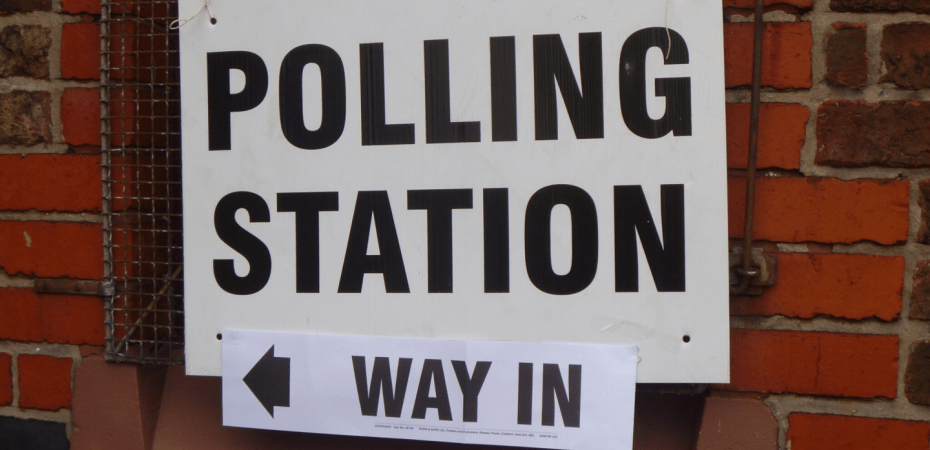
‘Sweeping gains for Reform’ was the dominant headline following the first wave of results in Thursday’s local government elections. It’s undeniable that Reform were highly effective at converting votes into seats, particularly in parts of the North and especially in areas represented by prominent Labour MPs.
BBC Political Editor Chris Mason pointed out that in Tameside, Greater Manchester, the seat of former Deputy Prime Minister Angela Rayner, Labour lost 16 of the 17 seats it was defending to Reform. In nearby Wigan, where the local MP is Cabinet Minister Lisa Nandy, Labour lost all 22 seats it was defending to Reform.
In many such areas, this is a reaction to politics-as-usual, a vote by desperate voters for the ‘Change’ that Keir Starmr promised in 2024 but signally has failed to deliver. Elsewhere, Reform made gains at the expense of the Tories, a straightforward switch between the two right wing parties.
Where did Labour’s votes go?
But polling expert Professor John Curtice counselled caution in drawing any conclusion that it is Reform who are doing most damage to Labour in these elections. “That is not the pattern,” he argued. “A sharp fall in Labour’s performance is accompanied more often by an above average Green performance than it is by a strong Reform performance.”
Politics Professor Rob Ford agreed: while Labour may have lost most seats to Reform, it lost more votes to the Greens and this split allowed Reform to come through the middle. He warned: “If Labour react to this pattern by saying ‘we need to win back votes from Reform’ they risk making a major misdiagnosis, one which could make their current troubles even worse.”
London Mayor Sadiq Khan went further. He said: “Labour has lost votes in London to a variety of different parties, but the biggest change has been Labour voters switching to the Greens.” He said that many people who had voted Labour in 2024 “clearly feel angry, disappointed and let down.”
“They want a Labour government to address the cost-of-living crisis while demonstrating the core values the party was established to promote,” he continued.
Green leader Zack Polanski certainly had a lot to celebrate, including the end of two-party politics, as his party made substantial gains, especially in London. But without proportional representation, this fracturing of the progressive vote has unhealthy consequences, with good socialists in both Labour and Greens – and sometimes independents too – running against each other. In some cases, this allowed candidates – sometimes from the far right – to win with a small percentage of the vote. With a future Reform-led government a distinct possibility, this is a luxury the left simply cannot afford.
For Labour, the break-up of its coalition of radical progressives and working class voters is producing a stark polarisation. Nowhere is this clearer than in Wales with the Labour voters moving to Plaid Cymru and Reform to demand different kinds of radical change. Even Labour’s First Minister Eluned Morgan could not retain her seat. Contrast this with the picture a few years ago under Mark Drakeford’s leadership, when a clear Welsh Labour identity helped the Party in Wales to buck national trends that were unfavourable to Labour.
Some caution clearly needs to be exercised when extrapolating from these results projections for the Westminster Parliament. Turnout may have been higher than usual, but it was still significantly lower than in a general election. For a variety of reasons, older voters tend to vote more in second-order elections, and this cohort tends to favour parties of the right, compared to younger voters. In a general election, where younger voters are likely to be more engaged, the Greens might do even better, Reform UK less so.
Who’s responsible?
Much of the blame for Labour’s dire performance must be attributed to the Starmer government’s failure to deliver the promised change, instead attacking Labour’s base with the winter fuel allowance policy and the continuation of the two-child benefit cap. All the worthy things the government may be doing are marginalised by its refusal to address the cost of living crisis.
But a good part of Labour’s dismal showing is down to what the Starmer faction, led by the now disgraced Mandelson and McSweeney, have done, not just in government, but to the Party itself, with their factional expulsions, deselections and blocking of decent candidates.
Take Hackney, where the Greens made sweeping gains to win a majority on the Council and the mayoralty. “Hackney North MP Diane Abbott has been suspended for nearly two years and the Constituency Labour Party is moribund, without even branch meetings, let alone any pretence at internal democracy. The result is yesterday’s collapse in the vote,” pointed out David Osland.
In Brent, northwest London, where Labour won all but eight seats in 2022, the Council passed to no overall control. The Borough Party was the centre of a Campaign Improvement Board, answerable only to the National Executive Committee. It tore up the local selection process by branches and imposed candidates centrally, barring several sitting councillors, many from the left, with impeccable records, in the process. Some joined the Greens and retained their seats. The widespread demoralisation of Labour members undermined effective campaigning and all opposition parties made sweeping gains, leaving Labour councillors in a minority.
Change the leader
The news agenda has moved on from analysing the results to weighing up how long Keir Starmer has left in office. A change of leadership is undoubtedly necessary, as increasing numbers of MPs – and not just from the left – are now saying publicly.
“There was one issue on the door and it was Keir. If he leads us into a future election we are dead,” one Labour MP told the BBC. Another usually loyal Labour MP, in an area that went heavily Reform in Thursday’s poll, said the reassuring thing was that voters didn’t really hate Labour, but “they did hate Keir.”
Former Cabinet member Louise Haigh said: “Unless the government delivers urgent and significant change it’s clear the PM cannot lead us in to the next election.”
Clive Lewis MP spelled it out: “The Prime Minister needs to go. That is not negotiable. The only thing now in his gift is the nature of the contest that follows. It must be open, fair and legitimate. Everyone who should be part of that process must be allowed to take part. That means no blocking Andy Burnham. And it means a clear departure date, no later than the autumn. These results are existential for the Labour Party. Existential. Anyone still saying we should simply carry on ‘delivering the plan’ has lost touch with political reality, and with the public. The voters have spoken. It is not for the leadership to pretend they have not.”
This is eminently sensible. And it should be added: replacing the current leader with a ‘better communicator’ will not address Labour’s woes if the political direction remains the same. Labour needs new leadership, but also new policies that address the combined crises of health, climate and cost of living – and much more.
Urgent! A letter from defeated Labour councillors and candidates is now circulating calling on Keir Starmer to set a timetable for his departure. Please get defeated candidates and councillors to sign.
On the Monday evening after the elections – 11th May, 6.30 – 7.30 – Arise and the Trade Union Coordinating Group will be hosting an online discussion asking these questions. Left MPs including John McDonnell and Richard Burgon will be joined by trade union leaders Fran Heathcote (PCS) and Daniel Kebede (NEU) to think through the significance of what has happened and the political lessons for activists on the left.
Register here to join the meeting.
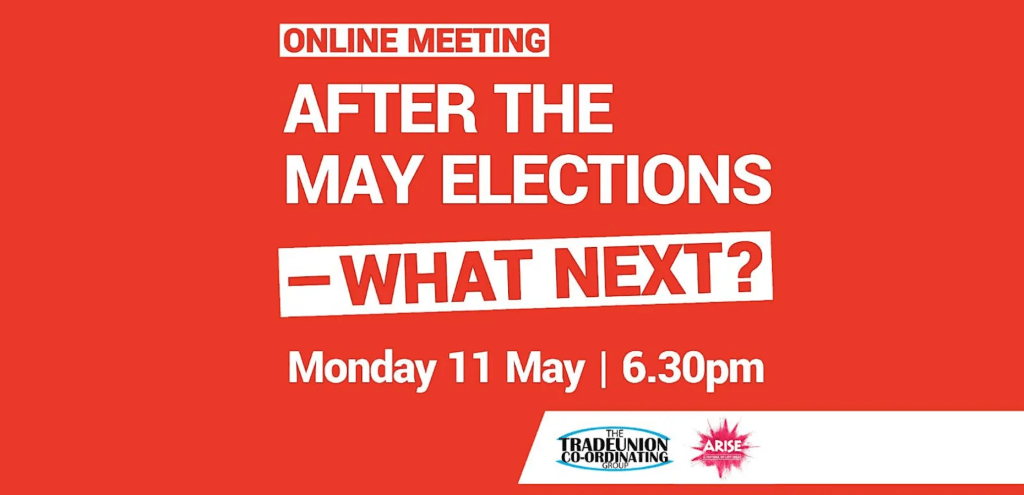
Image: Creator: rawpixel.com | Credit: rawpixel.com. CC0 1.0 UNIVERSAL Deed


[…] Labour’s catastrophic results necessitate new leadership Labour Hub. […]