
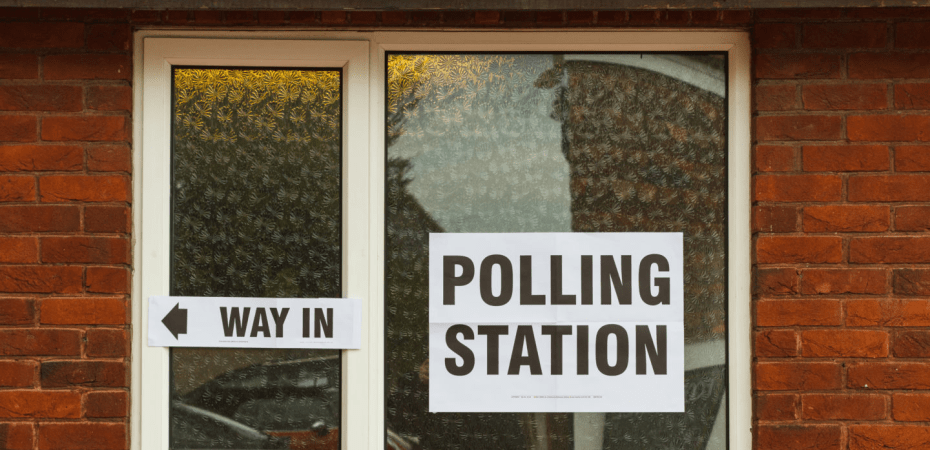
Michael Hindley looks at May’s local election results in the former East Lancashire Cotton Belt.
The four East Lancashire District Council elections (Blackburn with Darwen, Burnley, Hyndburn and Pendle) all saw a collapse in Labour representation, and though the boundaries do not correspond exactly to Westminster constituencies, the results spell disaster for Labour in the sub-region. The Westminster Labour victories in 2024 were a temporary respite, and not a revival.
It is clear that the long-term prospects for Labour in East Lancashire were set in the ‘Red Wall’ election of 2019, and didn’t fundamentally change in 2024.
To recap, the metropolitan chatterati got very excited with Boris Johnson’s victory in December 2019, which in essence was down to a clever, opportunist slogan of “Get Brexit Done”. That election was in effect the ‘Second EU Referendum’, which Keir Starmer, then Labour’s Europe Spokesperson, had naively demanded. Labour promised to renegotiate the terms of membership and put the subsequent new deal to another referendum; a faint echo of a far more skilful Harold Wilson’s clever winning strategy in 1974.
East Lancashire had been staunchly anti-Europe in the 1975 Referendum held to confirm our membership. East Lancs retains a deep reservoir of Euro-scepticism, as I well know as a former Hyndburn Council leader and MEP for the sub-region from 1984 to 1999.
The clever campaign slogan of “Get Brexit Done” fed on that anti-EU sentiment, despite East Lancashire’s great success in attracting EU funds, which to some degree alleviated the ravages of Thatcher’s stripping of East Lancashire’s manufacturing base and starving of local government aid.
Only in Blackburn did Labour escape the General Election of December 2019 election cull.
But Johnson and subsequent Tory governments had not the slightest intention of alleviating the misery of social and economic distress and the failures of successive PMs, Liz Truss and Rishi Sunak drained the Tory Party’s reservoir of support.
The Labour ‘landslide’ of 2024 had everything to do with the peculiarities of the First Post the Post (FPTP) electoral system and the exhaustion of the Tory Party had very little to do with Starmer’s cautious policies. In fact in the East Lancs seats, which Labour regained (Burnley, Hyndburn, Rossendale and Darwen and Pendle) the Labour vote actually fell,but was compensated for by a collapse in the Tory vote.
Starmer did not enter Number 10 with any popular enthusiasm, more a relief that the Tories were gone.
The immediate fiasco of the winter fuel allowance and the ‘second child cap’ severely dented any idea that ‘change’ was coming. Also, the immediate revelation that the Labour elite were freeloading on Lord Alii’s generosity and also accepting freebies for pop concerts and sporting events increased the grumbling that ‘they’re all the same’.
The collapse in confidence in Starmer’s Labour had set in long before the damage of the Mandelson scandal. Most significant, and often overlooked in election analysis, is the continued impact of the Israeli government’s horrendous destruction and slaughter in Gaza, which still continues despite a bogus ceasefire.
The outrage felt among the usually loyal Muslim Labour voters and representatives has been profound and lasting. Throughout East Lancs, Muslim Labour councillors resigned in protest against the Starmer government’s failure not only to explicitly condemn Israel’s attacks on Gaza, but in effect to become complicit in those attacks. Many of those ‘Independent’ defectors kept their seats in the recent local elections and there are now some thirty-five such local councillors identifiable as Muslim ‘Gaza’ Labour defectors.
This disillusion climaxed in the Rochdale by-election in February 2024. The local Labour Party selected the much respected and competent Labour Leader on Lancashire County Council and Pendle-based, Azhar Ali. Some intemperate remarks of his were magnified by a press in full hue and cry to accuse another Labour figure of anti-Semitism. The former MP and former Leader of Lancashire County Council, Louise Ellman, at first spoke in his favour but then on the leaking of further intemperate remarks, joined the chorus to drop Azhar Ali.
Buckling under the pressure, the Labour leadership dropped Azhar Ali but too late to stop his name appearing on the ballot paper. The inevitable drop in the Labour vote in Rochdale led to the itinerant radical George Galloway winning the seat, only to lose the seat in the May General Election.
Azhar Ali is now the Leader of a small groups of Greens and Independents in County Hall under the name ‘Progressive Lancashire’, perhaps a sign of things to come.
Worst was to follow for Labour in Lancashire in the County elections in May 2025, when Reform advanced spectacularly from a few councillors to a staggering overall majority.
The percentage of people identifying themselves as Muslims in East Lancashire boroughs is higher than the national average of 6.5%. (Blackburn 35%, Pendle 26%, Burnley and Hyndburn 14% each), figures eagerly seized on by the anti-immigration Reform party, which deliberately conflates immigration with refugees and asylum seekers.
The nadir of Labour’s loss of support amongst Muslim voters came in the General Election of 2024, when an ‘Independent’ won Blackburn, which had been a safe Labour seat for decades and had had Philip Snowden, Barbara Castle and Jack Straw as its MPs.
The winner, Adnad Hussain, another Labour defector, won. Like other Muslim representatives, Hussain, a local businessman, is pro-Palestine but socially conservative. Although an initial supporter of the ‘Independent Group’ of MPs, he soon left after its transformation into ‘Your Party’.
The Greens have little impact on the electoral map of East Lancashire, but a growing membership and have an appeal to younger votes.
Boundary changes in East Lancashire were gerrymandered by the Tories to ensure their survival but the plan failed disastrously as the Reform surge ate into the Tory vote. Ironically it was this loss of Tory votes, which saw Labour win seats despite a fall in the Labour vote.
Labour needs East Lancashire seats to form a government and it is significant that two of Labour’s 2024 new winners, have called for Starmer’s resignation. My own conversations throughout East Lancs with many friends with longstanding experience in Labour politics were adamant that Starmer’s unpopularity was a decisive issue on the doorstep.
Will Andy Burnham’s possible entry into an eventual leadership contest change the picture? Currently reading Chris Moss’ Lancashire, I came across a very apt description of Lancashire urban society. Though Lancashire is now a post-industrial society, the atmosphere hasn’t really changed. The original quote comes from 1930s Bolton but is as accurate today as then.
“…the complete discrepancy between what all the people I am working with think and what is being reported in the newspapers and on the BBC. The gap between leader and led, between… Westminster chatter and Lancashire talk has built an invisible barrier that is dangerous in democracy.”
The feeling in ‘Red Wall’ East Lancs, is that Starmer simply doesn’t get it; but Andy Burnham does. Burnham’s record in Manchester, East Lancs’ most accessible metropolis, is admired across all sections of the North West.
The challenge though is, can Andy Burnham translate that empathy into national policy?
Michael Hindley is a former Leader of Hyndburn Council, a Lancashire County Councillor and MEP for Lancashire East. He is now a freelance writer and speaker on international politics. This article first appeared on his substack here.
Image: https://socialistalternative.info/2022/07/01/wakefield-by-election-yet-another-tory-catastrophe/ Creator: Kim Hansen (Wikimedia Commons User:Slaunger) Copyright: Kim Hansen Licence: Attribution 3.0 Unported CC BY 3.0 Deed

