
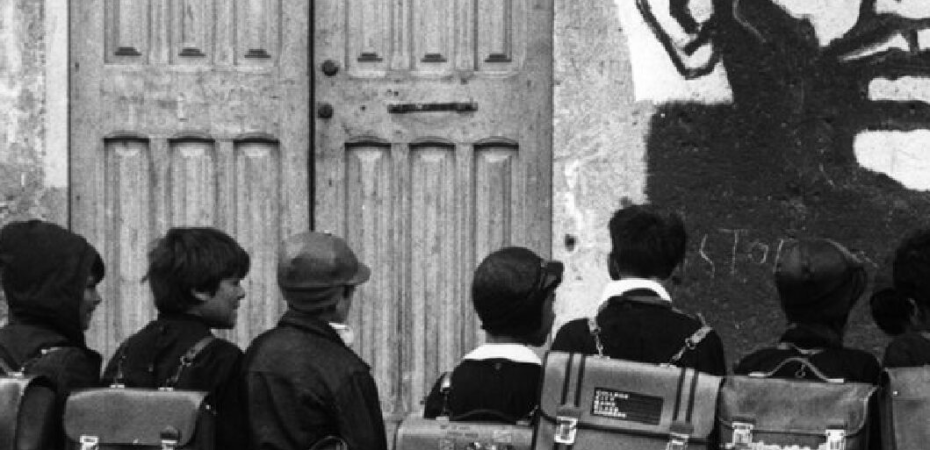
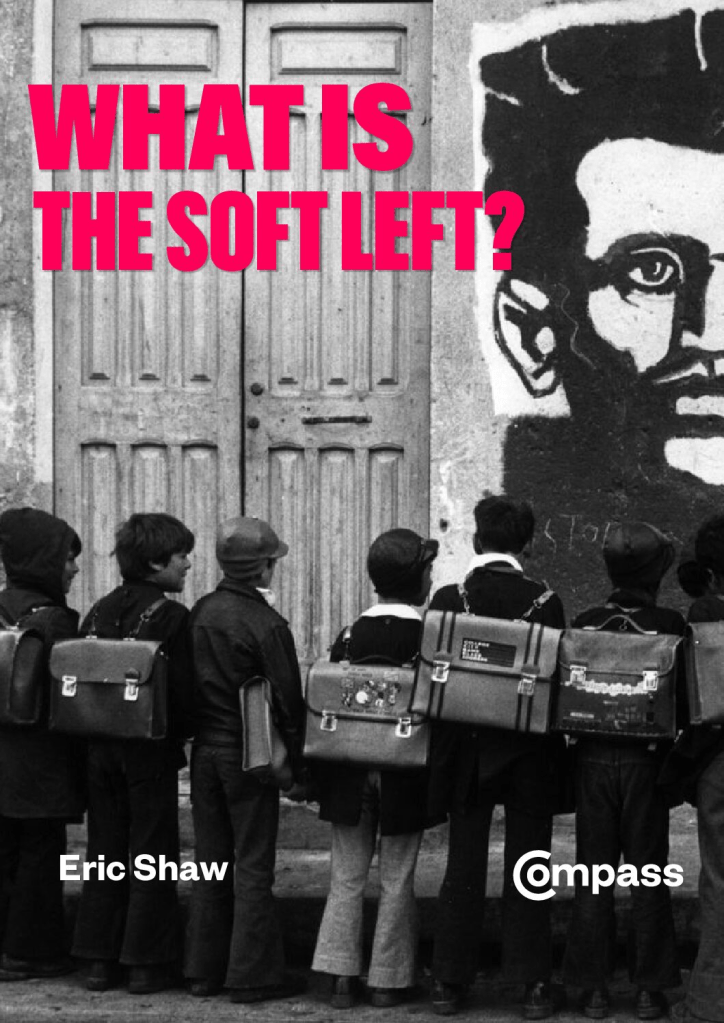
A new pamphlet from Compass, published today, looks at where this current came from and what it stands for now.
Currents in the Labour Party have always been in a state of evolution but the split between ‘hard’ and ‘soft’ left that originated in the early 1980s has proved unusually enduring, argues Eric Shaw, Honorary Research Fellow at the University of Stirling, in this new paper.
Its greatest influence in recent years was probably under Ed Miliband’s leadership of the Party. But while it is true that the highly centralised control of candidate selections was relaxed somewhat in these years, in comparison to the hyper-factional approach of the Blair-Brown era, the influence of ‘soft left’ thinking at this time should not be exaggerated. In terms of policy, with Ed Balls the Shadow Chancellor, there was more continuity than rupture with the economic thinking of New Labour. And anyone who remembers Labour’s “Controls on Immigration” mugs in the 2015 general election will be all to aware of the continuity with current Starmerite thinking.
The ‘soft left’ was neither very helpful nor loyal under Jeremy Corbyn’s leadership of the Party. That judgment applies to Keir Starmer, whose ‘soft left’ ten-point platform was quickly shredded once he became leader. Starmer’s move right, which has continued apace since ethe 2024 general election, has seen the sidelining of a number of prominent ‘soft left’ figures, including the removal of Angela Rayner and Louise Haigh from the Cabinet. But Lucy Powell’s defeat of Bridget Phillipson in last year’s Deputy Leadership race suggests there is ongoing support for the group from the Party’s declining membership.
Leader-in-waiting Andy Burnham now seems to be firmly linked to this wing of the Party, backed by the newly-launched Mainstream group. The right, by contrast, is in disarray following the disgrace of Mandelson and the departure of Chief of Staff Morgan McSweeney. Starmer himself is electorally toxic and unlikely to survive and Wes Streeting, the natural candidate of the right, is not popular, due to his close association with the Labour Together faction and enthusiasm for NHS privatisers.
Shaw tries to pin down the central principles that animate the ‘soft left’: equality, collectivism, pluralism. The problem is that at this level of abstraction, virtually nobody would disagree with such core values. The difficulty arises when hard policy choices need to be made – and funded.
So Shaw seeks to propose what a democratic left current should stand for concretely: proportional representation, the public ownership of essential utilities including water, and a move away from rampant hyper-factionalism towards a more inclusive politics – something, he agues that the ‘hard left’ has not always been clear about.
It’s highly positive that there is a process of political renewal taking place in the Party that it is trying to define itself against the right wing neoliberalism embraced by Starmer. But one of the characteristics of the ‘soft left’ historically has been a tendency to cave in to pressure. Hence Shaw emphasises “the need for extra-parliamentary forces to be mobilised to support and hold to account the more transformative left-green government that would be facing the hostility of conservative and national populist forces.”
Shaw perceives the ‘hard left’ to be largely marginalised today. That’s true in terms of its strength as an organised current in representative politics. But if the ‘soft left’ promise of even a limited dose of “radical pragmatism” fails to deliver, the mounting pressure to fix the threefold cost of living, climate and public services crises may well bring more sweeping solutions to the fore.
To rad the pamphlet, see here.


[…] the dreaded bond markets is not clear. Perhaps that is why Eric Shaw, in a recent Compass pamphlet reviewed on this site, wrote of “the need for extra-parliamentary forces to be mobilised” in support of such a […]
[…] much more than a re-heated ‘stakeholder capitalism’, a defining feature of the politics of the ‘soft left’ of which Burnham sees himself as a […]