
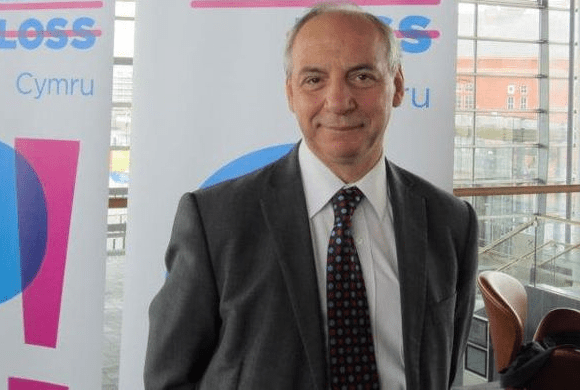
Senedd Member Mike Hedges reflects on May 7th’s election results in Wales.
The result of the 2026 Senedd election was somewhere between very disappointing and disastrous for Labour in Wales. The party moved from thirty out of 60 seats in 2021 to nine out of 96 in 2026, with no seats west of Loughor bridge and only one in north Wales.
While Labour did very badly in council elections in England, losing almost 1,500 seats, the result in Wales was substantially worse. I estimate that if the result had mirrored England, then the Labour Party in Wales would have dropped from an estimated 44 to 18 to 20 seats.
It is very easy to blame the Labour Party at Westminster and Keir Starmer for the election result and, as anyone who canvassed on the doorstep will know, opposition to Keir Starmer and the actions of the Westminster government in Wales were raised regularly and rarely in a positive way.
The defeat was inevitable, but the scale of the defeat was made in Wales. While we all have twenty-twenty hindsight, I raised issues that badly affected the Labour vote during the last Senedd.
The default 20mph speed limit on roads caused a problem with the electorate. I wrote for Nation Cymru, and the Welsh Fabians regarding default 20mph.
I said then and say now 20mph is suitable for estate roads and C roads. The problem arises when it is applied to A and B roads. The default speed limit became a problem due to the highly prescriptive guidance from the Welsh government.
A straightforward way out of this is to remove the guidance on A and B roads and let council highway departments, who know the area and the roads, set the speed limit for these roads. To change the speed limit, the consent of those living on a road would also be needed.
The second issue was the increase in the number of members, the size of the constituencies and the voting system.
We have an electoral system with the new Senedd constituencies being paired combinations of the 32 seats set out for Westminster, each electing six members from a closed list system where candidates were ranked by political party.
As I said before the system was approved, many people, including me, were concerned about the size of the Senedd constituency based upon the parliamentary constituency of Brecon, Radnor and Cwmtawe, stretching from Knighton and Presteigne on the English border to Lower Brynamman and Gwaen-Cae-Gurwen on the border with Carmarthenshire being merged with Swansea East and Neath.
This is why I asked if we had to go to 96 members for 32 three-member constituencies, where the Senedd and Westminster Parliament have the same boundaries.
The increase in the number of Senedd members to 96 with very little public debate was very unpopular. There was little attempt to justify it or to get public support. It was imposed; the electorate did not like it and were vociferous about it, but were ignored.
That the voting system was not understood is an understatement. Many people like to vote for individuals they know not for a party. The proportionality of the voting system was ignored by some political parties and by the media, especially television.
The election was often presented in the media as a two-horse race between Plaid Cymru and Reform UK. Plaid Cymru’s campaign theme was vote Plaid Cymru to stop Reform.
The system meant that 15% of the vote guaranteed a seat and 12% of the vote meant that a party would probably win a seat. TV totally ignored this and continued with the narrative that it was a two-horse race.
Problems also existed in health. While total waiting lists were reducing, many people were waiting. It was difficult to get an appointment with a GP and there were problems with registering with an NHS dentist.
The campaign failed to make the economic argument against separatism. According to David Phillips of the IFS: “The most recent estimates from the ONS suggest that public expenditure in Wales is about 10 percent higher than it is across the UK as whole.”
When you include a population share of some of those UK-wide expenses like debt interest, defence and foreign affairs and so on, because unfortunately Wales does have lower levels of productivity and somewhat lower levels of employment, the tax revenues per person, particularly from the income tax and the direct tax side, are lower and, overall, are estimated to be about 75 percent or so of the UK average.
So, if you were to say that Wales keeps its revenues, funds its own public spending, and then makes a population-based contribution to the UK-wide situation, at least as it stands, that would lead to quite a large fiscal deficit for Wales.
I think that when we estimated the, if you like, net fiscal transfer, the difference between Wales’s relative revenues and relative spending, as it stands under current constitutional arrangements and current economic performance, it is about £12 billion to £15 billion a year.
That is a substantial number. In order for there to be a net budget benefit to Wales, you would need to see something substantially change in terms of economic performance within Wales.
Mike Hedges is the Senedd Member for Gower and Swansea.
Image: Mike Hedges. Author: Steve Cushen, licensed under the Creative Commons Attribution-Share Alike 3.0 Unported license.

