
Urariano Mota was emailed by a school student some questions about his experience of living under the Brazilian dictatorship, which lasted from 1964 to 1985. He shares his answers here.
Q: What was your daily life like during the military government in Brazil? Did the dictatorship affect any aspect of your daily life or that of your family?
A: Terrible. Everyday life was a nightmare. I went to live in a boarding house, where I sheltered a persecuted comrade, which was extremely risky because if he were caught, we would both be arrested, tortured, and killed. I was able to shelter clandestine comrades, hiding them from the police and the owner of the boarding house as well. As if that weren’t enough, in the same room where I slept, there was a mimeograph under my bed (an object that reproduced documents, which for us was like a small printing press). I tell this story in my novel A mais longa duração da juventude (translated into English by Peter Lownds under the title Never-Ending Youth).
Q: Was there any news story that made an impression on you during the military dictatorship? If so, which one?
A:Many things left a mark on me. One of the most serious was the massacre, known as the Granja São Bento case, where a friend of mine was murdered. Six people were killed at once, whom the dictatorship called ‘terrorists’. Among them was Soledad Barrett, about whom I wrote the novel Soledad no Recife, and who returns in another novel, Never-Ending Youth.
Q: Did you hear about the people who were persecuted by the military regime?
A: Yes. We communicated through clandestine pamphlets (small mimeographed texts) that reported on those killed and tortured by the dictatorship. We also communicated through what we were told at our ‘meeting points’ – a ‘meeting point’ was a place where subversives would gather. The maximum time allowed to stay at the place was five minutes. Otherwise, we had to leave quickly, without looking back. The latecomer could have been arrested and could have ‘given away’ the meeting place. We all had our watches set to Radio Tamandaré in Recife.
Q: Were cases of persecution or torture known to everyone?
A: No. The press, the entire press, was censored. There were police and military censors in newspaper offices. Theatre, music and cinema were under censorship. Artists were exiled to Europe (Chico Buarque, Caetano Veloso, Gilberto Gil…). So crimes and kidnappings were a state secret. A young activist would die, and the army would deny that the prisoner had ever been in the barracks. The police would enter suspects’ homes at any time. And woe betide anyone who mentioned what they had seen. They could also be arrested and ‘disappeared’. The bodies were buried without identification, like paupers. Some of them in mass graves. Terror, absolute terror.
Q: What was your opinion of the military dictatorship at that time? Is your opinion the same now, or has it changed? Why?
A: My opinion at the time was that I was living under a regime of terror. I lived in anguish, the deepest anguish. And I could not escape my duty to help my persecuted comrades. I wasn’t going to condemn them to death by my omission. So I made myself present, out of a sense of duty. Not out of joy or courage. Out of fear. But fear also drives action. My opinion today is more mature. So much so that I write about that period in novels and articles that are read and discussed. I would never want to go back to that time. But in my memory, I am already there, permanently. I know what Brazilian dictatorship is. I write about it.
Urariano Mota is a writer, journalist and author of novels that narrate the dictatorship, such as Soledad no Recife and Never-Ending Youth (New York: International Publishers).
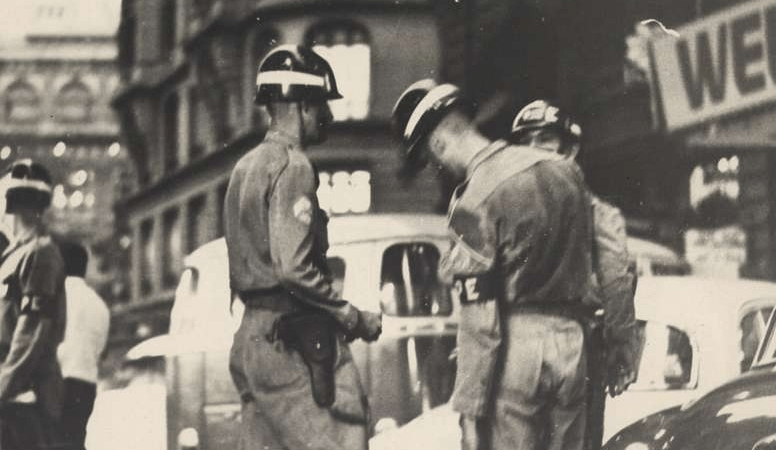
Image:The 1964 Brazilian Coup d’état https://depic.ai/entity/1964_Brazilian_coup_d%27%C3%A9tat. Creator: GetArchive | Credit: GetArchive Copyright: No known copyright restrictions. Licence: CC0 1.0 Universal CC0 1.0Deed

