
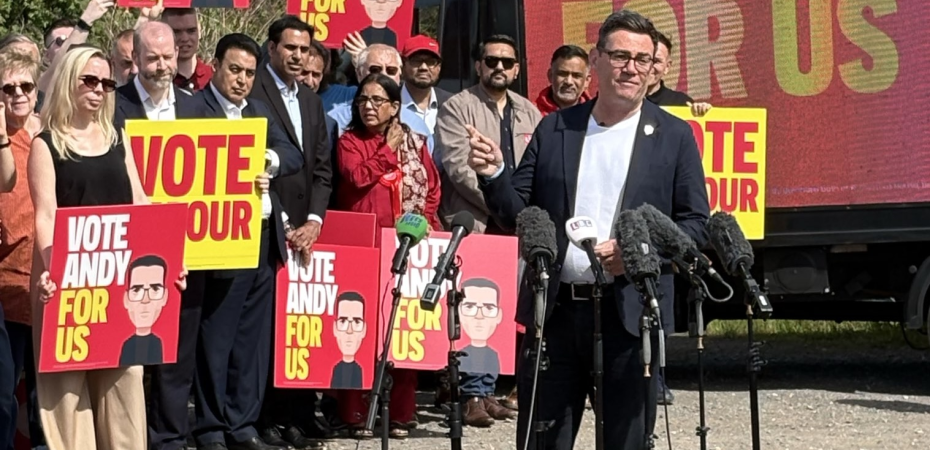
Susan Press reports from the front line of Andy Burnham’s campaign.
As by-elections go, the stakes for this one couldn’t be higher. If Andy Burnham wins, he will probably be not just the next leader of the Labour Party but Prime Minister. If he loses, his Parliamentary ambitions are probably at an end and Labour’s death spiral is likely to continue.
The recent local election results were bad everywhere for the Party but much, much worse in Makerfield where Reform won all eight wards up for election and Labour took just 23 per cent of the vote. In Wigan borough, which includes Makerfield, Reform won 24 out of 25 council seats up for election.
Those catastrophic statistics would suggest a by-election at this time to be not only an absolute gift to the far right but utterly insane. But this is also the area where just two years ago Andy Burnham won 66.1 per cent of the vote.
Pretty much everything is hinging on the irrefutable fact that as an extremely popular Mayor of Greater Manchester since 2017 and the only senior UK politician with a positive net rating, Burnham could reverse Labour’s decline. But politically this is still an existential event which could go horribly wrong.
Recent polling by More In Common showed Labour would rise from 22 per cent to 30 per cent if Burnham were Labour leader and that he could win back a third of voters who have left Labour since 2024. In Makerfield, the gap is much narrower.
First polling by Survation shows Labour ahead of Reform by just 43 per cent to 40 and the demographics which would have made Gorton and Denton a safe bet for him are strikingly absent.
‘Makerfield’ includes several old mining villages right on the edge of Greater Manchester including parts of Wigan, and Ashton in Makerfield itself. But it also has a fair number of more affluent areas and new housing developments.
Heading into the constituency on the main road from Wigan Wallgate station, there are disconcerting numbers of turquoise stakes and posters in the windows. However, Labour is fast catching up and fortunately for Team Burnham, Reform could not have picked a more disastrous candidate.
The first week of Rob Kenyon’s campaign was not, as planned, an inspiring story about a plucky plumber’s fight against the establishment. Instead, thanks to Hope Not Hate’s investigations, there was viral coverage of his deleted history on social media of sexism, racism and homophobia.
Most political parties would have shown the guy the door and found a swift replacement. Reform’s leadership brazened it out, dismissing dozens of abhorrent comments as the kind of ‘locker-room banter’ you would expect from an ordinary working bloke.
That gamble might yet pay off with hardcore Reform supporters, but in the wake of the allegations many voters are already saying they won’t vote for him. Some are switching back to Labour but others are bizarrely opting for Rupert Lowe’s Restore, which didn’t even stand candidates in May. It’s a right-wing split which could help Labour get over the line.
The Green Party candidate had to withdraw amid allegations over social media posts and was replaced by another candidate with no link to the area At 3 per cent in the Makerfield polls and bookies’ odds of 500/1, their presence on the ballot paper is unlikely to affect Labour’s chances significantly, however much some might have preferred them to stand down completely.
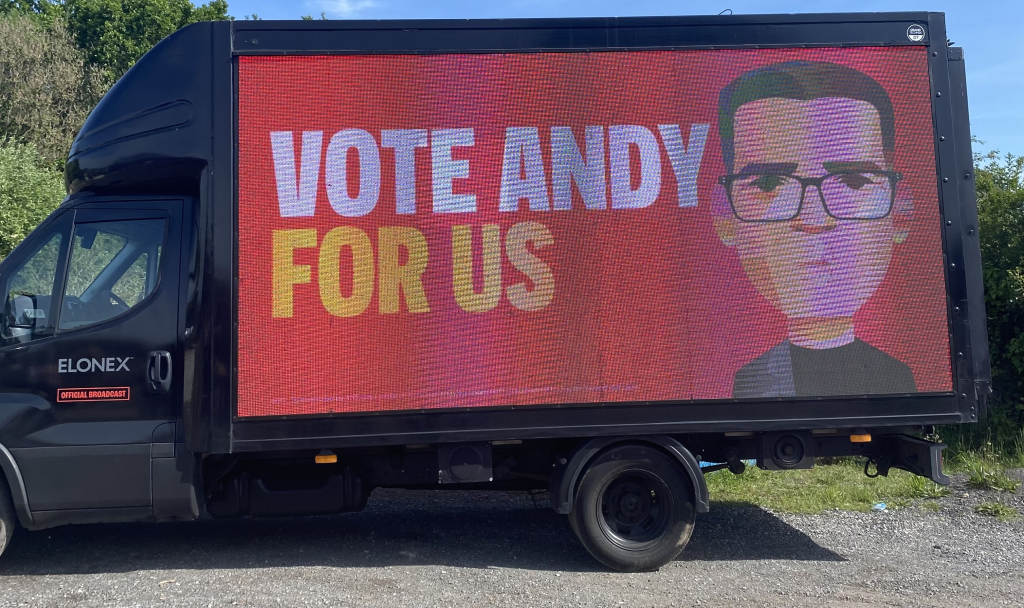
In Makerfield, the personal is not just political but absolutely key to what Labour hopes will be a winning strategy. Most Labour stakes and posters are branded ‘Andy For Us’. Not only is he pounding the streets, Burnham is on a mission to actually visit as many ‘Undecideds’ as he can and flip them back to Labour.
The official briefing from the top is not just Voter ID but to try and find out why supporters have switched sides. And when you speak to former Labour voters, they are seriously angry at how unaffordable life has become and the government’s failure to deliver on their 2024 promise of ‘Change’. The winter fuel allowance debacle has still not been forgiven and people feel Starmer and affluent MPs in Westminster have abandoned them.
In a constituency which is one of the least ethnically diverse in Greater Manchester and 96 per cent White British, the Middle East and Gaza is unusually hardly on the radar.
This area was once the heartland of Lancashire’s mining industry and a place of working-class solidarity. Campaign HQ is an old Labour Club, still equipped with a bar where activists can get a pint or two. Field operations are in the adjacent community room, where dozens of Party staffers are organising the foot soldiers.
Just one week into the campaign, every door in the constituency has already been knocked with plans to go back until every single person has been spoken to. Hundreds of Party members and MPs are turning out daily and most of the PLP including Starmer himself have pledged support – though whether that particular promise is welcome is questionable.
The chances are that it is still going to be very tight on election day June 18th.
Nearby Runcorn was lost by just six votes to Reform. And perhaps inevitably, their support seems highest in the very areas which once would have been solidly Labour, the kind of place where, as one old man said to me “you could put up a pig on a stick with a red rosette round here and it would still win.”
On the old council estates, the prevailing mood is one of disillusionment and apathy. In the newer housing developments, things are a lot more mixed.
Most people you speak to rate Burnham personally even if they have no time for the Party nationally. So it’s not hard to appreciate why the main focus of the campaign is on domestic issues, sorting out the cost of living crisis and talking up Burnham’s long and highly successful track-record as Mayor of Greater Manchester.
Yes, the apparent backtracking on issues like Brexit, fiscal rules, immigration and trans rights may already have angered many on the left and raised understandable doubts about how much government policy would actually change under a Burnham leadership.
Pragmatically, in a socially conservative part of the north-west which voted 63.9 per cent to Leave, the laser focus on ‘Manchesterism’ is probably his optimum path to victory.
Susan Press is a former Labour councillor and member of Calder Valley CLP.
Photos: c/o author.
 Labour Hub