
Murad Qureshi puts the urgent case for a Land Value Tax.
As the race to shape the future of our Party and our country intensifies, any serious contender for the leadership must confront a brutal triad of economic realities. We are looking down the barrel of non-existent economic growth, a tight grip by bond markets on sovereign policy, and a massive, decades-long transfer of wealth away from those who work for a living toward those who simply own assets. Jonathan Portes recently outlined several paths a new leader could take to shift the politics of growth. But if we want a strategy that delivers structural change rather than cosmetic tweaks, we have to talk about the ground beneath our feet.
Andy Burnham has rightly broken cover on this issue, highlighting the stark reality that land in the UK is drastically “undertaxed.” He is entirely correct. Land accounts for a staggering 60 per cent of the UK’s total net worth. Yet, it represents one of the most unequal distributions of wealth in modern history. Less than 1 per cent of the population owns half of England.
Meanwhile, in Makerfield—the Lancashire constituency where Burnham is seeking to win his parliamentary return—over a quarter of households own no land or property assets at all.
This is the frontline of modern inequality. It is a tale of two Britains: one that extracts unearned wealth from skyrocketing land values, and another that is squeezed by high rents and hollowed-out public services.
To fund the progressive future Labour members want to see—including robust, universal social care and a mass program of council house building—tax reform is not optional; it is critical. However, the standard objection from the right of the political spectrum, and from the cautious corners of our own movement, is always the same: “What about the markets?”
Burnham has promised to placate the bond markets by sticking to strict borrowing rules and avoiding hikes on productive taxes. This is where the beauty of a Land Value Tax (LVT) lies. Unlike taxes on trade, income, and enterprise—which can shrink economic activity—taxing the unimproved value of land does not spook the markets or hamper growth. You cannot move land to an offshore tax haven, and you cannot stop producing it.
History and economic consensus demonstrate that a substantial LVT actively stimulates the real economy through three clear mechanisms.
First, it allows us to replace economically damaging, regressive taxes that hit working-class communities the hardest. Second, it penalizes land hoarding, forcing the efficient use of land and repairing a deeply broken housing market. Third, and perhaps most importantly, it shifts the incentives of our entire financial system. It redirects investment away from speculative wealth extraction—like landlordism and property flipping—and forces capital into the real economy where useful goods, services, and green industries are created.
Burnham has indicated a degree of caution, suggesting he would not go “straight to” a land value tax. But given the scale of the crisis we face, we cannot afford to kick this can down the road. If LVT can foster genuine economic growth, fund our social priorities, and redistribute wealth without violating fiscal responsibility, we must push our leadership candidates to be bolder.
If not this, then what? And if not straight away, then when? We must ask the question directly: why not now, Andy?
Murad Qureshi is a former Member of the London Assembly, and Chair of the Labour Land Campaign, writing in a personal capacity.
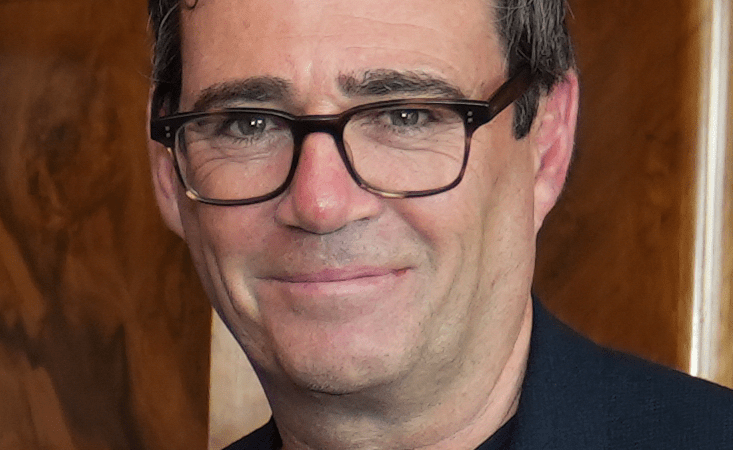
Image: https://commons.wikimedia.org/wiki/File:Andy_Burnham_on_13_August_2024_%28cropped_2%29.jpg Source: https://www.flickr.com/photos/26320652@N02/53921141434/ Author: Scottish Government, licensed under the Creative Commons Attribution 2.0 Generic license.


