
By Dashty Jamal
Following the 40-day US-Israeli war against Iran and its conclusion with a ceasefire, it is evident that the political objectives of the aggressors have not achieved. Despite the assassination of Islamic Republic leaders, the destruction of infrastructure and the deaths of thousands of civilians, the policy of Trump and his allies failed to break the regime.
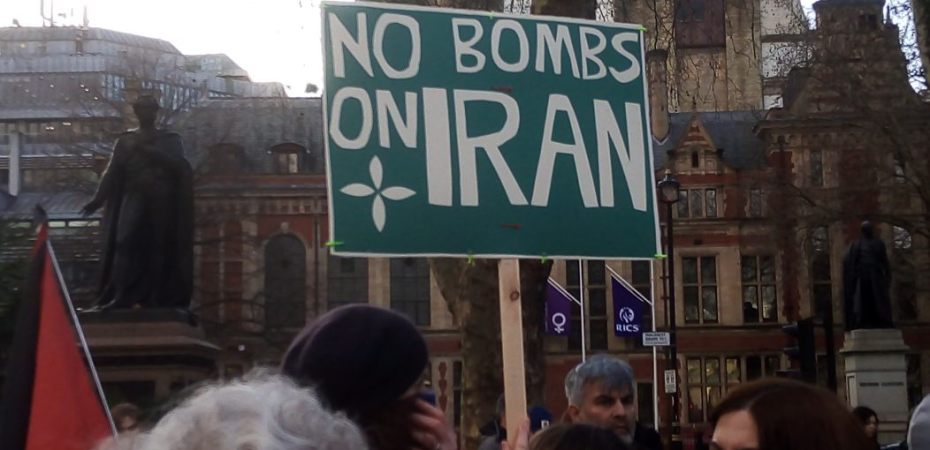
The prolongation of the war brought about several significant changes in the region. The most important was the threat of closing the Strait of Hormuz, which had a direct impact on global energy transport and trade. Furthermore, Iranian attacks on US and Israeli military bases and centres in the region further complicated the security landscape. At the same time, diverging stances within NATO and Europe, alongside rising anti-war protests in the US and Europe, increased political pressure on Washington. Combined, these factors forced Trump to impose a ceasefire.
The end of fighting and the resumption of negotiations, particularly within the framework of the 14-point memorandum between Iran and the US, known as the “Islamabad Memorandum,” mediated by Pakistan and Qatar, has created a new situation. While this agreement leaves the situation in a state of suspended animation between war and an incomplete peace, it has brought fresh hope to the lives of millions in Iran and the region who had been living under the shadow of war, with their security and stability severely threatened.
The memorandum includes several key points:
· An end to hostilities on all fronts.
· The suspension of military operations.
· The lifting of sanctions on oil and petrochemicals for a period of 60 days.
· Ensuring the free movement of vessels through the Strait of Hormuz.
· Allocating $300 billion for the reconstruction of Iran’s economy.
· Allowing the International Atomic Energy Agency (IAEA) to conduct inspections alongside the lifting of sanctions.
The US and Iran have shown a readiness to resume negotiations, even though the situation remains trapped between war and an incomplete peace due to the prolonged nature of the crisis and the intensity of the conflict.
The Regime’s Internal Exploitation of the Conflict
The military attack on Iran provided a significant opportunity for the Islamic Republic. Under the guise of defending the homeland, the regime attempted to fuel Iranian nationalism and rally a segment of society around itself. Through propaganda, it sought to portray itself as the sole guardian of national security. The regime used the war to impose a militaristic atmosphere on society, sideline popular protests, and launch a new wave of repression and security crackdowns.
Concurrently, pressure on political prisoners intensified, marked by heavy sentences, the restriction of judicial rights and harsh treatment. Hunger strikes became a primary method of protest, but the health condition of many prisoners remains critical. Furthermore, their families face constant threats and harassment, while the government utilizes internet shutdowns and media censorship to conceal dissent and its own crimes.
By issuing unjust and severe sentences, the Islamic Republic launched a new wave of executions targeting political activists and individuals accused of spying for the enemy during the war, while continuing to arrest and suppress freedom seekers and political opponents. This is in addition to the immense human casualties and devastation that the war forced upon Iranian society.
The Realignment of Political Forces
The military assault on Iran split the bourgeois and nationalist opposition into two camps. One camp opposed the war under the banner of defending the homeland and resisting enemy attacks. The other camp supported the US-Israeli assault under the pretext of overthrowing the Islamic Republic through foreign intervention.
In this context, the monarchists, Kurdish nationalist forces, the Mujahedin-e Khalq (MEK), various ethnic groups and even some parts of the left have participated in this destructive dynamic. They formally declared themselves ready to serve as the ground forces for the US-Israeli war, and certain pro-war Kurdish factions were even granted astronomical financial resources. Despite their political differences, this bloc united to spread propaganda, incite uprisings inside Iran and legitimize attacks on the Iranian people, posing a serious threat to the revolutionary movement of the masses against the Islamic Republic.
In contrast, a segment of communists and worker-communist parties in Iran and Iraq stood as the only political force that clearly opposed the US–Israeli military attack and the war. They stood simultaneously against the Islamic Republic and militarism, defending the people of Iran, the working class, women and the achievements of the revolutionary movement. Furthermore, the communists opposed the forced imposition of poverty and the regime’s execution of campaigns carried out under the pretext of war. They exposed the policies and schemes of the bourgeois and nationalist opposition, championing the fundamental rights and freedoms of the Iranian people.
At the same time, as part of the global anti-war front, they sought to mobilize international labour unions, communist and socialist forces to support the appeals of labour and freedom activists within Iran. They called for an immediate end to the war, the lifting of sanctions, and a halt to economic warfare. These imperialist policies, driven by the pursuit of US hegemony, have subjected millions of people to inflation, poverty, and misery, while creating a breeding ground for the rise of fascist and racist movements and the division of the working class in several European countries and the UK.
A New Chapter of Struggle
The Middle East is now entering a new phase. The decline of US hegemony, the formation of new alliances, and shifts in the imperialist and regional balance of power have created a novel dynamic. However, these changes do not yet guarantee a lasting peace. In this environment, the Israeli government, the Islamic Republic and global powers are each seeking to protect and expand their own interests and influence.
Inside Iran, while the Islamic Republic attempts to justify its failures and manufacture a security atmosphere under the banner of patriotism to reconstitute and tighten its grip on power, the halting of this war offers an opening. It provides an opportunity for the resurgence of the revolutionary movement of the Iranian people and the working class to resume their struggle against poverty, unemployment, tyranny and for the ultimate overthrow of the Islamic Republic.
This new situation places a heavier responsibility on the shoulders of communist workers to raise the consciousness of the working class and unite their ranks around a clear vision. The goal is to expand the influence of communism and organize the working class and popular protests around a socialist horizon.
From this perspective, the overthrow of the Islamic Republic must serve as the first step toward empowering the working class and ending an oppressive regime that has crushed the lives of the Iranian people and society for over forty years.
The end of the war is not the end of the conflict. it is the beginning of a new phase of struggle. If the working class, along with communist and socialist forces, can organize themselves, act in solidarity, and stand globally against militarism and warmongering, they can shift the balance of power in favour of the working class and the oppressed.
Dashty Jamal is a member of the Solidarity with the Iranian Workers’ Movement Committee (Chair: John McDonnell MP).
Image c/o Labour Hub.
 Labour Hub