
By John Davies
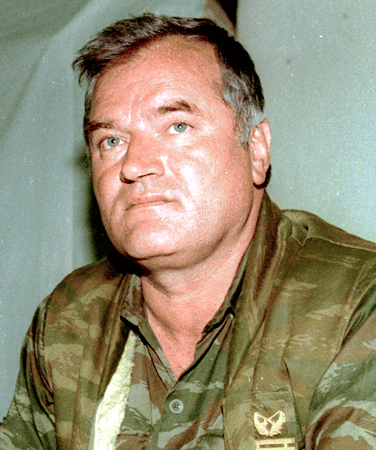
The Serbian general and war criminal Ratko Mladić, the butcher of Srebrenica and too many other places to mention, died last week. It’s an opportunity for reflection, and I felt I couldn’t let it pass. It has made me think of my time in Bosnia, but also more recent events in Iran, Ukraine and Syria.
I had barely heard of Bosnia in 1993 but it ended up playing a big part in my life for the rest of the decade, and beyond. Serb nationalists started murdering Bosnian Muslims and Croats in 1993 with the aim of partitioning Bosnia along ethnic/religious lines. I got involved with Workers Aid, and this solidarity campaign and the extraordinary country itself sort of swallowed me up.
At the height of the Serbian wars on Bosnia and Kosova, this working class initiative sent about twenty convoys of aid to those countries. We started with the multi-ethnic mining town of Tuzla, in Bosnia, whose miners had sent material support to the British miners in their great strike of 1984-85. The ethnic cleansing started in Bosnia only a couple of years after the pulling down of the Berlin wall and the subsequent disintegration of various east European countries claiming to be socialist.
When Bosnia was part of Yugoslavia (until 1992), Tuzla had the highest level of inter-marriage between the three religious groups (not that religion had much sway in many former Yugoslav towns). In the final census before the break-up it had the highest percentage of citizens who identified as Yugoslav, rather than Bosnian, Serb, Croat or other nationalities.
It was the spirit of places like Tuzla that Ratko Mladić and the Serb nationalist leader Radovan Karadzic had to destroy. Mladić’s forces murdered hundreds in nearby Brcko, and threw the bodies into the river Sava. Other towns suffered similar fates, particularly in eastern Bosnia.
Tuzla, however, survived – as did its Serb Orthodox church, protected by its citizens, of all faiths.
Seeing the success of the Serb ethnic cleansers, from 1991 western governments were happy to oversee Bosnia being carved up into ethnic statelets. They drew up a series of plans to do just this, all of which failed in the face of determined Bosnian opposition.
Western complicity was evident from the beginning. For example, although the CIA knew about Serb death and rape camps in the Prijedor region, it kept shtum for more than a year.
The worst of the killing took place in 1992, when Bosnia had very little with which to defend itself – the bulk of the Yugoslav army, with its largely Serb officer corps, had gone over to Mladić.
In the face of this huge military disparity, Douglas Hurd, the old-Etonian British foreign secretary, intervened by opposing lifting the arms embargo on Bosnia, imposed in September 1991 – as did David Owen before him and Malcolm Rifkind afterwards. Hurd drawled that “we don’t want a level killing field” – a patrician, Tory and thoroughly laughable nod towards pacifist opposition to war in general.
It echoed the condescending drivel in the media about Balkan people being predisposed to fighting and war (rather like the Irish – remember them? – or for that matter the ‘fascist Ukrainians’) and of having ‘primitive ethnic hatreds’, the cliché of the hour.
But when people are attacked they defend themselves. And un-level killing fields are particularly bloody places.
Although the killing by Mladić’s forces continued after 1992, it did so at a slower pace, as the Bosnian defences became organised. But as we moved into 1995 anyone who had been paying attention knew that two eastern Bosnian enclaves, Srebrenica and Zepa, were vulnerable.
These contained largely Muslim populations and were a demographic anomaly for those planning ethnic division. However, Srebrenica’s citizens had organised its defence well, with one particular heavy gun commanding a large area.
But in 1994 they handed over this gun and other positions to the UN military force UNPROFOR, on the understanding that both Srebrenica and Zepa would become designated “Safe Areas” under UN protection. Then, in the spring of 1995, Mladić’s forces surrounded Srebrenica, the larger of the two enclaves.
In July 1995, some days before the massacre which ensued, I attended a large public meeting at Leeds University. On the top table were Tariq Ali and Alex Callinicos, a leading member of the Socialist Workers Party (SWP).
Tariq Ali called for the UN to intervene – it already had, catastrophically – and Callinicos pushed the SWP line of, ‘a plague on all your houses’.
The arms embargo imposed by western governments in 1991 had effectively frozen the massive military superiority of the Serb nationalist forces. Far from calling for its lifting, Callinicos argued, to caricature only slightly, that the Balkan working class had to pull its socks up and unite. Taking sides was out of the question.
The slogan “self-defence is no offence” was relevant, as far as the SWP was concerned, to an attack on an Asian grandmother in Bradford, but was deemed to be inappropriate for her Muslim counterpart in Srebrenica. The instruction to unite with their class brothers – Serb nationalist ethnic cleaners and murderers – was a fantasy, as would have been uniting with the National Front in Bradford.
The SWP – to be fair, like most of the ‘left’ – preserved its pristine rhetoric throughout the war, a condescending neutrality maintained while watching more than a hundred thousand Bosnians murdered. All while mouthing vapid slogans.
And UNPROFOR, having taken over control of the military positions defending Srebrenica, handed over those same positions to Mladić’s Serb nationalists. The UNPROFOR Dutch soldiers then helped Mladić separate the men and boys, thus facilitating the murder of about 8,000 innocent civilians. Calls at the last minute by UN special forces spotters to bomb Mladic’s forces were over-ruled by Yasushi Akashi, the UN special representative.
More than 30 years later, many on the ‘left’ still feel uncomfortable talking about Bosnia and Kosova. Some – including, shamefully, Noam Chomsky – even went as far as to question or even deny the reality of what had happened.
NATO had bombed Serbia; surely, the logic went, the Serbs could not therefore be the bad guys. No dialectics here, just binary simplicity.
Ratko Mladić was a monster. You can read first-hand accounts of his chilling behaviour at Srebrenica – statements given by mothers, describing how Mladić watched and smiled reassuringly, as sixteen-year-old boys were taken away to be mowed down in a nearby field.
But Mladić was aided by the UN’s complicity, and in the case of Thomas Karremans, the Dutch UNPROFOR commander at Srebrenica, they toasted that complicity from sparkling champagne flutes.
As for the British ‘left’, the vast majority of it kept their slogans clean.
Bosnian echoes
The reaction of most of the British left to the ethnic cleansing of the 1990s appeared to me to be almost Pavlovian, and reactions to what happened in Syria and current reactions to events in Ukraine and Iran, have echoes of that instinctive ‘anti-imperialism’. When in 1995 NATO – belatedly, reluctantly – bombed the Serb Stalinists-turned-nationalists who were ethnically cleansing Bosnia and Kosova, the left energetically denounced such intervention. But no such denunciations had been made over earlier western interventions, most notoriously the arms embargo. When a former ‘socialist’ country is attacked (usually, on the Iran/Gaza scale, to a minor degree), no matter how dictatorial or fascistic its regime has become, Pavlov’s bell has rung and the selective British anti-imperialists start rushing to defend whichever reactionary regime it might be ‘leading the anti-imperialist struggle’. Why this obsessive defence of dictatorial regimes who, from time, cross swords with the USA?
In the early nineties much of the British left saw in former-Yugoslavia the acceptable face of Stalinism. Yes, things had gone wrong with the ‘socialist project’, badly wrong in the Soviet Union, Romania, East Germany and other eastern bloc countries. But at least there was Yugoslavia. There were of course differences. In Yugoslavia the overturn in social relations resulted from a popular mass movement, not from a Red Army diktat. This difference could be seen in the workers’ ownership of factories, an ownership admittedly made largely meaningless by top-down Communist Party control.
But as the economy crashed in the late 1980s after Tito’s death, workers across Yugoslavia tried to breathe life into their ownership and tried to take control. Milosevic’s Serb-controlled Yugoslavia was directed at smashing up this workers’ movement. Behind all the violence was the question of who gets to control the wealth of the country – the workers or the gangsters. Milosevic threw his lot in with the gangsters, of whom the war criminals Mladić and the para-military thug Arkan were leaders.
A Serb socialist friend of ours, Rade Pavlovic, made this point another way. He argued that the violence was not an expression of ancient hatreds but of the difficulty the gangsters had in crushing working class opposition to their attempted looting of the country.
So Yugoslavia was different in some important respects from other repressive ‘socialist’ states. But on the national question there were tragic similarities. As in the Soviet Union, Yugoslavia was dominated to an extent by one nationality – Serb – with others, to varying degrees, occupying lesser prominence politically. Slovenia was significantly more prosperous than Serbia, and Croatia slightly so, but the social product per capita figures from 1991 are revealing: Slovenia: 212; Croatia: 123; Vojvodina (an autonomous region within Serbia): 119; Serbia: 93; Montenegro: 78; Bosnia-Hercegovina: 74; Macedonia: 66; Kosova: 33.
When we visited a Kosovar miner’s house in 1996, the floor was brushed mud and you could count the utensils on one hand. But for Kosovar Albanians the oppression wasn’t just economic. There was no state education for Albanians in their own language, and there were no jobs for Albanians in state institutions like the police. The state was entirely Serb. This domination by Serbs in key areas of the Yugoslav state was most notable in the JNA, the Yugoslav People’s Army. While made up of soldiers from all the nationalities, the officer corps was dominated by Serbs. As I see it, these national inequalities are an echo of those in the Soviet Union.
The identification of anti-imperialist credentials in the Putin regime is, for some at least, based on a nostalgia for the old Soviet Union. Yes, there were problems with the Soviet system, to paraphrase a certain strand of leftist logic, but at least it was a bulwark against US imperialism. Often this reluctance to criticise the current Russian government goes hand in with World War Two nostalgia, the invocation of the 20+ million Soviet war dead somehow proving that Russia, under Putin, needs to be given some slack.
Similar attitudes were apparent over Bosnia. For some – Tony Benn included – Serbia and Milosevic embodied the struggle of the Yugoslav Partisans against Nazism. Sometimes an oversimplified summary of that struggle took the shape of Serbs struggling against both the Nazis and fascist Croatians (Ustasa), whereas the picture was much more complicated. Serb and Croat partisans both fought against the Nazis, but Serbs and Croats both also fought for their respective nationalist movements, the Chetniks and Ustasa.
This nostalgic support for the Partisans was allied with the belief that in some way Milosevic was fighting to maintain socialist Yugoslavia, to prevent its break-up. I’ve seen this echoed in an absurd form on social media recently in relation to Ukraine, with one polemicist arguing that Putin is fighting to defend the remnants of the gains of the October revolution. In the Bosnian case it often went hand-in-hand with rhetoric about Albanian nationalism and of German plotting with the fascist Croatians to break up the country.
In Ukraine the rhetoric accuses fascist Ukraine of allying with western imperialists plotting to break up Russia. But Putin has hitched his cart to Great-Russian chauvinism and the Orthodox church, and Milosevic did the same at the infamous rally at Kosovo Polje in June, 1989. In what many believe signified the green light for violence against non-Serbs, Milosevic openly invoked the Orthodox Christian struggle against Islam, symbolised in Serb iconography by the mediaeval battle of 1389.
By 1995 the Serb government, far from preserving socialism, was beginning to negotiate with foreign corporations about the privatisation of utilities. These included Nat West Markets, who employed the former British foreign secretary, Douglas Hurd, to meet Milosevic and advise about the selling off of Serb Telecom.
Likewise, there were very few denunciations of Putin from the left when he armed Assad, helping him to carry out the murder of hundreds of thousands of Syrians.
The Syrian events of ten years ago are slightly different, but do involve an instinctive jump to campism, the outlook which sees the world divided into bad guys (US imperialism and its allies) and anyone opposed to them – good guys.
Syrian Ba’athism’s brutal version of Arab nationalism attracted ‘conditional support’ from many left groups. The conditionality was always rather abstract and tended to wither away, so that organisations like the Workers Revolutionary Party, of which I was briefly a member, ended up taking money from the regime and supporting the execution of Iraqi communists. That is an extreme and grotesque example, but the brutality and anti-working class actions of Saddam Hussein, Ghaddafi and Assad were put to one side or simply denied whenever their usually cordial relations with US imperialism hit the buffers.
The violence in Syria was directed against the widespread and peaceful movement for democratic rights. As in Bosnia, the violence of the regime was needed to break up this movement. When the left supports this or that regime because it is being attacked by the US, they turn their backs on the working class, supporting one regime against another, indifferent to the workers’ movement.
Maybe Iran is the clearest example of this. A regime which murderously crushed the women’s freedom movement, did the same to the protests over the cost of living early this year and has over decades murdered and tortured countless socialists and progressives, gets supported by the left (critically!) when it is attacked by the US. My enemy’s enemy is my friend. To re-work a reformist slogan from many years ago, this binary road to socialism seems very much like a betrayal of socialist internationalism.
John Davies is a writer, actor and activist.
Image: https://commons.wikimedia.org/wiki/File:Evstafiev-ratko-mladic-1993-w.jpg General Ratko Mladić during UN-mediated talks at Sarajevo airport in 1993. Author: Фото: Михаил Евстафьев / Photo by Evstafiev Mikhail, licensed under the Creative Commons Attribution-Share Alike 3.0 Unported license.


[…] in 2022. I would also highly recommend this, written in 2026 on the death of Bosnian Serb military leader and war criminal Ratko Mladić. And […]
[…] Appeal to international trade unions/ New evidence of Russian torture, & more here and here/ Parallels between Bosnia and Ukraine/ Volyn killings: a conversation/ Wildberries […]