
Its current offensive against the Greens suggests just that.
Andy Burnham’s rise to the Labour leadership has clearly reversed the Party’s fortunes in the short term. But this week’s budget will underline that tough decisions lie ahead, which will continue to make the going rough. Members need to start thinking: where do we want our Party to be in two or three years’ time?
All over Europe, the hard right are on the march. Despite Reform UK’s current difficulties, nobody believes that the threat of this very well-funded organisation has gone away. Now organised fascists are marching on our streets, and the broadest coalition must be built against them.
At the electoral level, even before Burnham spoke in favour of proportional representation, there was a strong feeling that two-party politics is dead. Looking ahead, Labour may well need the support of other progressive forces to continue to govern into a second term.
Wrong-headed
All of which makes the Labour apparatus’s current offensive against the Greens not just wrong-headed, but ultimately self-defeating. Why is its overriding focus attacking the left, inside the Party and out, when far more serious issues are at stake?
Many people have raised genuine concerns about the resolution on Zionism recently passed at the Green Party Conference. Whatever one’s views, there is something fundamentally repugnant in the way Labour Party officials are exploiting its flaws for point-scoring purposes.
Even before the motion was passed, Labour’s bureaucracy was mounting an offensive against the Greens as if they were somehow worse than the traditional parties Labour has sought to share power with. This is particularly the case in London, where six former Labour councils are now Green-run, four of which are now led by councillors who claim they were forced out of the Labour Party.
Many of the new Green councillors were individuals who had been barred from running for Labour again by factionally motivated regional panels, as in Brent, where eight Labour councillors were barred from seeking their local branches’ nomination for a new term. All of them were from minoritised communities and all had signed a statement calling for a ceasefire in Gaza in October 2023. Following this self-inflicted wound, Brent went from an almost solidly Labour council to No Overall Control after this May’s local elections.
Local Labour Starmer loyalists were quick to react: the Greens were the new enemy. This pattern was repeated elsewhere.
Not just the Greens under pressure
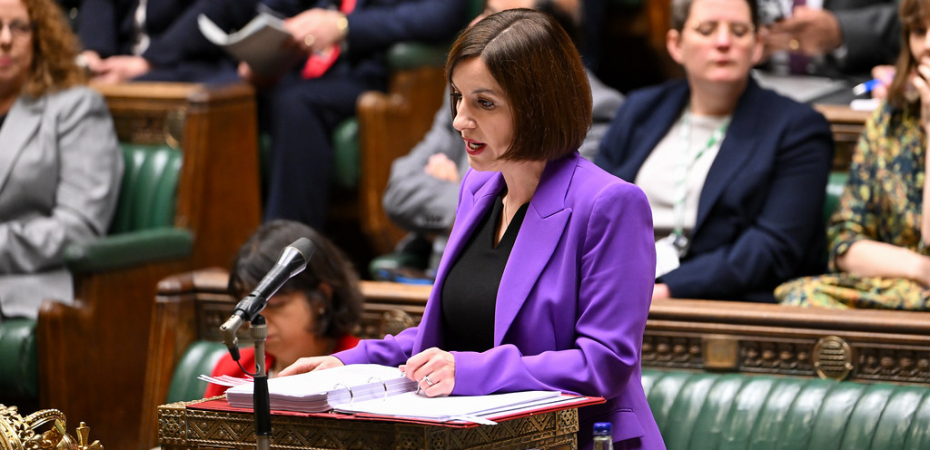
Following the Green Party Conference’s passage of the controversial motion on Zionism this autumn, Labour’s Chair, Bridget Phillipson, said local Labour groups working with Green Party politicians must review their agreements and end them unless the Greens locally reject their party’s Conference motion.
Green councillors are now under considerable pressure to dissociate themselves from their party’s policy. A website called ‘Zionism is not Racism’ is demanding that not just Greens repudiate the policy, but councillors from other parties do too. It’s instructive how a complex issue is reduced to a simple yes-no binary for the supposed purposes of deciding the parameters of political acceptability.
It is worth underlining here that the policy of the current Israeli government is to denounce any criticism of Israel as antisemitic. This view has been pushed relentlessly over the last few years and it has clearly had some impact on Westminster politics. Thus the last Tory Home Secretary could repeatedly misrepresent peaceful demonstrations in London for Palestinian rights as “hate marches.”
Labour too buckled to this pressure. Part of the reason for Keir Starmer’s growing unpopularity was his very vocal support for Israeli tactics, including cutting off vital supplies to Gaza, actions which are in fact war crimes. Starmer has now gone, and Foreign Secretary Ed Miliband has told Labour Conference that “You were right” to be marching in support of Gaza, which is a welcome improvement.
But Labour has very little moral high ground to claim here. It continues to uphold the absurd designation of direct action group Palestine Action as “terrorist” – which has resulted in large numbers of elderly peaceful activists arrested for carrying placards in their support. Such a policy doesn’t just smear legitimate protest: it trivialises real terrorism.
Labour nationally are still struggling under new leadership to get their policy right. Just last week, Labour’s Education Secretary said pupils should not display Palestinian flags at school. A year ago, her predecessor was filmed in a classroom with pupils waving the Ukrainian flag.
“This isn’t an issue of party politics,” says Bridget Phillipson, speaking of the requirement that Greens repudiate their party’s policy if they want to continue to work with Labour locally. But that is exactly what it is becoming. Labour Groups are being encouraged to issue smug statements expressing their shock and horror at the Green policy.
It’s absolutely right of course for councillors to express their opposition to all forms of bigotry and racism, and to emphasise that they work to overcome division and achieve interfaith understanding across their boroughs. That’s good. But for local Labour Groups to say, as Brent Labour does, that the Green resolution risks “stoking tensions” or implies “the collective vilification of Jewish people” smacks of deliberate exaggeration to score a political point.
Other Labour Groups have issued similarly self-satisfied statements. Given that Labour nationally got this so wrong to begin with and given the conscious attempt to reset the policy under Burnham and Miliband, one might have expected a bit more humility and a bit less chutzpah from Party representatives. Sadly, not.
High stakes
There is a bigger issue at stake: the danger of a far right government coming to power at the next general election. It’s already happened in Italy and could happen soon in France. It is what very powerful figures in the US want and they are pouring huge sums of money into European politics to achieve it. Here, the fascists are openly marching on our streets against migrants.
If this tide of hate is to be stopped, the labour movement will have to come together with a broad range of progressive forces to resist it. Locally, that will mean Labour working with trade unions, community and faith groups, tenants – and other parties, including the Greens, to build the broadest possible front against the far right. The Labour leadership’s posturing over Green Conference resolutions looks pretty shabby alongside the scale of this challenge.
Perhaps Party chiefs should be doing some hard reflection on why so many Labour councils were lost to the Greens, rather than indulging in this petty point-scoring, which feeds so directly into far right narratives that all politicians are the same and should be swept away. It was this factional Starmer apparatus that caused so many good comrades to leave Labour, or lose their seats at the local elections, and its current attempts at deflection underline the need for its complete overhaul.
Image: https://www.flickr.com/photos/uk_parliament/54057237634 Rt Hon Bridget Phillipson MP (Houghton and Sunderland South, Labour)Copyright: House of Commons Creator: House of Commons Licence: Attribution-NonCommercial-NoDerivs 2.0 Generic CC BY-NC-ND 2.0 Deed

