
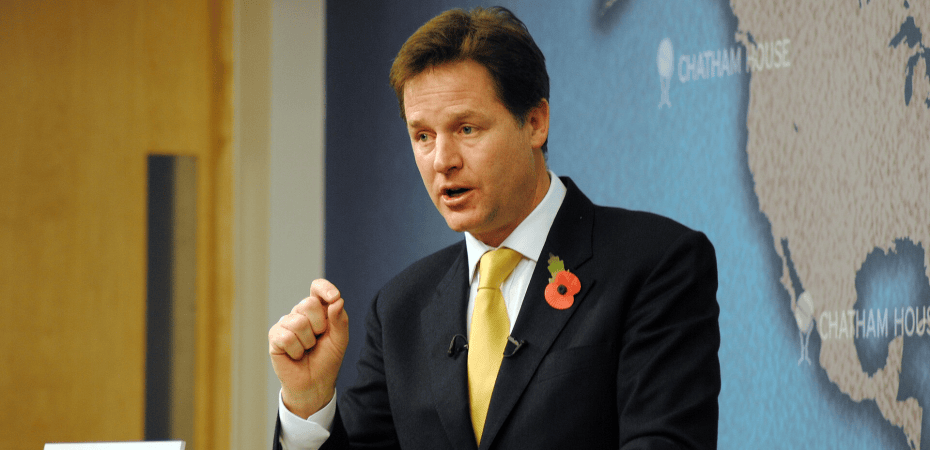
Frank Hansen reflects on Mark Zuckerberg, Nick Clegg, The Social Reckoning and the crisis of Britain’s “Sovereign Ai”.
You may have seen the film The Social Network released in 2010 under the strapline: “You don’t get to make 500 million friends without making a few enemies”. Written by Aaron Sorkin, the film chronicled the origins of Facebook and depicted a young Mark Zuckerberg in 2003 developing the website with his friends. It portrayed the paradox of a socially awkward misfit building a tool to connect the world, only to alienate those closest to him. In 2004-5, some of his co-founders launched multi-million dollar lawsuits against him. The Guardian named it as one of the best films of the decade.
Over the next 15 years, as the company (now Meta) transitioned from a college experiment into a hugely profitable business, Zuckerberg’s influence and wealth grew. Today he is the fifth richest man in the world, with personal wealth of around $248 billion and the company valued at some $1.8 trillion. Facebook is no longer hailed as just a “great place for friends to meet”. It has experienced rising global criticism over data privacy breaches, such as the Cambridge Analytica scandal, foreign election interference, social division and child safety controls. Stronger regulation has been introduced in Europe and the company is facing intense competition from other platforms such as Tik Tok.
Meanwhile Nick Clegg was also on the rise in terms of political influence. In 2007 he became leader of the Lib Dems. The 2010 general election resulted in a hung Parliament and with 57 seats Clegg opted to form a coalition with Cameron – putting the Tories back in government after 13 years. Clegg became Deputy Prime Minister for five years. The Lib Dems, while claiming to act as a moderating influence, helped the Tories to introduce austerity policies. The most infamous was Clegg’s support for tripling student tuition fees to £9,000, despite his election pledge to oppose any rise.
This political betrayal produced widespread anger and student protests across the UK, which contributed to a catastrophic loss of support for the Lib Dems in subsequent elections. In 2015 they retained only eight seats and Clegg resigned as leader, The Tories gained full control and implemented further austerity measures, with Cameron also deciding to call a Brexit referendum in 2016. If a film had been made about Clegg’s political rise and fall it could have been straplined: “How to become a Deputy Prime Minister, put the Tories in power and lose most of your friends and supporters, while paving the way for austerity and Brexit.”
Clegg’s political career finally crashed and burned when he lost his seat in 2017, but he landed on his feet and managed to parachute upwards towards Silicon Valley. It seems that Zuckerberg and Sheryl Sandberg personally head-hunted Clegg in 2018 for his understanding of EU and UK politics and hired him as Facebook’s Vice-President for Global Affairs and Communications. Zuckerberg said he needed a leader who could take the weight of political and legal friction off his shoulders. Clegg quickly entered Zuckerberg’s inner circle and by 2022 was promoted to President of Global Affairs. Arguably he became Zuckerberg’s main apologist and political fixer. He earned good money – reportedly £2.7 million annually and a promotion bonus of £9.4 million. When he left the company in January 2025, he also accrued some £14 million through share sales.
The Social Reckoning 2026: “We’re Way Past Making Friends” is Sorkin’s sequel to The Social Network and currently on release. This fascinating drama concerns the 2021 Facebook Files Crisis, as the whistleblower Frances Haugen secretly copies tens of thousands of pages of internal documents, working with an investigative reporter to leak them to the media. The files expose how the platform’s algorithms deliberately prioritise profit, outrage and division over public safety, leading to real-world harms, particularly affecting young people, and social polarisation. Despite internal research that identified the problem and ways to ameliorate it, Zuckerberg ignored this and continued with the algorithms to defend profits and market share in the face of rising competition.
The drama ends with Zuckerberg pondering whether to shut down Donald Trump’s posts on December 6th 2021 as the Capitol is stormed by a vicious MAGA mob. In the real world, as the riot unfolded, Facebook first removed a video address and a post from Trump for violating its policies against incitement, followed by an indefinite ban. This restriction was later changed to a two-year suspension, which was overseen and announced by Nick Clegg in June 2021. Similarly, when Trump was reinstated on Facebook in early 2023, Zuckerberg delegated the decision to Clegg, who argued that keeping a major political candidate off the platform indefinitely was “damaging to open democracy”.
Clegg doesn’t actually appear in the film and there is no suggestion that he engaged in any misconduct in the events portrayed. However, he was the corporate executive responsible for publicly managing the political fallout generated by the leaks. According to tech journalist Kara Swisher, writing in the New York Times: “Nick Clegg’s primary job at Facebook seems to be to act as a human shield for Mark Zuckerberg and Sheryl Sandberg, deploying a series of elegantly constructed but ultimately hollow platitudes to distract from the systemic harms built directly into the platform’s architecture.”
When Clegg was promoted in 2022, the whistleblower Frances Hagen wrote in the Guardian: “What will Clegg do with his new position? If history is any guide he’s likely to continue to be one of Facebook’s fiercest defenders, often using absurd, hypocritical arguments to uphold Meta’s worst actions.” She argued that Clegg could “now stop the lies” by simply opening up the algorithms for researchers to properly assess the platform – this never happened. One of Clegg’s defensive lines was that people should “not blame algorithms – people like fake news.”
In an amazing act of real world ‘reckoning’, the US legal system actually caught up with the film’s narrative just before its release. In August 2026, Meta abruptly aborted a high-profile federal trial in a consumer protection case brought by 47 US State Attorneys General. The prosecutors used the leaked files to prove that Meta executives actively hid internal findings showing that Instagram severely damaged young people’s mental health and body image. Zuckerberg and Meta avoided taking the stand by agreeing to a historic $17.1 billion settlement. This vast sum is to be paid over ten years, but still only amounts to approximately 1% of Meta’s market capitalisation.
While most states accepted the settlement, New Mexico rejected the deal and took Meta to a trial in Santa Fe. The jury ruled heavily against Meta, concluding that the company systematically lied to its users. On 21st October 2026 the judge ordered Meta to pay a record-breaking $25 billion fine – the largest single-state penalty against a tech company in US history.
US social media firms are able to hide behind Section 230 of the Communications Decency Act, which means they cannot be sued in the US for the illegal or harmful things users post on their sites. They are regarded as platforms rather than publishers. The leaks enabled prosecutors to focus on product design and algorithmic manipulation rather than content. They argued that features like “infinite scroll,” automated notifications, and AI recommendations were engineered like digital slot machines, specifically to exploit children’s brain chemistry.
As a direct consequence of the settlement, Meta is legally required in the US to implement safety boundaries for minors. These include disabling all user notifications overnight and during school hours, implementing a strict two-hour daily limit on Instagram and Facebook for users under 18, completely muting apps between midnight and 6:00am, and turning off harmful predictive features.
While this is an important step forward, it is hardly a remedy to all the harms caused by social media as it applies only to under 18s. One way of solving the numerous problems caused by social media in the US would be to amend Section 230 and make the companies accountable for content. Such a change won’t, of course, be happening under the Trump regime.
Nick Clegg resigned from Meta on 2nd January 2025 just before Trump’s inauguration. The reason he gave was that Silicon Valley had “embraced MAGA politics”. He accused Zuckerberg and Big Tech of cosying up to Trump for “self-interested” corporate reasons. He said Meta’s moderation stance was altered, replacing fact-checkers, and changing the firm “utterly” from the one he had joined. However it’s not the case that Meta’s moderation stance was “acceptable” when Clegg was there, because many of its practices were ruled unlawful in the 2026 lawsuits.
But it was true that Big Tech had gone MAGA. Musk had bankrolled Trump’s 2024 election campaign and all the Tech Titans now lined up to pay homage to the new boss (see BBC i-player “Trump and the Tech Titans”). It was a victory for the oligarchs, who were now engaged in a competitive worldwide race to reap the financial benefits of AI. Under Trump they were assured of a political champion and a favourable “pro- innovation”, “voluntary-regulation” regime. To seal the deal JD Vance, with strong links to Silicon Valley, became Vice President. Tech investors also backed Vance to champion a hands-off approach to crypto, social media and AI and because he is a potential successor to Trump. Under the false flag of ‘free speech’ it was now no-holds-barred when it came to platform content and AI development.
Governments outside the US are not bound by Section 230 and some progress has been made in regulating the harms of social media, particularly on young people. It has been uphill going, with vocal opposition from Big Tech and right wing politicians like Vance and Farage. The UK’s Online Safety Act 2023 (OSA) introduced a “duty of care” for tech firms, placing the legal responsibility on platforms to protect users from illegal activity and safeguard children from harmful material. It has been extended under Labour to include wider powers such as an under-16 Social Media Ban to be fully implemented by Spring 2027.
Recently Ofcom published its first statutory report on the OSA following the introduction of stricter child safety duties and admitted that there was no significant change in the proportion of children encountering severe online harms, including graphic violence, suicide encouragement, and cyberbullying. Changes are proposed but will they tackle the issue at source? The NSPCC argue that Big Tech are still prioritising profits by building algorithms designed to “keep children hooked,” and pushing dangerous content despite the law. The Children’s Commissioner for England, also claims that the OSA is structurally flawed because it focuses too heavily on moderating individual pieces of content rather than fixing systemic platform design features.
As previously argued in Labour Hub, the root of the regulatory problem seems to be the Starmer/Mandelson legacy of an AI policy that’s far too open and welcoming to US Big Tech and based on the flawed idea that this will automatically bring sustainable economic growth. It has produced a weak, fragmented regulatory system,(compared to the EU) and the risk of AI infrastructure being dominated by US tech. The government has encouraged the rapid growth of hyperscale data centres – which carry enormous demands on electricity and water supplies – which is now leading to rising public opposition. There needs to be a thorough review of AI policy looking at regulation and the fast pace of data centre development.
A re-evaluation of infrastructure is urgent, particularly given the recent problems faced by Nscale, which is considered Britain’s main AI data centre developer. Nscale made headlines after pledging £2 billion to build the UK’s largest sovereign AI data centre in Loughton, Essex. The project was meant to house an AI supercomputer powered by some 23,000 Nvidia chips. Microsoft was to be Nscale’s primary tenant to rent these chips. However, UK Power Networks ruled that upstream capacity shortages meant the site could not receive sufficient electricity until the 2030s and Microsoft pulled the plug on the deal. This has severely damaged Nscale’s ambitions just as it was hoping for a £35 billion listing on Wall Street. It has also damaged Labour’s narrative of developing “Sovereign AI”. It remains to be seen whether the deal can be ‘rescued’. Nscale is talking of possibly developing on-site energy generation plants to bypass the wider grid.
In the run-up to the budget, Microsoft, Nvidia and others were warning Ministers that they “have 12 months to head off public opposition to datacentres in the UK or risk US-style protests that could threaten their construction”. They called for the establishment of a “prosperity compact between government, industry and local communities”, to ensure Britain’s “digital destiny by actions that accelerate the UK’s transition to an AI-enabled economy.”
In the Budget, Healey duly obliged by announcing the “British Data Centre Covenant” as a “new deal”. This envisages a “local benefits plan” and a number of “protections”, concerning water, energy, and environmental standards. In return, companies would get priority grid access, and on-site generation rights, where grid connections are delayed. A new government body, chaired by AI Minister Narayan, will be established to fast-track planning approvals, and oversee strategic data centre construction.
The reaction from environmental groups to the Covenant and the government’s AI infrastructure plans has been very critical. While the government frames the Covenant as a way to force “green standards” on developers, opponents argue that the policy is a massive giveaway to tech corporations, who have ‘captured’ the agenda. They say the Covenant is a way of fast-tracking development by overriding local democracy and local planning controls, using ‘vague’ and ‘voluntary’ standards. A recent investigation by “Spotlight on Corruption” also claimed that during the 17-month development of the government’s AI infrastructure policy, senior Ministers and civil servants met with 137 tech and corporate businesses, but failed to meet with a single environmental organization.
Given that the Department for Science, Innovation and Technology (DSIT) has pushed ahead with its 6 GW target for data centres without conducting national-level environmental or social impact assessments, there are calls for an immediate moratorium on new build. Opponents point to the EU and Canada who conduct public consultations and stipulate legally binding ecological constraints before allowing massive developments.
It seems that the Burnham Government,, while talking up the idea of reversing 40 years of neo-liberalism, is still going along with the latest neoliberal project – the reckless race for AI – based on the same free market, light-touch regulatory approach pioneered by Starmer/Mandelson.
As for Sir Nick Clegg, he’s certainly left a legacy of sorts – forming the first formal coalition government in the UK since the second world war and paving the way for former UK politicians to offer their services to Silicon Valley – a path now well-trodden by notables such as Tom Watson (Palantir), Rishi Sunak (Anthropic and Microsoft), George Osborne (OpenAI), along with Sir Keir Starmer’s former AI advisor Matt Clifford (Anthropic).
However, he’s not exactly out of the game. Having ‘saved’ David Cameron by making him PM, he’s now written a book How to Save the Internet based on his Meta experience. Clegg argues that the internet is facing an existential crisis of fragmentation with the threat of “splinternets” in Russia and China and Silicon Valley backing “America First”. He puts forward a blueprint for multi-national, corporate cooperation as a solution – perhaps difficult given the current ruthless race for AI where US oligarchs not only compete against China but amongst themselves.
The book received mixed reviews – praised by Tony Blair and the Spectator and panned by others. A major point of contention is Clegg’s continuing defence of algorithms – he says that claims of harm are “vastly overstated”. Critics point out the irony of a book in which Clegg warns about the dangers autocrats pose to a free web, but downplays the profound structural harms engineered by the very platform that paid him millions.
He recently presented the updated edition of his book at the Chiswick Book Festival and was taken to task by the audience for dodging questions about the morality of Big Tech. The CEO of the Independent Society of Musicians, publicly challenged Clegg over Meta’s actions regarding AI and copyright. She later wrote an account in the Chiswick Calendar: “I was hoping for answers. What I got instead were generalities, vacuous statements and fact-free assertions.”
Nick Clegg may not have made many new friends at the Chiswick Book Festival and he may have fallen out with his former boss, but at least he seems to have retained one key Facebook pal. On 9th March this year, Clegg and Sheryl Sandberg (who left Meta in 2025) both joined the Board of Directors of Nscale. As part of the remuneration package they received equity shares which could be worth up to $40 million for Clegg and $88 million for Sandberg, based on Nscale’s plans for a Wall Street flotation with a target of $35 billion.
Microsoft’s sudden decision to pull out of the Loughton contract directly affects Clegg – not just the windfall from his own shares, as Nscale’s potential flotation value falls; but as a director with a corporate governance role, he is exposed to the fallout and will have to deal with investor scrutiny regarding Nscale’s business model. Nscale’s initial plans for flotation indicate that some 40% of projected revenues rely on the Microsoft/Loughton contract.
Above all, there is the political crisis created by the Loughton project failure. It was championed by the government as the landmark symbol of Britain’s “sovereign AI” strategy. It was supposed to be a march by Nscale, Clegg and the government towards a successful “Sovereign UK infrastructure” launch. With the project now effectively in limbo and Nscale considering if and how it can generate its own power on-site, it could well turn into a damage limitation exercise involving the government’s AI Minister, Narayan.
“Limiting damage” (or not as the case may be), seemed to be Nick’s main job as Deputy PM and at Meta, so could he be quite well suited for this new ‘back to the future’ role? Meanwhile, it’s time that Burnham had a long rethink about where this neo-liberal AI policy is actually taking him. It certainly isn’t the road to democratic socialism.
Frank Hansen is a former Councillor in the London Borough of Brent.
Image: Nick Clegg https://commons.wikimedia.org/wiki/File:The_Rt_Hon_Nick_Clegg,_Deputy_Prime_Minister,_UK_(8144405130).jpg Source: The Rt Hon Nick Clegg, Deputy Prime Minister, UK Author: Chatham House, licensed under the Creative Commons Attribution 2.0 Generic license.


