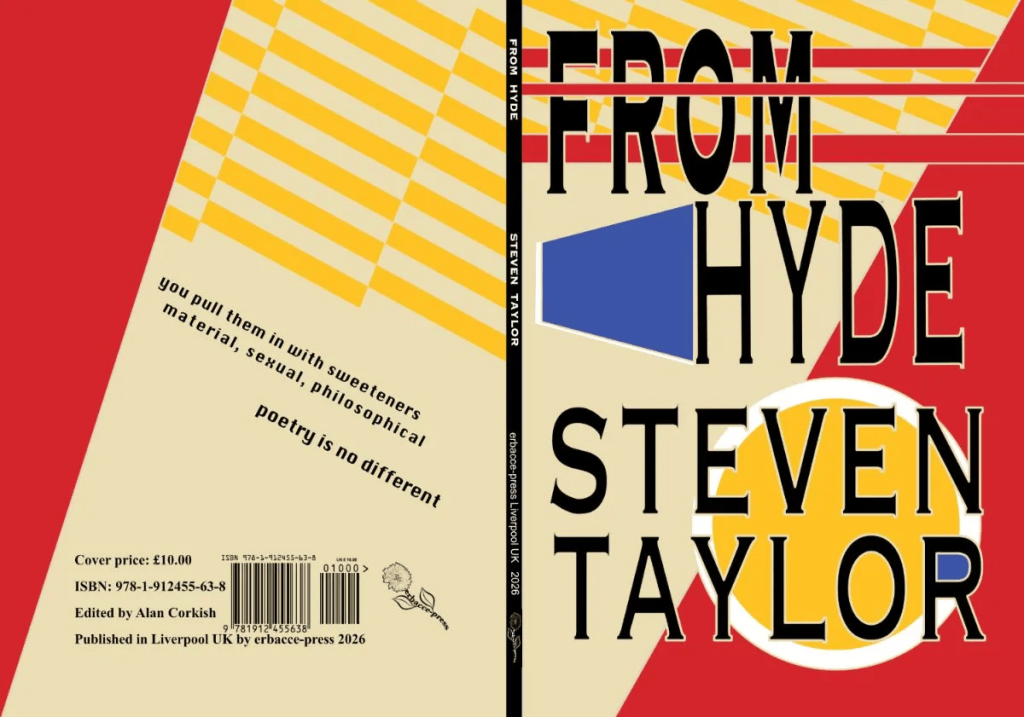
Poet Steven Taylor introduces his new collection.
There’s a great poem by the Irish writer, Paul Muldoon, called ‘Meeting the British’ about an encounter between Native Americans and British soldiers where the natives are gifted blankets laced with smallpox. Sometimes, I feel suggesting poetry to the left is akin to offering them such a gift.
But I persevere.
I post poems on left sites and occasionally they appear in left magazines, journals and anthologies – even newspapers. They’re regularly misunderstood or criticised for being less than literal (even ambiguous) which goes against the resolute grain of expected discourse. When this happens, I try to explain myself – suggest a different approach to the poem, or another way of reading.
John Berger was great at this, with his various books about seeing – how to look at things and think, or rethink, assess and reassess.
We all have an immediate response to things, but on reflection that response changes. We might gain (or reject) an understanding. We find resources to help us interpret, reimagine or understand something that had previously seemed obscure. Sometimes it’s even possible that obscurity (and difficulty) is the point.
A poem (or painting) is not necessarily ‘about’ something.
I don’t understand every poem I hear or read. When I attend a poetry reading, I often struggle to keep up with the poem being read, or become lost among metaphors while becoming more aware of the rhythm. The best readings I ever heard were by Arab poets reading their work in Arabic and then pausing while they were translated into English by an interpreter.
I got the music first, and then the meaning.
As Gaza is demolished, it’s worth reminding ourselves how highly valued poetry is across the Arab world. Poets are accorded a much greater status than they are in the West – where we expect either an obvious sentiment or loud exclamation, a simple slogan, or a bit of appropriate hand-wringing.
Something said by someone else at a graveside. Stop all the clocks, or whatever. Look, daffodils.
We live within a culture that abhors reflection. If we stop and listen and – woe betide us – think, we might just develop the awareness to see ourselves differently, to connect or reconnect in ways that can’t be monetized or consumed like chewy mints.
Poetry can do his. It can explain ourselves to ourselves. And not just poetry, but all stuff that presents as culture.
Before it’s swallowed and played back to us as biography or gossip, it’s possible it might mean something and give us a wider choice – a better chance of not drowning or being swallowed.
From Hyde was put together with intent. It’s built from a segmented history of place – the politics, history, geography and biography of a small mill town (a former mill town, obviously) on the edge of Manchester where I was born and raised. Both my parents were mill workers.
My father was a cutter – which gives each part a divide – and my mother was a machinist – which stitches the lines together. It’s got strikes and demonstrations, revolutionary uprising and women without hats. Acts of solidarity and paintings. Factories and workshops. Labour versus Capital.
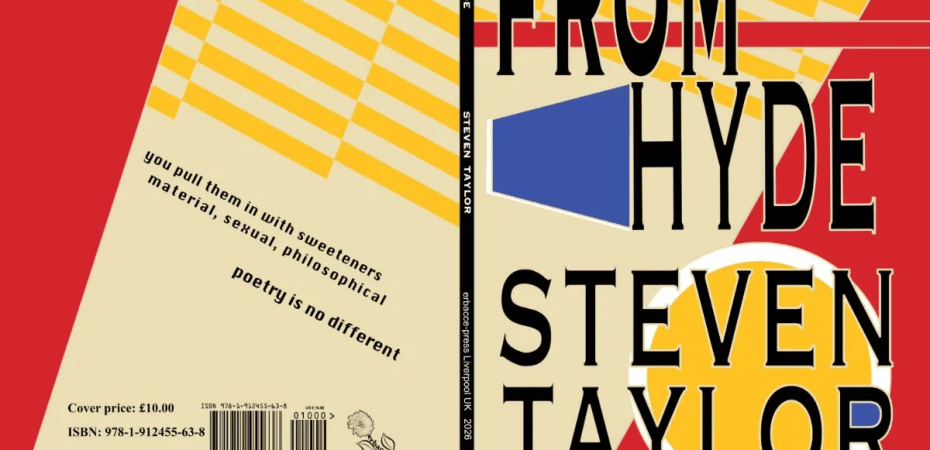
The book’s published by erbacce – a fabulous co-operative of writers, artists and rascals – and it looks amazing.
I had nothing to do with the cover.
It can be located and bought here.
each length measured for a purpose,
marked, and cut accordingly
The women walk to work
At the Providence mill whatever
The weather, linking arms
And bumping hips in solidarity
Until they reach the entrance
And must uncouple to survive
You could hear it sometimes
How, irrespective of necessity
Mortality and the wind chill
Laughter followed them
Unfurling like a banner
By El Lissitzky, brandished
With a fierce potency
Up the staircase to their machinery
It’s not that only matter is existent or real
It’s that only matter can be quantified
each length measured for a purpose,
marked, and cut accordingly