
What was supposed to be about justice for victims in Northern Ireland has become an arena for veterans to block the disclosure of the truth necessary for reconciliation, argues Nadine Finch.
On 19th October 2026, Chris Bryant, the Secretary of State for Northern Ireland, opened the first day of the debate on the Northern Ireland Troubles Bill with an appeal for equity and balance. This was in keeping with the aspirations and negotiations, which led to the Good Friday Agreement. In particular, he said: “I want to say how important it is that we achieve a balanced piece of legislation… we need to get this right for the thousands of families who are still waiting for answers… all must be treated equally and all must have an equal chance of justice. That is the rule of law that we all adhere to in this country.”
Unfortunately, the debate, which followed, did not reflect the experiences of a significant number of those families or reflect their memories of the three decades of the ‘Troubles’. Many contributors made it sound as if paramilitaries had never been arrested and imprisoned. It is correct that around 1,705 of the deaths during the Troubles were caused by the IRA and another 1,027 by Loyalist paramilitaries. But more than 39,804 individuals were detained for politically motivated offences between 1971 and 1998, with a number of them being children. This included individuals remanded in custody, interned without trial and serving sentences in Northern Ireland, England and Wales and the Republic of Ireland – see The Irish Criminology Research Network.
At times during the debate, it also appeared that it was only members of the military who were suffering from the traumatic consequences of a conflict played out over 30 years on the streets of towns and villages of a part of the United Kingdom. This ignored the fact that it was the Northern Ireland community, who continued to live there throughout the Troubles. Their trauma was often exacerbated by the portrayal of civilians killed by the British army and the RUC as actively involved in the armed struggle.
There was no mention of the 17 civilians killed by rubber or plastic bullets used by the British Army and the RUC. Eight of the 17 were children; killed as they walked down the street or played close to their homes. One of them was ten-year-old Steven Geddis, who was playing in a courtyard near his home in Divis Flats in Belfast in 1975. A bullet fired by a soldier into the courtyard, from a distance of 50 yards, bounced off the ground and hit him in the head. An initial inquest in 1976 returned a verdict of misadventure but, in 2014, a fresh inquest was ordered. In 2022, a coroner found that the use of the rubber baton round was neither necessary not justified. It was also found that no verbal warning had been issued.
To date there have also been a significant number of other legacy inquests into killings, which occurred decades before. These were not the result of any alleged ‘rinse and repeat’ investigations into individual members of the security forces. Many initial inquests had been rudimentary. Those involving members of the military had usually been investigated by the Royal Military Police. They did not issue formal cautions. This meant that any admissions made would later be ruled inadmissible.
The families of those killed are primarily seeking the closure, which can only be obtained, if the truth surrounding their deaths at the hands of state actors is publicly accepted and acknowledged. As Sorcha Eastwood MP said in the debate: “Families were stained for years, people said, ‘Oh, there’s got to be something there, they must have been killed because they were in the IRA. Oh, they were Catholic? Okay, something must have gone on’.”
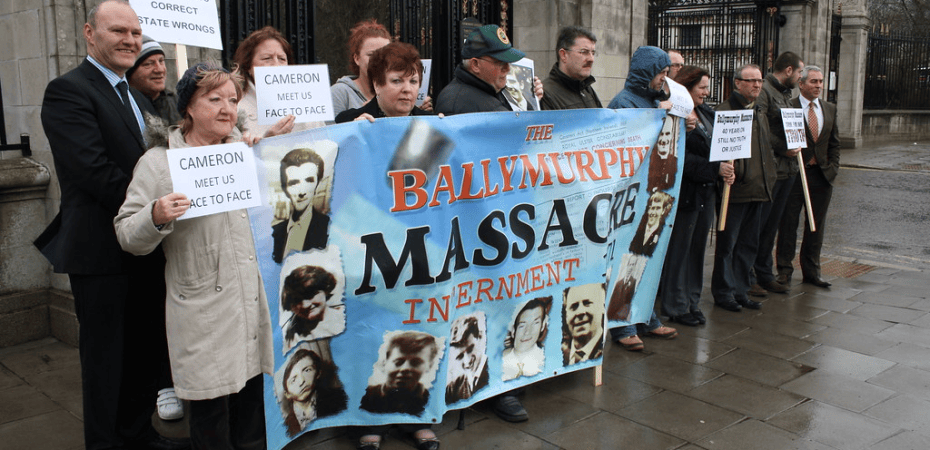
The Ballymurphy Inquests involved the deaths in August 1971 of ten such members of the community during Operation Denetrius. This took place over three days, as adults and children were taken to internment camps. It is now accepted that the ten civilians, including one priest and one mother of eight, were shot by members of the British Army on the street or on a piece of waste land. The initial inquest in 1972 returned an open verdict. But, in the 2021 legacy inquest, Mrs Justice Keegan, provided closure and uncovered the truth. She found that all ten victims were innocent. She also found that the instructions to soldiers contained on the Yellow Card had not been adhered to and that there had been no adequate investigation by the Royal Military Police.
A further inquest into killings of another priest, two children and two adults in the Springhill Estate in West Belfast in 1972 had a similar cathartic effect. The initial inquest, which took place in 1973, returned an open verdict but in 2026 there was a legacy inquest. Mr Justice Scoffield found that those killed were unarmed and posed no threat to the soldiers, who killed them. He also found that they had all died as the result of direct aimed shots from a high velocity rifle.
In his judgement, the Coroner reviewed a large amount of evidence in detail. He accepted that many of the soldiers involved were young and inexperienced and that memories can be fragile. But he also noted that it was “a striking feature of this case that a number of important MoD documents which may well have assisted, either in identifying the ciphered soldiers or more generally in relation to what occurred, have gone missing without any or adequate explanation.” He also found that “each of the deaths subject to investigation in this inquest was caused as a result of fire which was in breach of the instructions contained within the Yellow Card.”
These inquests and their findings were largely ignored in the Commons debate, which focused on a narrative of the soldier as victim of a type of lawfare perpetrated by solicitors and barristers seeking to enrich themselves and denigrate the military. Some 250,000 British soldiers were deployed to Northern Ireland between 14th August 1969 and 31st July 2007. A small minority were responsible for 301 deaths, 121 of which were of Republican terrorists and ten were of Loyalist terrorists. The remaining 170 killings were of civilians.
The CAIN archive at Ulster University also records that the RUC were responsible for a further 55 deaths. But collusion between Loyalist paramilitaries from the Ulster Volunteer Force and Ulster Defence Association, and members of the UDR and RUC also caused the death of many Catholic civilians, which may inflate the numbers given above. For example, between 1972 and 1980, the Loyalist paramilitaries from the UVF and the UDA, working with members of the Ulster Defence Regiment and Royal Ulster Constabulary, in the Portadown and Mid Ulster areas, killed 120 civilians – see Operation Denton findings in the Operation Kenova report.
The lawfare narrative was encouraged by the Defence Secretary, who stated in a Government press release on 12th October 2026, that “for too long, veterans have faced uncertainty over historic investigations, despite serving honourably during the Troubles.” Yet, in the debate, John McDonnell MP, confirmed that “between 2010 and 2025, there have been 25 prosecutions. Six of them were of veterans and there was only one conviction.” Nevertheless, MP after MP stood up to attest to the feat of persecution and punishment that was destroying the lives of veterans, who had served in Northern Ireland during the Troubles.
The lawfare campaign appears to be spearheaded by former members of the SAS and individual regiments to portray human rights and lawfare as a means of attacking military heroes, who alone protect democracy and the rule of law. This is well illustrated by a session on The SAS: The Past, Present and Future of UK Special Forces that was recently held as part of the Hereford Military History Festival.
David Davis MP was in the audience and was acknowledged from the platform as a key supporter of the views of the SAS. Therefore, it may not have been a coincidence that it was David Davis who stated in the debate on the Northern Ireland Troubles Bill that he “would rather see the dispassionate actions of the [legacy] commission than the activities of IRA lawyers in the courts in inquests and civil proceedings.”
Neither the Speaker nor the Home Secretary intervened to stop a possible series of events that could once again lead to deaths of these so-called ‘IRA lawyers’. The remark caused serious concern in Northern Ireland amongst the legal professions, nationalist parties and some media outlets. In the House of Commons, it was left to Ian Byrne MP to remind the House on the day after the debate that “the Law Society and the Bar Council have called recent references by some hon. Members to supposed ‘IRA lawyers’ grossly irresponsible and said that it puts people at risk.” He noted “the tragic history of the murder of lawyers such as Pat Finucane and Rosemary Nelson” and urged all MPs “to take extreme care over their language and recognise that their words can have tragic consequences and completely undermine the confidence of bereaved families and victims, which is essential to ensuring a balanced and credible legacy process.”
Thankfully, there are other veterans who prefer to discuss issues of human rights and the rule of law. On 14th September 2026, Amnesty International and the Centre for Military Justice hosted a briefing for members of the Houses of Commons and Lords. The speakers presented a very different view of how reconciliation and truth can be achieved. One of the key speakers was Lieutenant Colonel (retired) Reverend Nicholas Mercer. He joined the Army Legal Service in 1991 and served in Northern Ireland between 1995 and 1997. He also had tours of duty in Iraq and Afghanistan. It was part of his role to teach soldiers how to comply with international law, which protects the lives and safety of civilians even in times of war, as well as the Human Rights Act 1998.
It is his view that the campaign against lawfare being waged during the debate on the Northern Ireland Troubles Bill has little to do with events, which occurred in Northern Ireland. Instead, it reflects “a desire to escape the European Convention on Human Rights”, not least in the light of recent revelations regarding UK Special Forces in Afghanistan. He went on to explain that, as a result of exposure by Panorama, the SAS now stand accused of committing war crimes in Afghanistan and effecting a cover up. This is the subject of the Independent Inquiry relating to Afghanistan, being chaired by Lord Justice Sir Charles Haddon-Cave.
As Nicholas Mercer went on to conclude, “the great irony is that our special forces or other state actors would not be worried about legacy issues from Afghanistan, or indeed Northern Ireland, if human rights norms had been applied rigorously at the time. Military operations would have been conducted in accordance with the rule of law and there would have been no cover up, because the ECHR would have prevented it. There would have been a proper independent inquiry at the time – the guilty would have been dealt with, the innocent exonerated. This is precisely why the application of the Human Rights Act is so important – it will stop ‘legacy’ issues arising now and in the future.”
Despite all the noisy support for the veterans, six MP s, John McDonnell, Ian Byrne, Andy Macdonald, Sorcha Eastwood, Colum Eastwood and Claire Hanna managed to raise very similar points. They argued that truth and reconciliation would be possible only if the Legacy process could deliver human rights complaint solutions to years of uncertainty and trauma.
They had tabled amendments designed to ensure that the Bill could deliver these outcomes. They were largely ignored by everyone else.
Debate was also frustrated by the fact that the Government had decided that there would not be the more usual separate Committee stage that meets over a number of sessions to discuss the detail of the draft bill and any amendments. Instead, there was a Committee of the Whole House followed by a severely truncated Report stage; all within two afternoons and evenings after other business of the House was completed. MPs were also required to absorb and prepare to respond to numerous Government amendments tabled merely one week before the debate.
Nevertheless, the six MPs tabled amendments that may do better in the House of Lords. One seeks to amend Clause 10 of the bill. The clause gives the Secretary of State for Northern Ireland the power to appoint the Judicial Panel Members of the Legacy Commission. This is in breach of the recommendations of the Criminal Justice Review, established as a result of the Good Friday Agreement. They became law in the Justice (Northern Ireland) Act of 2002 and 2004. As a consequence, an independent Northern Ireland Judicial Appointments Commission was established in June 2005. It is responsible for the appointment of all members of the judiciary in Northern Ireland.
The Commission’s powers were further extended on 12th April 2020, when the Northern Ireland Act 2009 resulted in responsibility for justice matters being devolved to Northern Ireland. Sorcha Eastwood, the sole Alliance MP, was correct when she noted that “the Secretary of State’s broad powers mean that a future Secretary of State for Northern Ireland opposed to an independent rule of law legacy investigation could make further appointments to frustrate the legacy commission’s purpose. There is precedent for the risk: the irregular appointment of the second police ombudsman was followed by a lowering of the office’s independence in legacy investigations, leading to an independent inspection and suspension of the historic function of that office.”
The final decision on whether to prosecute anyone for the most serious Troubles-related crimes will also be removed from the Northern Ireland Director of Public Prosecutions under New Clause 50 and given to the UK Attorney General. This is despite the fact that the 2000 Criminal Justice Review removed the Attorney General’s power to direct prosecutors in Northern Ireland in individual cases and on policy matters. This also became part of the devolution of justice matters to Northern Ireland.
As Andy Macdonald MP noted during the second day of debate, “the De Silva report into the murder of Pat Finucane documented political pressure on the then Attorney General over the prosecution of the state agent, Brian Nelson.” He went on to say: “How can families have confidence in a process where an independent prosecutor might conclude that a serious offence should be prosecuted, only for a Government law officer to prevent that prosecution without adequate explanation or scrutiny?”
Crucially, he also noted that “the Good Friday Agreement was not simply a political declaration of peace and reconciliation. Its implementation required detailed reforms to institutions including the criminal justice system, designed to establish independence and to instil public confidence.”
Many earlier inquests and investigations failed to provide sufficient clarity about killings because vital evidence had been ‘lost’ or it was said that national security concerns prevented disclosure of relevant documents and records. The current bill goes some way to ensure that more evidence may be sent to the Legacy Commission for its investigations. But ultimately, it will be the Secretary of State for Northern Ireland who will decide what evidence can be disclosed to family members at the end of the inquisitorial proceedings. This will be a great disincentive to families deciding whether to engage with the new Legacy Commission.
The Government has failed to explain why there are such stringent national security concerns about events which occurred up to fifty years ago. In Amendment 97, John McDonnell MP and others sought to narrow the national security test to be applied to sensitive material. The amendment would remove the words “would risk damaging” on the basis that this introduced a speculative test, as opposed to one where the Secretary of State would have to show that there was a tangible risk. As Andy Macdonald MP said, “a speculative risk to national security should not automatically outweigh a family’s legitimate interests in establishing the truth.”
New Clause 56 also asks the Government to apply the duty of candour drafted for inclusion in the Public Office (Accountability) Bill to legacy proceedings. The Secretary of State for Northern Ireland has made a dispatch box assurance that he will try and mesh the same duty into the Legacy bill.
But, if reconciliation and closure in legacy matters is to become a reality in Northern Ireland, the Government needs to ensure that debate on a duty of candour is not the only issue on which it listens to the community there. Transferring powers from judges and the Director of Public Prosecution in Northern Ireland to members of the Westminster Government undermines both the Good Friday Agreement and devolution of justice. The bill was supposed to be about justice for victims and communities in Northern Ireland. But the debate has become an arena for veterans to oppose lawfare in general and to block the disclosure of the truth necessary for reconciliation.
If the bill passes without any amendments which benefit families and survivors, as opposed to members of the military, few may engage with a Legacy Commission. As presently constructed the Legacy Commission process seems designed to require families to renew the trauma of remembering events with no guarantee that the state will disclose any information which may provide them with closure. This is a disproportionate process that cannot seriously be said to comply with Article 2 of the ECHR.
Nadine Finch is Vice-Chair of the Labour Movement for Irish Unity.
Image: “Ballymurphy families at Stormont” by Sinn Féin is licensed under CC BY 2.0.

